
The Oasis: the water is the product, and the water has an operating cost
Emaar has three tiers of villa product, and this is the one above Dubai Hills: larger plots, mansion typologies, and a masterplan organised around lagoons and canals rather than around roads. Remove the water and what remains is a remote villa community on the western edge of the emirate — which is why one question matters more than all the others.
Where it sits in the Emaar hierarchy
Emaar’s villa ladder runs from the mainstream family communities like Arabian Ranches and The Valley, through the premium tier of Dubai Hills, to The Oasis at the top.
What distinguishes the top rung is plot size, water frontage and the mansion typologies, which push into a price band that previously meant Emirates Hills or a Palm frond.
The buyer it is aimed at is a family that wants a very large house with water frontage inside a managed community, rather than a bespoke plot they have to develop themselves.
Talk to a licensed broker: WhatsApp +971 50 120 32 64 · Telegram
The masterplan is early. Phases have launched and construction is under way, but the community does not yet exist as a place, and that gap is where most of the risk lives.
The water masterplan
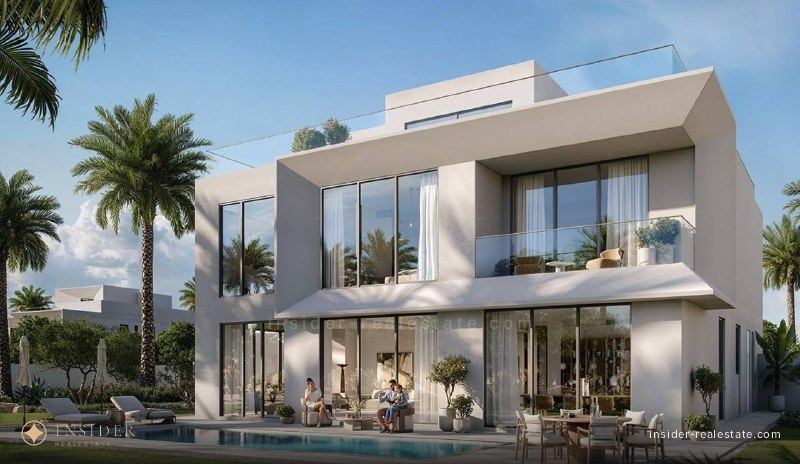
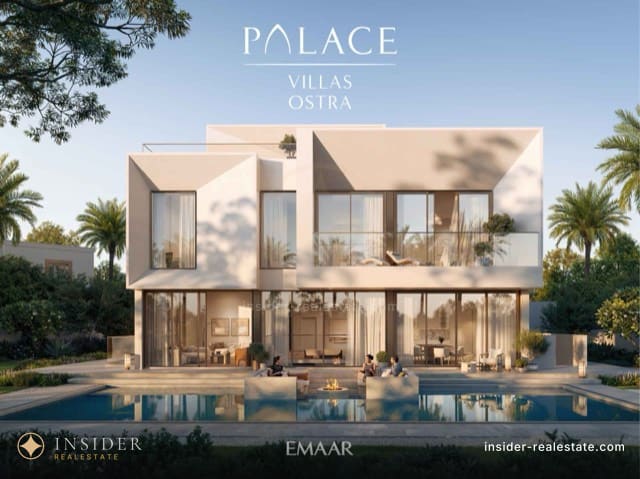
The Oasis is planned around an extensive network of lagoons, water canals and swimmable beaches threading between the plots, with parkland and green corridors filling the space between. Emaar has said a large share of the site is given to water and landscape rather than to housing.
That is the product, and it is what lets the scheme compete with Palm frond villas and Emirates Hills rather than with Dubai Hills.
It also means an unusually heavy infrastructure burden. Lagoons need filtration, circulation and continuous maintenance, and that cost lands in the community charge for as long as you own the house.
Ask for the projected community charge in writing and treat it as a floor, not an estimate. On water-led masterplans the first published figure is calculated before anything is actually operating.
The location argument, both halves of it
This is the western edge of the developed emirate, west of Sheikh Zayed Road towards Al Qudra, and the drive to Downtown, Marina or the airport is substantial.
Emaar’s counterargument is that the city grows outward and that Dubai Hills was also considered remote when it launched. That is historically true, and it is not a guarantee.
What is certain is the next several years: residents will be living somewhere with limited surrounding amenity and long drives to everything, and that is the period you have to be able to sit through.
The western corridor is also served by fewer routes than the rest of the city, so ask specifically which road connections are planned and when. Journey times here depend heavily on which of them get built.
Where it sits against Emirates Hills
The natural comparison at this level is Emirates Hills, which offers bespoke plots, an established address and a location inside the western corridor rather than beyond it.
The Oasis offers a managed masterplan instead: a coherent design, Emaar community management, delivered landscaping, and water frontage that Emirates Hills does not have.
What it does not offer is maturity or proximity. Emirates Hills was built out two decades ago and sits fifteen minutes from the Marina; this is being built now and is a considerably longer drive from everything.
Buyers who want a finished environment and an established address buy Emirates Hills. Buyers who want a new house on a large water-facing plot, with a developer that will still be managing the community in twenty years, buy here.
The investment view, stated honestly
This is a long-horizon, end-user purchase. Yields at this price point are low and largely beside the point; the argument is a very large house in a well-managed community with an Emaar name on it.
Capital performance depends on the masterplan delivering and on the western corridor developing the way Emaar expects. Both are plausible; neither is certain.
Liquidity at handover will be thin. The buyer pool for very large houses in an incomplete, remote community is small until the community matures, so this has to be money you can leave in place.
It suits poorly anyone who needs amenity now, anyone who might need to sell within a few years, and anyone for whom the commute matters today.
Practical due diligence
Confirm the phase, the handover date, and precisely which water and parkland elements are contracted to be delivered with it. On an early masterplan that is the whole risk assessment, and a rendering is not a commitment.
Confirm the plot dimensions, the setbacks, and what can be built on the adjacent plots. At this price the neighbours’ building envelope affects your privacy and your outlook permanently.
Price it against Dubai Hills golf villas and against Palm frond villas, which are the realistic alternatives in the same budget, rather than against the surrounding land.
And read the service charge projection as the long-term cost of the thing that makes the community worth buying. The water is the asset; the water is also the bill.
Frequently asked
Where is The Oasis by Emaar?
On the western edge of the developed emirate, west of Sheikh Zayed Road towards Al Qudra. It is a long drive from Downtown, Marina and the airport, and the surrounding amenity will be limited for several years yet.
How does The Oasis compare with Dubai Hills?
It sits above it in Emaar’s hierarchy: larger plots, mansion typologies and water frontage, in a price band that previously meant Emirates Hills or a Palm frond. Dubai Hills is the premium mainstream tier and is delivered and mature; The Oasis is early and remote.
What is the single most important thing to verify?
Which lagoon, canal and parkland elements are contracted for delivery with your specific phase. The water network is the entire reason the community prices where it does, and on an early masterplan a masterplan drawing is not a contractual commitment.
✍️ Message me on WhatsApp for a free consultation — off-market stock, payment plans and honest numbers on any of the projects covered here.
✅ Subscribe on YouTube — investment, property, business and relocation in the UAE and beyond.


Below market in The Oasis right now
From the daily off-market feed. Availability and price are confirmed on request.
All below-market listings →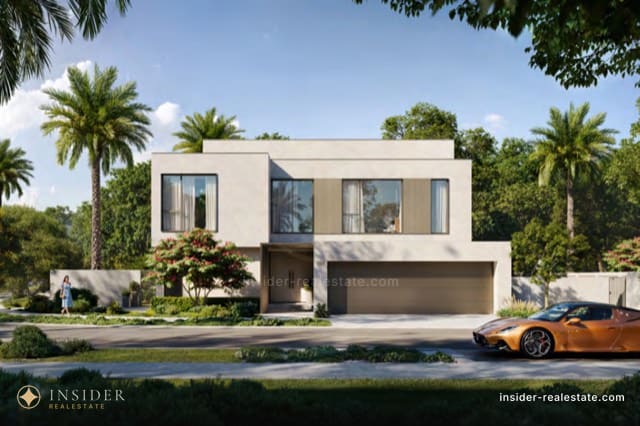
In the news
The same subject in writing — analysis and news related to this video.
The Oasis: what "premium" means when the city is not there yet
A premium master plan with canals and lakes, far from the built-up city. Premium comes in two kinds, and which one you are buying decides your exit.

The Oasis off-plan specification: what developer finishes include at the premium end
In expensive projects the specification looks generous and is still a document with tolerances. Read it line by line, not by its headings.

Investing in Dubai: world number one for creative-industry FDI projects, with 754 projects and 19 304 jobs in 2025
fDi Markets data shows Dubai attracted 754 new greenfield creative-industry projects in 2025, worth $3.76bn and creating 19 304 jobs, the top city out of 233 for the fourth year running. Separately, Al Maktoum airport is getting a 50km underground people mover. What both mean for rental demand.
JVC traffic fix: RTA and Dubai Holding’s AED 6bn road programme and four new access points
The RTA and Dubai Holding signed an AED 6bn (about $1.6bn) road programme: four new JVC access points with interchanges, double the capacity and 70% shorter journeys. Hessa Street phase two adds a 780 m bridge and a 480 m tunnel out of JVC. What it means for owners and buyers.

Production City: a district built around one industry
A media and printing free zone with housing around a lake. When demand rests on one industry, that is both the strength and the single point of failure.

Production City: how to check free zone occupancy before buying to let
In a sector-based district, housing demand comes from the companies nearby. Their number and occupancy can be checked, and they are the best leading indicator you have.