
The Gulf neighbours: Qatar, Oman, Saudi Arabia and Bahrain compared
Every Gulf state now has a property-linked residence of some kind. They differ in what they cost, what they permit and how deep the market behind them is.
The UAE’s neighbour: resort freehold and a residence visa for the owner.
Oman is the closest foreign market to our own practice: the same buyers, the same region, an hour’s flight from Dubai. A foreigner here does not buy "anywhere" — only inside an Integrated Tourism Complex, an ITC. These are gated resort masterplans with their own infrastructure: Al Mouj near Muscat, Jebel Sifah on the coast, the Salalah projects, the newer Muria districts.
Inside an ITC ownership is full freehold, and it carries a residence visa for the owner and immediate family. That combination — freehold plus residency at considerably calmer price levels than Dubai — is the whole reason Oman enters the conversation.
Outside an ITC nothing is available to a foreign buyer, and this is the first question to ask about any Omani property. If the seller cannot name the ITC the project belongs to, discussing price is premature.
The caveat: A thin market: a fraction of Dubai’s transaction volume, which means the exit is measured in seasons rather than weeks.
What we filmed on location — projects, rules and the things a brochure leaves out.
 9:41
9:41 A branded golf community above Muscat with beach access, an 18-hole championship course and villas from AED 8.5m. What the numbers mean, who Oman actually suits, and the question nobody asks until they want to sell.
WatchWritten breakdowns of subjects the English channel has not filmed.
Oman sells nature rather than skyline: mountains, monsoon greenery in Salalah, and resort property with residency attached. A lower entry point than Dubai — and a market that is thinner in exactly the way that matters at exit.
Oman lets foreigners own freehold in one place only: inside a designated tourism complex. What that means in practice at a project like Muria, what the residence permit is attached to, and where the risk sits.
Portfolio core
The Gulf, but not Dubai
Early entry, long horizon
Coastal living and relocation
Fast entry and status
Status inside the EU
Living and letting, not status
Europe close by, a soft entry
An operating business
Resort letting and wintering
Cheap entry
Capital preservation
Jurisdiction and residency
Jurisdiction and education
Long horizon
Freehold only inside tourism zones (ITC). The title is a property of the specific project, not of the country as a whole: what the contract says outranks the word "freehold" in a brochure, and that is the first document to read. The detail is in the write-up above.
UAE satellite. The UAE’s neighbour: resort freehold and a residence visa for the owner. That answers "what job does this market do", which is a different question from "where is the yield highest": markets on this list run on different currencies, different liquidity and different exit horizons, and a single percentage cannot be compared across them.
A thin market: a fraction of Dubai’s transaction volume, which means the exit is measured in seasons rather than weeks. We put that in writing rather than in the small print, because it is usually the thing that decides whether the market suits a particular buyer at all.
Muria, Jebel Sifah, Al Mouj, Salalah, Trump Golf. That is what we have been to and filmed. Where we have not been, the page carries ownership law and market structure and says nothing about the buildings — we do not rewrite other people's reviews as our own visits.
Because we hold no transaction database for this market, and passing a third-party market summary off as our own analysis is not something we do. We compute figures only where we hold live stock — in Dubai, where medians and entry prices are recalculated nightly and published on the district pages. Here you get the rules, the role of the market and what we have seen for ourselves.
Tell me the budget, the horizon and what the purchase is for. Where the answer is Dubai I will say so with numbers from our own stock; where it is not, I will say that too.
Every Gulf state now has a property-linked residence of some kind. They differ in what they cost, what they permit and how deep the market behind them is.
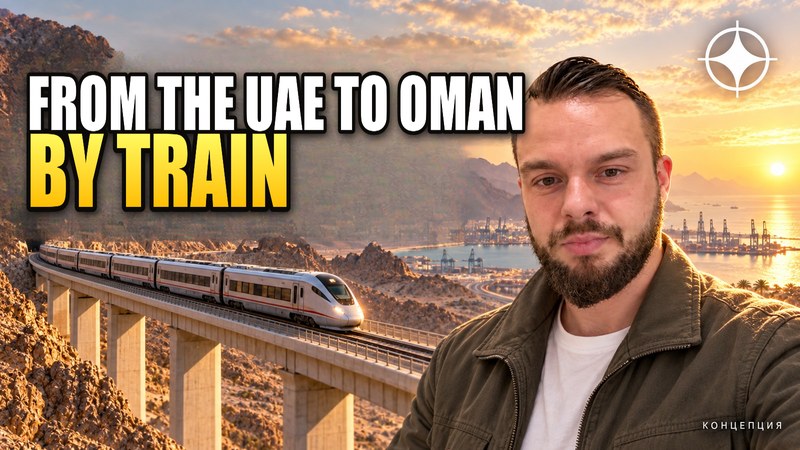
Hafeet Rail is a $2.5bn joint venture between Etihad Rail, Oman Rail and Mubadala: 238km from Abu Dhabi through Al Ain to the Omani port of Sohar. The passenger service will run at up to 200km/h; as of spring 2026 the line was 40% complete, and Oman ratified the agreement in September.
The Omani transaction differs from the Dubai one on a single defining point: a foreigner’s right to buy comes from the status of the property, not from the status of the buyer.
The Omani rental market splits exactly in half, and both halves work unlike Dubai’s. Mixing them in one calculation is not possible — different occupancy, costs and horizon.
Oman for a foreigner is not a whole country but a set of tourism complexes along the coast. The two main addresses inside that set work on fundamentally different principles.
A Gulf country, and the tax picture matches: no personal income tax, no annual property tax. As with its neighbours, no tax does not mean no cost — and the main costs are not tax.
The Omani market for a foreigner is arranged simply and strictly: purchase is possible only inside integrated tourism complexes. Outside them, nothing is sold.
On the north-east of the map there is a place that looks like a printing error. There are only two arrangements like it in the world — and the way the border was drawn is the interesting part.
Mira Developments unveils a waterfront destination within Hawana Salalah, combining branded residences, villas, five-star hospitality and resort services.
Telegram is the fastest way — I answer personally.
Message on Telegram