Production City: a district built around one industry
A media and printing free zone with housing around a lake. When demand rests on one industry, that is both the strength and the single point of failure.
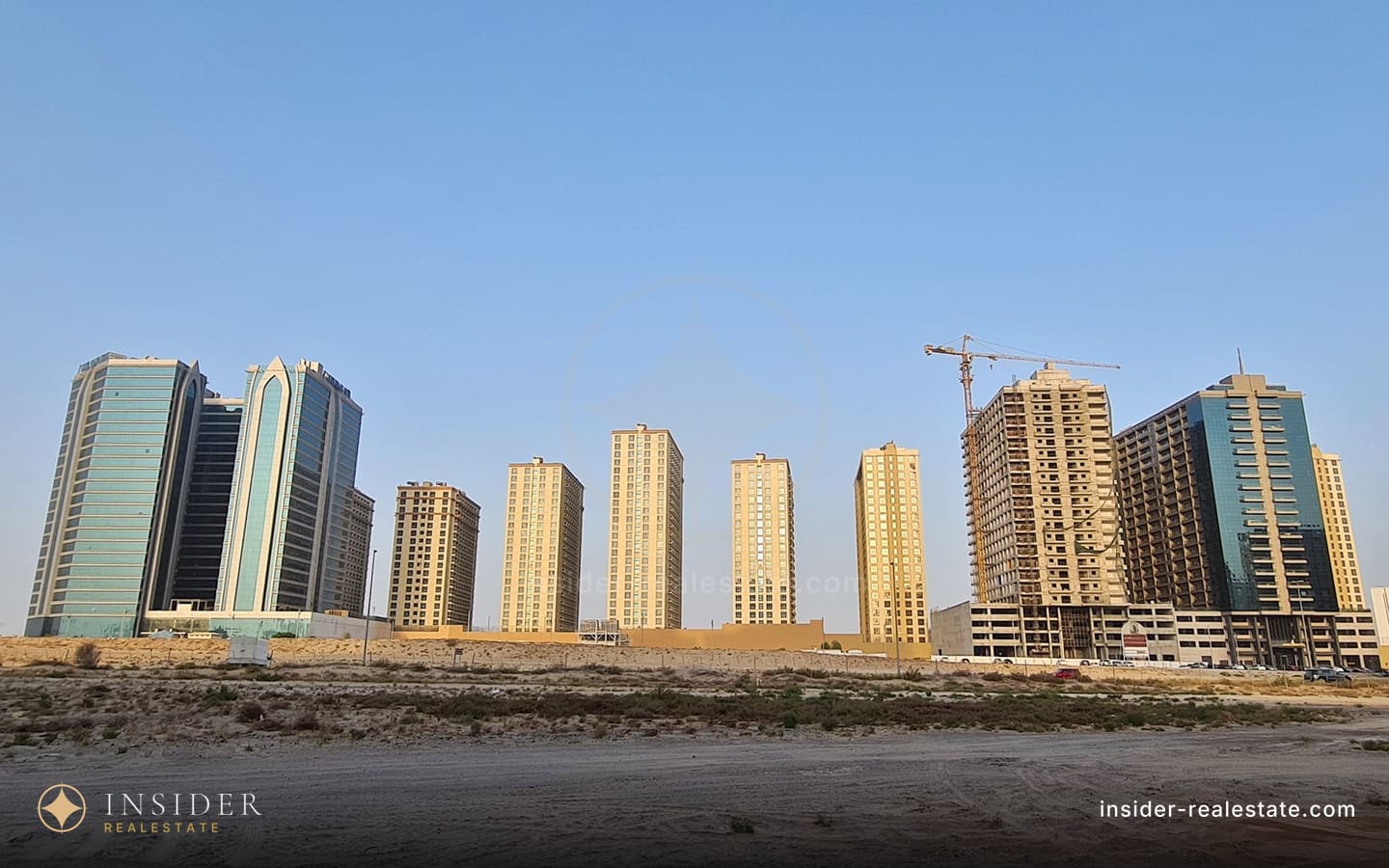
Production City is a media and printing free zone with a residential quarter built around a lake. Demand for that housing rests on the industry next door, and that is worth treating as a distinct property of the asset.
The strength of an industry district
- The tenant is defined and close. People working in the zone rent nearby for the short commute, and that is why they renew.
- Demand does not follow city-wide fashion. While the zone's companies are hiring, the housing lets, whatever is happening to the popularity of neighbouring clusters.
- Prices below the central districts for comparable space — that is why people choose it.
- Occupancy is often published. Free-zone operators disclose it, which is a rare case of an investor having a leading indicator for their own rent.
The point of failure
- An industry can shrink or relocate. Demand tied to one cluster of employers is robust exactly as long as the cluster is there.
- Replacement demand is thin. In a city district a departing tenant is replaced by anyone; here, by someone who works nearby, and that pool is narrow.
- This is not a reason to avoid the district — it is a reason not to treat its rent as being as diversified as a central district's, and to price that in.
What to check
- Ownership form for the specific building. Free-zone districts are not uniform, and this determines which banks will lend — and therefore who can buy from you later.
- Published occupancy for the zone and its direction over several years, not a single figure.
- Achieved rents and void periods inside the district, from live listings.
- What else is in your building — offices and homes often share towers here; establish whether entrances and lifts are separated.
- Service charge and any zone-level charge. Dubai has no annual property tax; these replace it.
- The commute at peak and parking.
Who it is wrong for
Anyone who treats this demand as equivalent to city-wide demand, and anyone who skipped the ownership question.
Based on the Dubai Land Department register and the published structure of the zone.
Talk to a licensed broker: 📲 +971 50 120 32 64 on WhatsApp, @dubai_oleg on Telegram
In the news
Other write-ups on the site about the same thing.

Production City: how to check free zone occupancy before buying to let
In a sector-based district, housing demand comes from the companies nearby. Their number and occupancy can be checked, and they are the best leading indicator you have.
Dubai Studio City: choosing between three adjacent clusters
Studio City, Production City and Sports City sit side by side at similar prices. They differ in three ways, and each is checkable before you buy.
Dubai Silicon Oasis: a free zone people actually live in
A technology park with housing inside it and universities alongside. Ownership is not the standard freehold, and the tenant pool comes with an academic calendar.
Barsha Heights / TECOM: a business district you can live in
A free-zone cluster of towers mixing offices and homes. The ownership form varies by building, and the tenant is defined by the companies next door.
Dubai Design District: a district built for one profession
A quarter for design, fashion and creative business, with housing among it. Demand here is occupational and narrow — which is both its strength and its single point of failure.
Jebel Ali: the transport corridor and what it means for housing — check the distance to the metro
A port, a free zone and residential clusters along the main highway and the metro line. Here what counts is not the district but the distance to a specific station.
Below market in Production City right now
From the daily off-market feed. Availability and price are confirmed on request.
All below-market listings →