
The Gulf neighbours: Qatar, Oman, Saudi Arabia and Bahrain compared
Every Gulf state now has a property-linked residence of some kind. They differ in what they cost, what they permit and how deep the market behind them is.
Every Gulf state now offers a residence linked to property or investment. Anyone comparing them against the Emirates should know how they differ in substance rather than in brochure.
Qatar
- Property in nine freehold zones and sixteen usufruct zones; residence attaches to ownership above a threshold, with an enhanced status including access to state healthcare and education above a higher one.
- No personal income tax, no annual property tax, a currency pegged to the dollar.
- A small, largely regional market with limited transaction data — the exit is measured in seasons.
Oman
- Foreign ownership only inside integrated tourism complexes, with residence for the owner and family while the property is held.
- Separate long-term investor residence categories exist alongside it.
- No personal income tax; a narrow market and a quiet, low-rise country that is the point rather than the drawback.
Saudi Arabia
- Premium residency, in permanent and renewable forms, granting the right to live, work and own property without a local sponsor — a fundamental change from the historic kafala arrangement.
- Property ownership by foreigners has been progressively opened, with new legislation extending it to defined zones from 2026, excluding the holy cities in the ordinary case.
- The largest economy and the deepest domestic demand in the region, and the least established regime for foreign ownership.
Bahrain
- Golden residency on property ownership above a threshold, on income, or on long prior residence — one of the more accessible in the region.
- Freehold ownership permitted in designated areas, with a long-established expatriate community.
- A small market closely linked to Saudi demand across the causeway, which is both its support and its concentration risk.
How they compare with the Emirates
The Emirates' advantage is not the tax position, which the others share, nor the residence, which they all now offer. It is depth: published transaction data, a functioning secondary market, international buyers from everywhere rather than from the region, and the ability to sell in weeks rather than seasons.
The neighbours compete on price and on being quieter. For a buyer whose objective is a home and a status, several of them are entirely rational. For one whose objective includes being able to exit, the depth difference is the whole comparison.
Talk to a licensed broker: 📲 +971 50 120 32 64 on WhatsApp, @dubai_oleg on Telegram
Video on this topic
The same subject on the English channel — each clip has a written version of its own.


Request a consultation
Leave your name, phone and the country you have in mind — I will come back with what your situation actually allows: which status is realistic, what it takes and how long it runs.
- An answer for your country and your circumstances, not a brochure
- What it takes: documents, timelines, the order of filing
- How to tell an operator from someone selling a deposit
Rather not leave a number? Write to me directly: WhatsApp or @dubai_oleg.
Your details
Related reading
Neighbouring write-ups in this section and news on the same subject.

Your own Red Sea island: Saudi Arabia opens sales on Laheq Island from $1.6 million
Saudi Arabia real estate is going global: Laheq Island, a 400-hectare private island on the Red Sea, offers villas from SAR 17.6 million and apartments from SAR 5.9 million. Who is building it, what the masterplan includes and whether buying property in Saudi Arabia makes sense yet.

Saudi Arabia opens its property market to foreigners from 2026
From January 2026 foreign investors may own property in Saudi Arabia with few restrictions. Individuals, companies, funds and SPVs qualify; Mecca and Medina keep a special regime. What it means for competition with Dubai.
Who bought off-plan property in Dubai in 2025: India, the UK, China, Saudi Arabia
Indian nationals are the largest group of foreign off-plan buyers. The shares of British and Chinese buyers grew noticeably, Gulf states were active, and Russian demand concentrated in the premium segment.

Qatar residency: work sponsorship, permanent status and property rules
One of the most closed systems in the Gulf, where almost everything depends on your employer. Covers the available grounds for residency, the rare permanent-resident status, and property ownership rules.
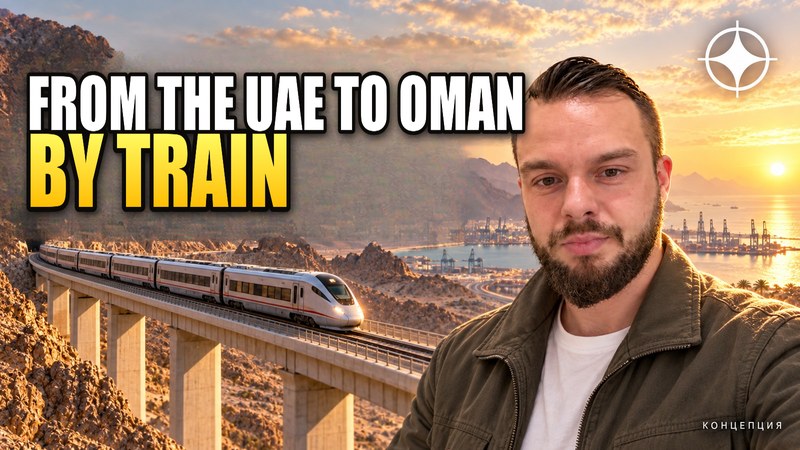
Hafeet Rail: the UAE–Oman railway, Abu Dhabi to Sohar in 100 minutes, and 40% built
Hafeet Rail is a $2.5bn joint venture between Etihad Rail, Oman Rail and Mubadala: 238km from Abu Dhabi through Al Ain to the Omani port of Sohar. The passenger service will run at up to 200km/h; as of spring 2026 the line was 40% complete, and Oman ratified the agreement in September.
A property transaction in Qatar: registration, settlement and what to check in the contract
A market where the right to buy is settled before the price. So a transaction starts not with a viewing but with establishing which zone the property is in and what right is transferred there.
This write-up is published for information only. It is not legal or tax advice and does not replace a qualified adviser in the relevant jurisdiction. Programme terms, timelines and requirements change — check them against the rules in force on the day you apply.