
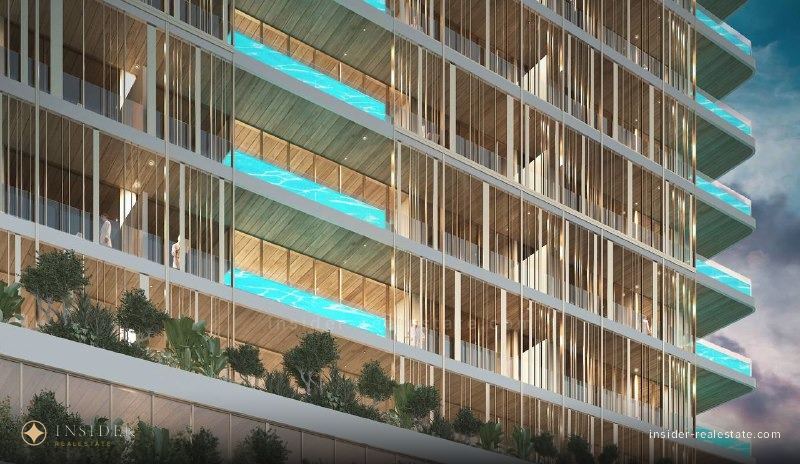
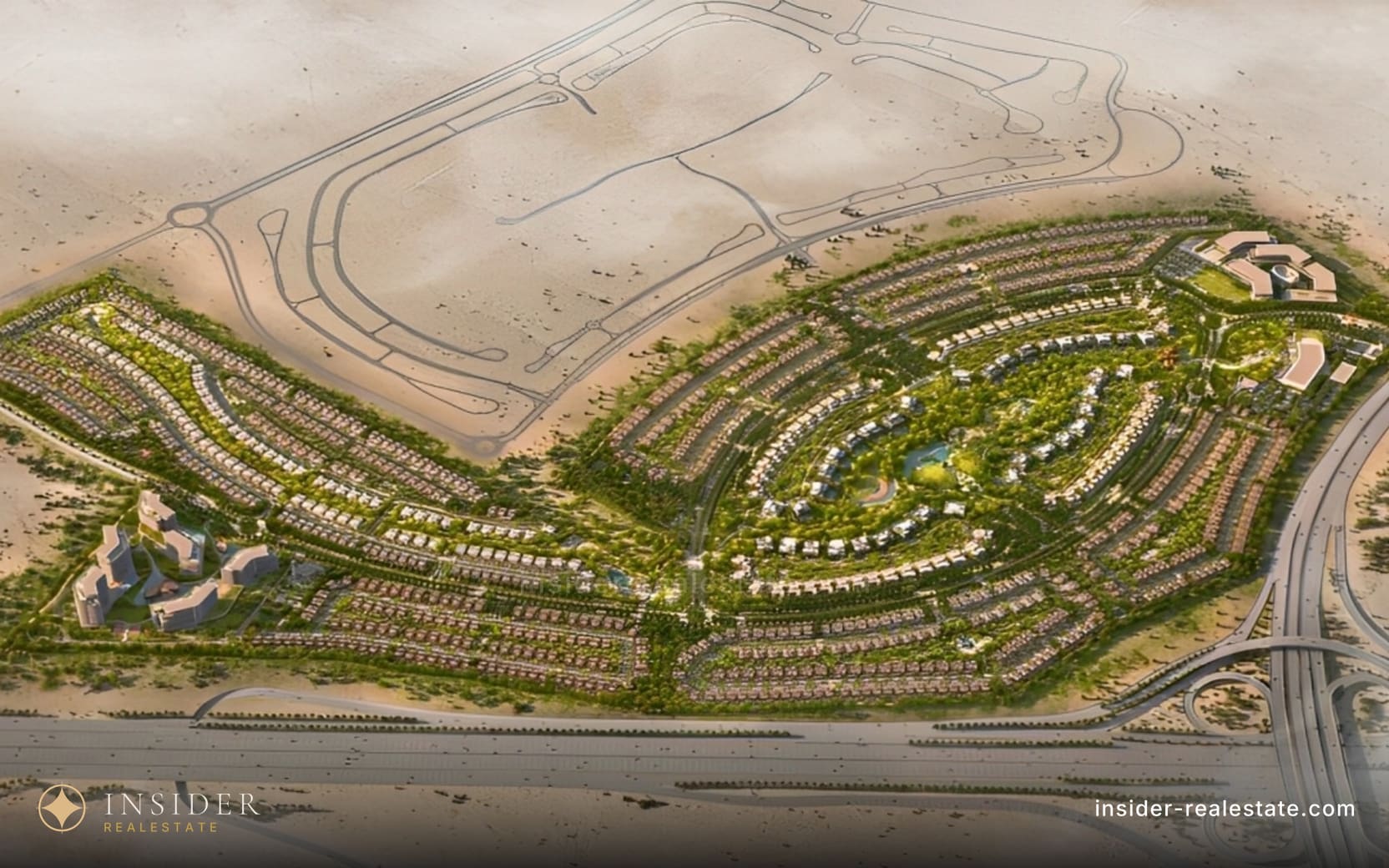
 Photo of the community −32%
 Peace Homes Development
A small mid-market developer that sets itself apart from dozens of competitors in outer Dubailand with one specific move — a man-made lagoon at the heart of the project — and that move deserves a level-headed reading: an amenity with an ongoing running cost, not a free marketing bonus.
6 lots in stock across 4 projects. Of the 6 with a known status: 0 ready, 6 under construction. By median price — 121st of 138.
- Visual distinction among cookie-cutter district housing
- Short-let rental, where a lagoon photo lifts bookings
- Buying for your own comfort, not only for rental yield
- A reasonable entry price in an outlying but growing district
Median price $265K AED 975 000
Entry price $163K AED 599 000 — the cheapest lot
Per square foot $284 AED 1 044 / sq.ft, median
Completed stock 0% 5 lots discounted, deepest −32%
Where they build
The districts where this developer has the most lots in our stock.
Dubailand 5 Wadi Al Safa 1
The company in brief
Checkable facts about the developer itself. Unlike the figures above, these are not about our stock and do not move with what happens to be listed today.
- Base
- the company's office is based in Jumeirah Village Circle
- Flagship project
- a lagoon-centred residential complex in a Dubailand residential cluster — a high-rise tower with a large number of units, organised around a man-made lagoon
What kind of developer this is
Who they are, and what their main bet is
The company is a small mid-market developer, run from an office in one of Dubai's densest residential districts while building in an outlying part of Dubailand. Its flagship project stands out among dozens of similar developers in the district through one specific choice: a central man-made lagoon around which the whole residential complex is organised — water features have, in recent years, become a standard way for mid-market Dubai developments to visually differentiate themselves.
That bet on a specific architectural idea is typical of a small developer without a recognised corporate name: rather than competing on brand reputation, the company competes on a concrete, easily photographed distinction that performs well in sale and rental listings and speeds up the decision of a buyer choosing between otherwise near-identical buildings in the district.
What the water feature genuinely delivers
A lagoon works on several real levels: it creates a visible distinction among the district's largely uniform housing stock, which in listings and photographs translates into faster leasing and selling; it measurably alters the microclimate and the feel of the courtyard through evaporation and surrounding landscaping, which in this climate is a practical benefit rather than cosmetics; and it delivers a view that isn't just the neighbouring building's wall — a rarity in dense mid-market districts.
These are genuine, not merely marketing, advantages, and that's what separates an honest water feature from a decorative pond built for renders. But acknowledging those upsides doesn't change the fact that a lagoon remains an engineered system requiring ongoing maintenance, not a landscape element that takes care of itself once the building is handed over.
What a lagoon costs every year
Filtration, circulation and water treatment run continuously, not seasonally, and the equipment has a service life, after which it needs replacing out of the building's reserve fund. In this hot desert climate an open body of water constantly loses volume to evaporation and needs regular topping up, and algae control at high temperatures is a year-round task rather than a one-off pre-season clean.
All of this ultimately lands in the annual service charge, and in a mid-market project where the rent itself is modest while the lagoon costs what it costs regardless of the building's price bracket, the gap between the amenity's appeal and its real running cost can end up working against the buyer if it isn't calculated in advance.
The one question that settles everything
Does the lagoon lift the rent more than it lifts the service charge? There's no single answer for every case: on short-let rentals, where a courtyard photo directly drives booking numbers, the effect is often positive — an attractive visual converts into occupancy. On long-term rentals in the same mid-market segment the answer is often different, because that tenant sorts listings primarily by price rather than by how attractive the shared courtyard looks.
This is checkable through live listings in comparable buildings in the district — both with and without a water feature — and the answer turns out to be specific to that cluster, not a general rule for the whole Dubai market. That comparison is worth doing before buying, rather than relying on the intuitive sense that water always adds value.
Location and resale market
The project sits in an outlying part of the city, and that shows up in the entry price — outer Dubailand traditionally offers more floor area for the same money than more central districts, at the cost of a longer commute to the business centre. How densely the area around a specific building fills in and populates over the same years is an important factor for future liquidity, and it's worth judging on what's actually built rather than on the territory's masterplan.
The resale market here is young, and a deep resale history hasn't yet built up for this specific complex, so a buyer has to rely on the trajectory of the whole cluster of lagoon projects in this part of Dubailand rather than on individual sales within one building.
Who it suits, and who it does not
This developer suits investors targeting short-let rental, where an attractive water feature pays for itself directly through bookings, and buyers who want the amenity for their own daily life and have already worked out the real size of the service charge rather than going by the marketing photo alone.
It doesn't suit a long-term-rental investor who hasn't compared the rent uplift against the lagoon's annual upkeep cost — in this segment the gap may not pay for itself. Nor does it suit anyone unwilling to commute further from the city centre in exchange for a larger apartment for the same money.
Projects by Peace Homes Development
All projects →Peace Homes Development listings in stock
All stock → Photo of the community −32% 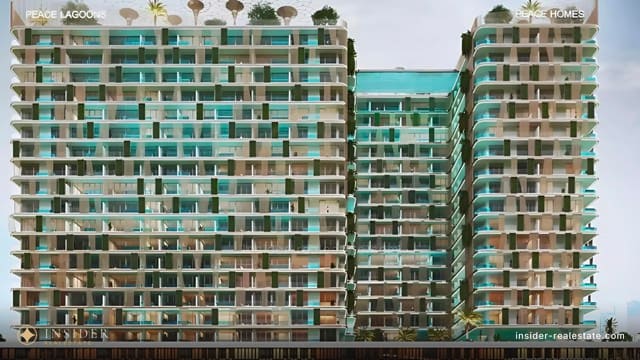 −32% Photo of the community −18% −18%
  Photo of the community −6%
 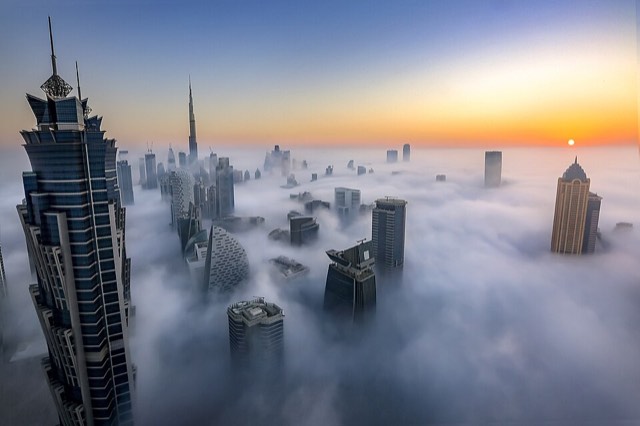 Illustrative photo
 What these numbers mean, and what they do not
The developer is inferred from the project name — there is no developer column in the base. So the figures describe our stock, not the company's share of the Dubai market: a developer sitting on an enormous volume of completed housing can look smaller here than one whose projects reach the resale market more often.
These are asking prices, not closed transactions. For a specific building I pull the registered Land Department sales and show where deals actually closed.
In the news
Peace Homes Development: what a lagoon costs to keep
A mid-market developer building a lagoon-themed project in Dubailand. Water features are the current standard amenity — here is what they actually add and what they take every year.
Other developers
All developers → Questions
Peace Homes Development: questions and answers
How much does a Peace Homes Development apartment cost?
The median across this developer's lots in our stock is $265K (AED 975 000), with entry from $163K. The median per square foot is $284. The figures come from asking prices in our base, not from the Peace Homes Development price list, and they are recalculated nightly to reflect what is actually for sale today.
Are there discounts on Peace Homes Development property?
Right now the base holds 5 lots from this developer priced below the market, with the deepest cut at 32%. The discount comes from the seller on a resale or an assignment, not from the developer: they have their own reason to exit quickly. The size of the cut is computed against comparable property by an algorithm, not typed in by a broker.
What projects is Peace Homes Development building?
Our catalogue holds 2 projects by this developer, each with a building passport: storeys, unit count, handover date, the mix of bedrooms. The list is on this page, and the districts where the developer has the most lots in stock are in the “Where they build” block. Under each project sit the lots on sale, where there are any.
Should I buy from Peace Homes Development direct or through a broker?
The price is the same: on off-plan the developer pays the broker’s commission, not the buyer, so going straight to the sales office saves nothing. The difference is elsewhere — a developer’s sales office shows its own projects only, and will not tell you that the same thing next door is cheaper or that this project is running later than advertised. On resale and assignment the commission is the standard 2% plus VAT.
Is Peace Homes Development worth buying
That depends on what you buy and why. Describe the budget and the aim — I will point out which of this developer’s buildings are justified today and which are better left alone.
Ask on WhatsAppAsk a question
Telegram is the fastest way — I answer personally.
Message on Telegram