
 −8%
−8% Al Barari
A family company that has, from day one, built not houses but one large botanical estate: less than half the land goes to villas, the rest is hand-planted landscape grown over two decades.
1 lot in stock across 1 project. Of the 1 with a known status: 1 ready, 0 under construction. By median price — 2nd of 139. The company was founded in 2005.
- A home for living, not for renting out
- Space and privacy
- A long ownership horizon
- Buyers comfortable with a high annual charge
Median price $16M AED 59 500 000
Entry price $16M AED 59 500 000 — the cheapest lot
Completed stock 100% 1 lot discounted, deepest −8%
The company in brief
Checkable facts about the developer itself. Unlike the figures above, these are not about our stock and do not move with what happens to be listed today.
- Founded
- 2005, a private family company
- Founder
- Zaal Mohammed Zaal, a Cambridge graduate
- Land
- 170 hectares, 34 themed gardens, over 16 km of man-made lakes and streams
- Generational handover
- operational leadership has passed to Hazza Zaal, the next generation of the family
- Awards
- "Sustainable Development of the Year" and "Best Real Estate Project Luxury Residential" at 2017 industry awards
What kind of developer this is
What it is, and where the idea came from
Al Barari is not a developer in the usual sense of buy a plot, build a house, sell it — it is one family's project, started in the mid-2000s to do something the city barely had: an estate where land given to greenery outweighs land given to floor space. The founder was educated in the UK and brought an approach rare for this market — the company spent years growing the garden before it started selling the homes around it.
That is a fundamentally different project economics from a typical villa-community developer: a large share of the budget goes not into foundations and finishes but into landscaping, irrigation and years of upkeep ahead. The company is effectively building a park with villas for sale inside it, not villas with landscaping around the edges, and that difference is visible from the first step onto the grounds.
Why buyers pay for it, and why it cannot be repeated
Dubai has almost no undeveloped land left near the centre, and what remains shrinks every year. The company secured its low-density plot two decades ago, when land near the city cost an entirely different amount, and since then this kind of project has become physically impossible to repeat in a comparable location — no other developer holds a comparable reserve of central land dedicated to garden rather than floor space.
The industry recognition the company received for its environmental approach is not a marketing phrase — it reflects a project genuinely run differently: the price per square foot is not the only number that counts, so is how much water, planting and staff the grounds require every year. For a buyer that translates into something concrete — a high but predictable annual charge that should be read from the actual figures, not treated as an abstract risk.
A generational handover at the top
The company has reached a point many family developers in the Gulf eventually reach: operational leadership passing from the founder to the next generation of the family. That is both a continuity signal — the heir is carrying the project forward rather than selling the asset off — and a point where it pays to look more closely at the details, since a leadership change inevitably brings some change in the management team, contractors and near-term priorities.
In practice this means newer phases should be judged not by the reputation accumulated over twenty years of history but by how they are specifically being built now, under the new leadership. That is not a red flag — continuity within one family usually preserves a project's philosophy better than a sale to an outside investor — but it is the current execution, not just the past, that is worth verifying.
The product, and its limits
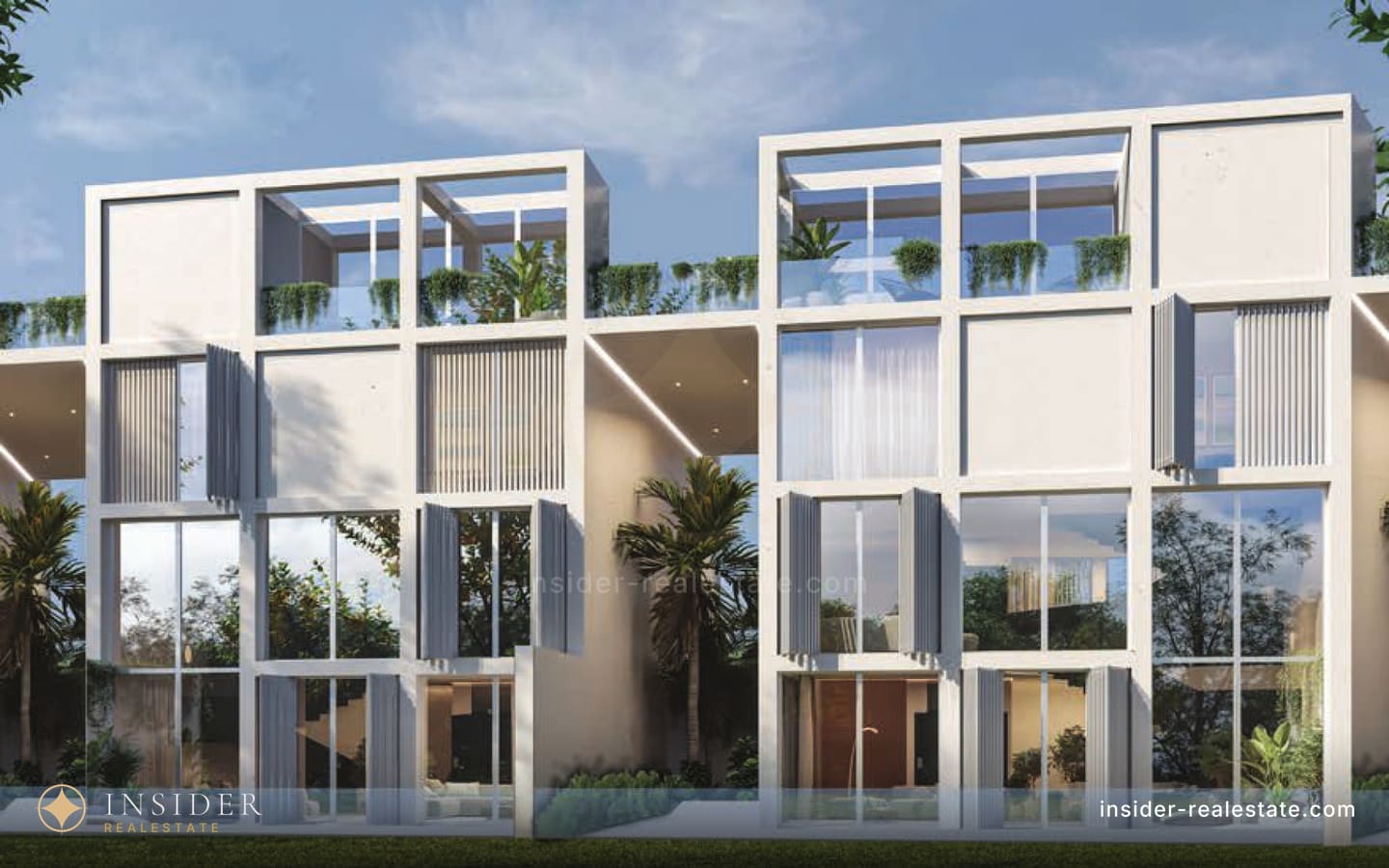
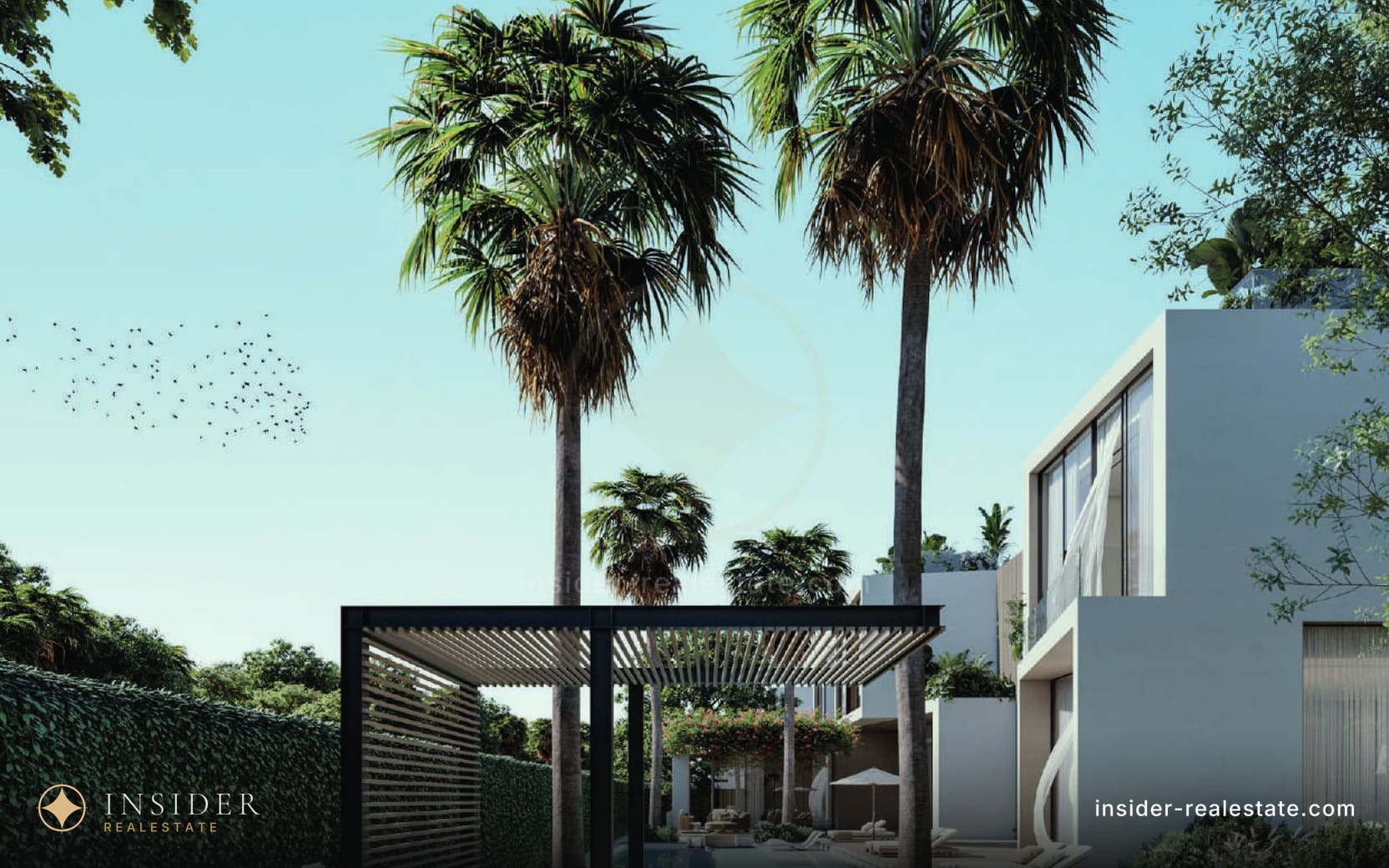
The company's portfolio is villas and clubhouse-style residences spread across several distinct quarters within one large estate, each with its own name and character, ranging from intimate clustered homes to standalone villas with their own garden. All of them share one logic: the house is part of the landscape, not an object placed on a plot and fenced off from it.
This is a deliberately narrow product. The company does not build apartments, does not expand into other districts of the city, and does not try to reach a buyer on a small budget — the whole line-up is aimed at people buying a home to live in for years and willing to pay for maintaining grounds at this scale. Anyone looking for a rental unit or a short-term flip has nothing to look at here.
The resale market
The buyer pool for this product is narrow and specific: people for whom space and greenery matter more than a high-rise view, and who understand what maintaining grounds at this scale actually costs. Sales here take longer than in the mass segment — that is a structural feature of the product, not a signal of trouble with a particular house.
But for the few who specifically want this product, there is almost no real alternative in the city: a private estate with this much mature landscape cannot be built again, because there is no land left near the centre to do it on. That is the rare case where scarcity works in the owner's favour on resale, even if the sale process itself is not fast.
How I work with its properties
For any house in Al Barari, the first thing I pull is several years of community-charge history and exactly what it covers — irrigation, upkeep of shared gardens, estate security; the list for a low-density estate at this scale is longer than for an ordinary residential complex, and it needs to be read line by line.
From there I look at the specific house and the specific garden around it — here, unlike a typical tower, the neighbouring plot and what grows on it is literally part of the deal. And separately, I ask who is actually managing the grounds today — the same team from the founder's era, or a new one that arrived with the generational handover.
Projects by Al Barari
All projects →Al Barari listings in stock
All stock → −8% What these numbers mean, and what they do not
There is no “developer” column in the base — a lot is attributed by its project name. The figures on this page speak about our stock, not about the company’s share of the Dubai market: a large developer with a big completed portfolio may appear smaller than one whose units come up for resale more often.
Prices come from listings, not from closed deals. For a particular building I retrieve the registered Land Department sales and show the real closing prices.
In the news
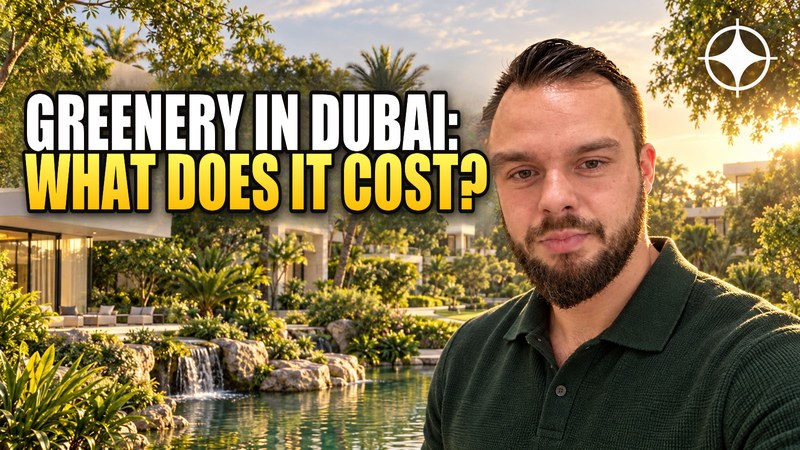
Al Barari: half the land given to greenery, and what that costs every year
A very low-density community built around planted landscape. Low density is the rarest product in Dubai — here is what it delivers, and the recurring cost that pays for it.
Al Barari: the greenest community in Dubai, and the three separate markets inside it
More than 60% of the site is gardens and water, and one address contains three different products — Ixora, Chorisia and the Estate Villas, with medians from AED 8.55m to AED 41.75m. Why a single average for the community means nothing.
Palm Jumeirah, Jumeirah Islands, Al Barari, Emirates Hills: prime villas in H1 2026
Across four prime communities 124 villas changed hands in the half against roughly 190 a year earlier — down about 35%. Median deal value rose in all four. Both facts are true, and neither means what the headline says.
Other developers
All developers → Questions
Al Barari: questions and answers
How much does a Al Barari apartment cost?
The median across this developer's lots in our stock is $16M (AED 59 500 000), with entry from $16M. These are asking prices out of our own base, recalculated every night; they follow what the developer and its sellers actually have on the market, not the price list on a corporate site.
Are there discounts on Al Barari property?
Right now the base holds 1 lot from this developer priced below the market, with the deepest cut at 8%. The discount comes from the seller on a resale or an assignment, not from the developer: they have their own reason to exit quickly. The size of the cut is computed against comparable property by an algorithm, not typed in by a broker.
Is Al Barari a reliable developer?
Founded: 2005, a private family company. Check Al Barari in the Land Department’s open register, not in the marketing: licence status, per-project construction progress and the registered escrow account are all there. Off-plan payments land in that escrow under RERA supervision and reach the developer only against verified construction milestones. The full dossier is further up the page.
What projects is Al Barari building?
Above on this page: 3 projects by Al Barari from our catalogue, each with a passport covering floors, units, handover and bedrooms. Lots on sale, when there are any, sit right under the project.
Should I buy from Al Barari direct or through a broker?
Money-wise there is no difference: on off-plan the broker is paid by Al Barari, not by you, so calling the sales office direct saves nothing. What differs is the view — the developer’s sales team sells only its own buildings and will not mention that the same unit costs less next door or that this project hands over later. On resale and assignment the commission is the usual 2% plus VAT.
Is Al Barari worth buying
It depends what you are buying and why. Send me your budget and the job it has to do — I will tell you which of this developer's projects make sense right now and which I would walk past.
Ask on WhatsAppAsk a question
Telegram is the fastest way — I answer personally.
Message on Telegram