
The largest Dubai developer’s revenue rose 65% in a half-year
A developer’s financial statements are not obvious reading for an apartment buyer, but they answer the main question: will the company finish what you are paying for?
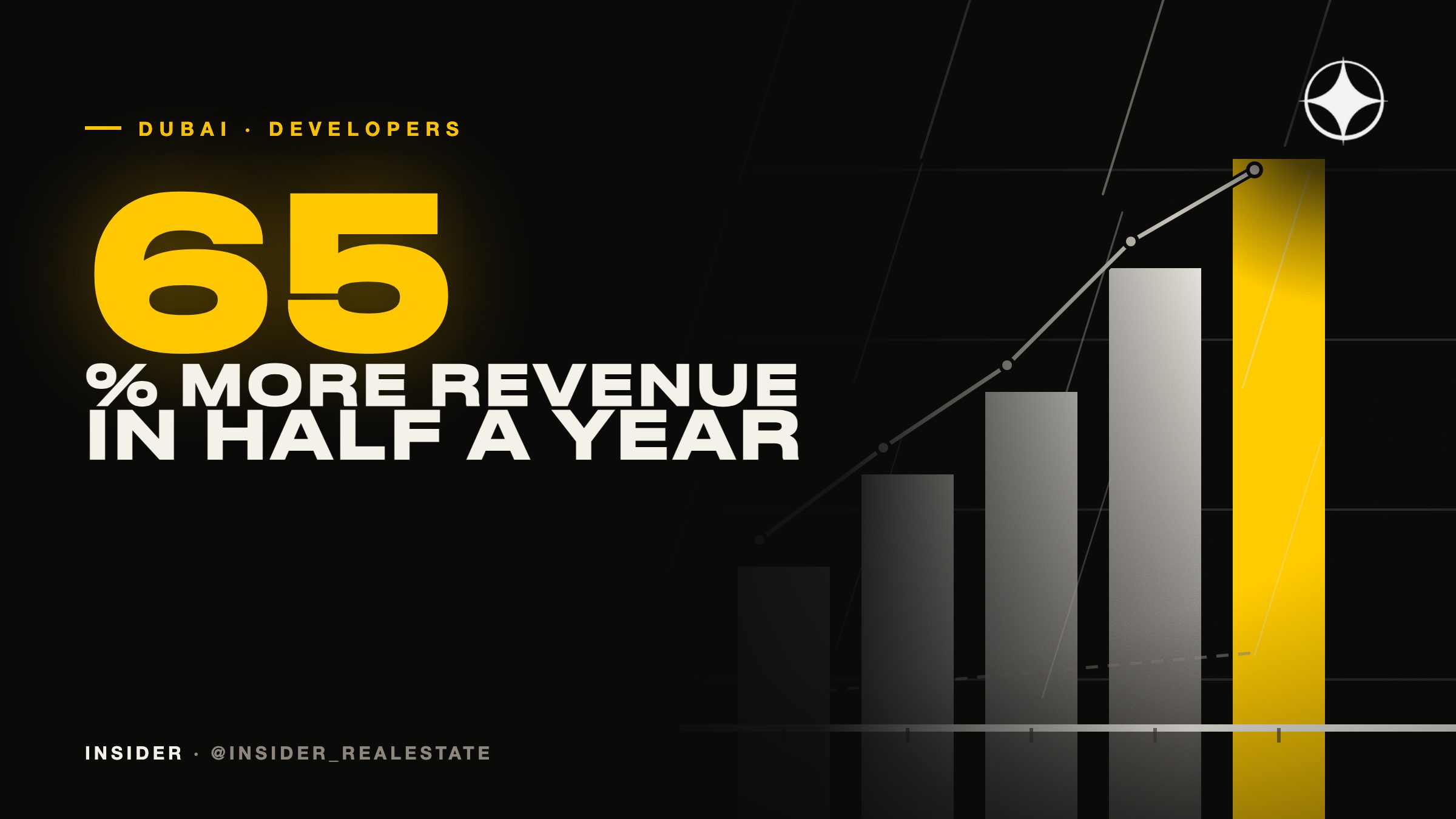
A developer's financial statements are not the most obvious reading for an apartment buyer, but they answer the main question: will the company finish what you are paying for?
First-half 2024 results
- Revenue: AED 7.3bn (about $2bn) — up 65% year on year.
- Operating profit before depreciation: AED 3.4bn ($922m) — up 47%.
- Market share: around 22%, which the company planned to hold through the second half.
Over nine months of the year, group revenue reached $4.2bn.
Why a buyer should know this
Off-plan housing is paid for in advance. The buyer is effectively lending to the construction and receives the goods in three or four years — so the seller's solvency matters, not only the beauty of the render.
Talk to a licensed broker: 📲 +971 50 120 32 64 on WhatsApp, @dubai_oleg on Telegram
- Rising revenue means money arriving for projects and the ability to fund the contractor.
- High margin gives a buffer against material cost inflation: the company can absorb a rise in build cost rather than halt construction.
- A steady market share is evidence of demand, and therefore of liquidity at resale.
What the statements do not show
Financial results do not guarantee that a particular project meets its dates: delays happen to large players too, most often because of a contractor or approvals. And they say nothing about finish quality — that is only checked by inspecting the developer's completed buildings.
Practical advice: before buying, go and look at a completed property by the same developer, preferably two or three years old. A newly handed-over building always looks good; the question is how it looks after a couple of years in use.
Video on this topic
The same subject on the English channel — each clip has a written version of its own.
 19:45Oceano on Al Marjan Island: the Luxe Developers project and the island being built around it14 August 2026
 28:23Peninsula Four The Plaza by Select Group: what you are actually buying2 March 2025
 1:38Binghatti Hills at Arjan: the volume play, examined10 September 2025
 1:31Binghatti Haven in Dubai Sports City: cheap for a reason, or cheap for a good reason?9 September 2025


In the news
Other write-ups on the site about the same thing.
186 new developers appeared in Dubai in seven months — about 25 a month
The inflow makes sense from the developer’s side. From the buyer’s side it says the opposite thing, and a licence in the Land Department register is not the answer to it.

The developer raised the price the day before signing: how that risk works
A broker and a developer had agreed a specific unit, the buyer had confirmed and sent documents, the deposit meeting was booked. The day before, the price went up. Why this happens with new entrants, and how to close the gap.
Land Department registration does not make a developer reliable: eight questions first
Every developer selling off-plan in Dubai has a registration and an escrow account. That is not an achievement, it is the condition of entry — and buyers read it as a guarantee.
LIV Real Estate: one district, and what concentration does to risk
A boutique developer working almost entirely in Dubai Marina. Why a single-district portfolio is both the strongest and the weakest thing about a company like this.
Azizi Developments: a volume model, and why the programme is the risk
A company running a large number of simultaneous projects in the mid-market. What the volume model implies, how to verify a delivery record, and what density does to achieved rents.
ORO24: rapid scaling in the mid-market, and how to price that risk
A developer that built a large pipeline quickly in Arjan and the growth clusters. What to verify when the pipeline is bigger than the delivery record.