
Taxes and fees in Qatar on a property purchase: what does not exist and what is paid
Qatar belongs to a small group of countries where the list of taxes on a private owner is almost empty. That is true, and it is also the main trap.
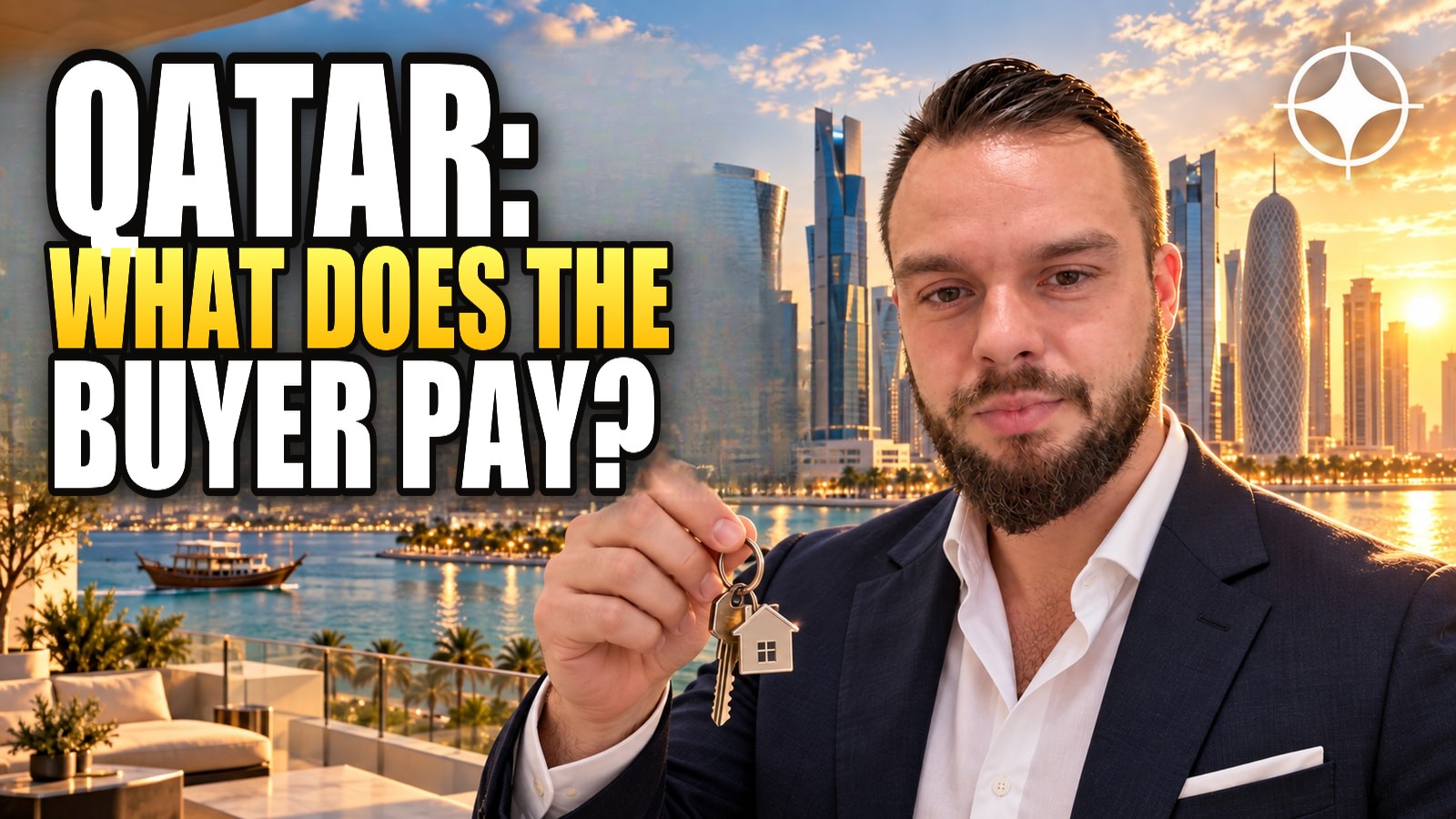
Qatar belongs to the small group of countries where the list of taxes on a private property owner is almost empty. That is true, and it is also the main trap: no tax does not mean no cost, and a zero rate in one country does not remove the rate in another — the one where you are tax resident.
What Qatar does not have
- Personal income tax. Salary, rental income and an individual's investment income are untaxed.
- An annual property tax. No equivalent of the European municipal ownership tax.
- Capital gains tax for individuals. The difference between purchase and sale is not taxed for a private owner.
- Inheritance and gift tax. They do not exist in the Qatari system as a category.
What is paid
- A registration fee on transfer. A small percentage of the value, paid at the registry. A one-off, and an order of magnitude below European transfer tax rates.
- Complex service charge. Calculated per square metre a year, and on premium master plans it becomes the owner's main annual cost — occupying the place property tax takes in other countries.
- Utilities and insurance. Standard costs, but in a Gulf climate air conditioning makes them noticeable.
- Legal and valuation costs. A valuation is needed not only by a bank but by you, if the purchase is being made for a residency threshold.
Where a zero rate is misleading
First: individuals and companies are taxed differently in Qatar. A legal entity with foreign participation pays corporate profit tax, so buying "through a company" is not automatic optimisation but a different regime that has to be modelled separately.
Second, and more important: the Qatari zero says nothing about your own tax country. If you are tax resident in a state that taxes worldwide income, income from Qatari rent and the gain on selling a Qatari apartment are declared there and taxed under those rules. No tax at source only means you have nothing to credit: there is no foreign tax paid to deduct.
Talk to a licensed broker: 📲 +971 50 120 32 64 on WhatsApp, @dubai_oleg on Telegram
Third: VAT. At the time of writing Qatar has no general value added tax, but that is the one item on the list around which there is constant movement in the Gulf — its neighbours have already introduced it. Planning a long transaction on the assumption that this point is permanent is unwise.
The practical conclusion
- Compare full costs of ownership, not rates. A zero tax with a high service charge can cost more than a small tax with cheap service.
- Calculate the tax in your own country, not in Qatar. That is where the obligation arises and where failing it has consequences.
- Do not buy through a company "for tax". In a country where an individual has no taxes, a company adds rather than removes them.
Video on this topic
The same subject on the English channel — each clip has a written version of its own.
 4:15Lamborghini villas in Meydan: half the price of Ellington, and why26 January 2024
 13:04The best townhouses in Dubai under USD 600 000: Nshama Town Square7 October 2023
 13:00Socio by Emaar in Dubai Hills: buying a whole floor, and skipping the 2% commission4 October 2023
 12:00XXII Carat on Palm Jumeirah: 22 Mediterranean villas compared with Raffles and Zabeel Saray20 September 2023
 25:03Harbour Lights by Damac and de GRISOGONO: prices, sizes and what the brand costs14 February 2023
In the news
Other write-ups on the site about the same thing.
Owner taxes and costs in Oman: what does not exist and what is paid
A Gulf country, and the tax picture matches: no personal income tax, no annual property tax. As with its neighbours, no tax does not mean no cost — and the main costs are not tax.
Owner taxes in Greece: ENFIA, the purchase charge and letting
An EU country with a full tax system, and holding property here costs more than in the Gulf. Not an argument against buying, but the costs are recurring and independent of occupancy.
Owner and landlord taxes in Georgia: rates and thresholds
Georgia belongs on the low-tax lists deservedly, but the reason is not one rate — it is that the system is territorial. And the annual property tax has an unusual trigger.
Lusail and The Pearl: how the Doha property market works
The law opened twenty-five zones to foreigners, but real liquidity and real turnover are concentrated in two of them. That is not a shortage of choice but a consequence of structure.
Taxes in Bali: what a villa owner pays and what a landlord pays
The tax side of Bali is discussed less often than the legal side, wrongly: it is what separates a promised yield from a received one. And the form of ownership changes all of it.
The end of non-dom in the UK: what changed for property owners
The regime existed for more than two centuries and was one of the reasons wealthy foreigners chose London. From April 2025 it is gone, replaced by a residence-based system.