
Phuket and Bangkok: two different property markets in Thailand
Thailand often appears in a buyer’s conversation as one market. It is at least two, with opposite logic — and mixing them into one yield figure is the most common error.
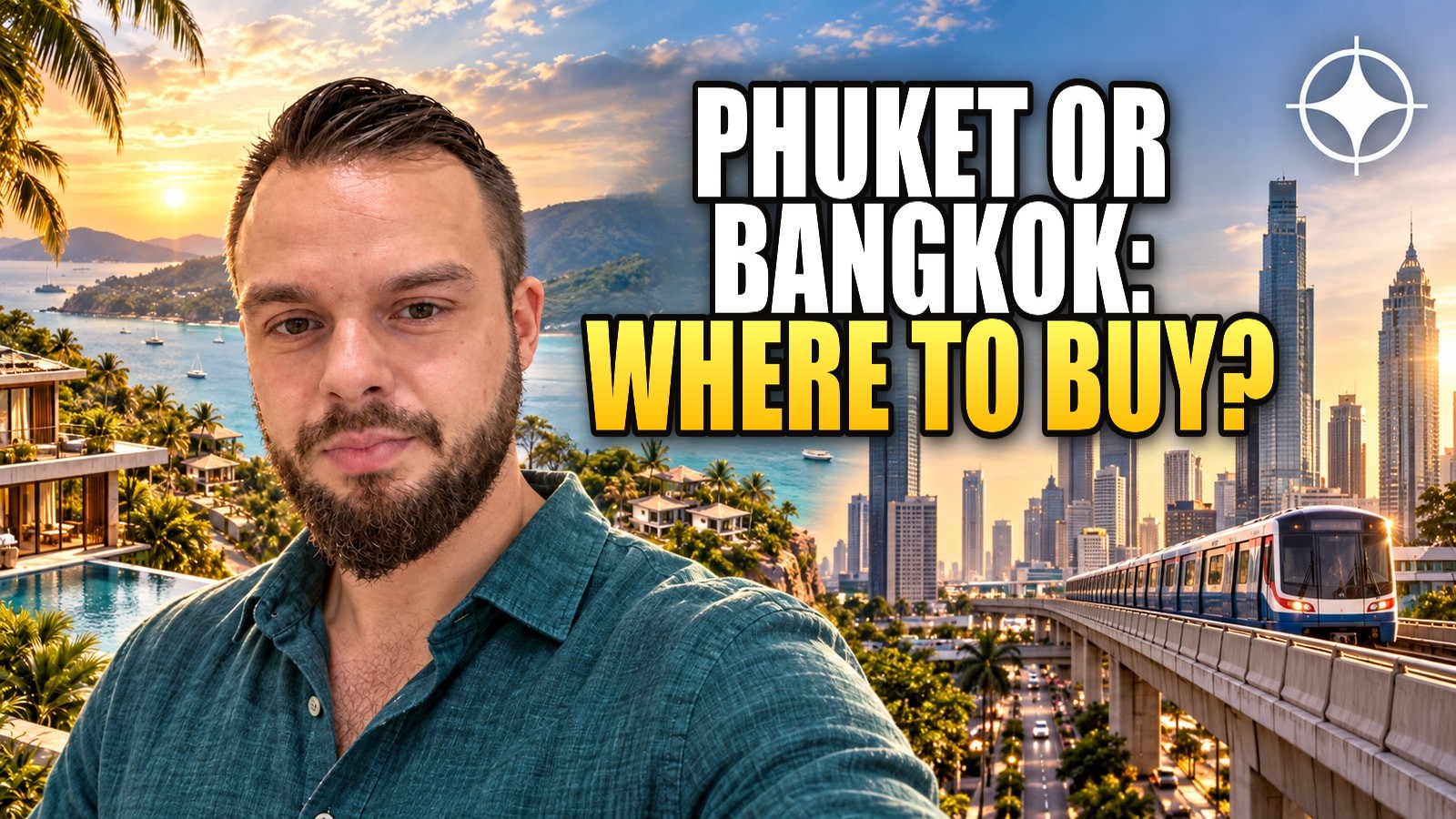
Thailand often appears in a buyer's conversation as one market. In practice it is at least two, with opposite logic: resort property earns from a visitor and lives by seasons; capital-city property earns from someone living in the city and works year-round. Mixing them into a single yield figure is the most common error in the calculation.
Phuket: income made by the season
- High and low season differ by multiples. The annual yield here is an average of very different months, and any promise of even income should raise a question.
- Management is compulsory. Nightly letting is an operating business: cleaning, check-ins, booking channels. Either a management company does it for a share, or you do.
- Developer-guaranteed yield is a common format on the island. Look not at the percentage but at the length of the guarantee, at what secures it, and at the price of the property: the guarantee is usually already included in it.
- A short-let licence. Without one, nightly letting is a breach rather than a grey area. That is a question about the project, not about your apartment.
Bangkok: income made by work and transport
The capital market is closer to any large city: the tenant lives and works, the lease is long, there is almost no seasonality. Different factors apply here.
- Walking distance to a skytrain or metro station is the main price factor in rent. A difference of five hundred metres changes both the rate and how quickly a tenant is found.
- Business clusters set demand: near them an apartment lets longer and more steadily.
- The volume of new supply. The capital builds densely, and in some corridors new blocks outnumber the growth in tenants — that presses on the rate before it presses on the price.
- Less operational work. An annual lease does not require daily management, and the manager's share of income is lower.
What they share
- The 49% quota. One rule across the country: foreign ownership is possible only within that share of a building's area, and in popular projects it runs out.
- The five-year mark on sale. A special tax on quick resale applies equally to the island and the capital.
- Maintenance charges. Higher at a resort — the owner pays for infrastructure that guests use.
How to choose between them
If the property is for yourself with occasional letting, that is a resort conversation, and what to calculate is the cost of ownership net of your own stays rather than a yield. If the property is for the rental flow, the capital's logic is more predictable.
Talk to a licensed broker: 📲 +971 50 120 32 64 on WhatsApp, @dubai_oleg on Telegram
Video on this topic
The same subject on the English channel — each clip has a written version of its own.
 8:54Address Sky View: the twin towers with the bridge, reviewed properly31 May 2024
 5:41Vida Residence Downtown: ready apartments beside the Burj14 June 2024
 13:04Seven Palm on Palm Jumeirah: an infinity pool, a rooftop bar and a hotel underneath8 May 2024
 1:38Binghatti Hills at Arjan: the volume play, examined10 September 2025
 1:31Binghatti Haven in Dubai Sports City: cheap for a reason, or cheap for a good reason?9 September 2025
 4:15Lamborghini villas in Meydan: half the price of Ellington, and why26 January 2024
In the news
Other write-ups on the site about the same thing.
Pattaya and Samui: two Thai resort markets besides Phuket
The Thai market for a foreigner usually reduces to Phuket and Bangkok. Two other notable markets sit around them, and they get considered exactly when Phuket prices surprise.
Tourist letting in Montenegro: the season, real occupancy and registration
The yield figure usually quoted is summer rates multiplied by twelve months. The reality works differently, and the gap between the two calculations decides the purchase.
Bali districts: Canggu, Ubud, Uluwatu and Sanur — four different markets
Bali is sold as one place, but the island long ago split into several markets with different economics. A villa in Canggu and one in Ubud are different businesses.
Tbilisi and Batumi: two different property markets in Georgia
The Georgian housing market is two cities, usually described with one figure. In the capital the income is made by someone who lives there; on the coast by someone who came for a fortnight.
Budva, Tivat and Kotor: three different property markets in Montenegro
The coast runs about three hundred kilometres, but a foreign buyer almost always chooses between three points — and the markets differ enough that a calculation does not transfer.
Athens, Thessaloniki and the islands: three different property markets in Greece
Greece in investment conversations usually reduces to islands and a golden visa. The market actually splits into at least three parts with entirely different economics.