
Budva, Tivat and Kotor: three different property markets in Montenegro
The coast runs about three hundred kilometres, but a foreign buyer almost always chooses between three points — and the markets differ enough that a calculation does not transfer.
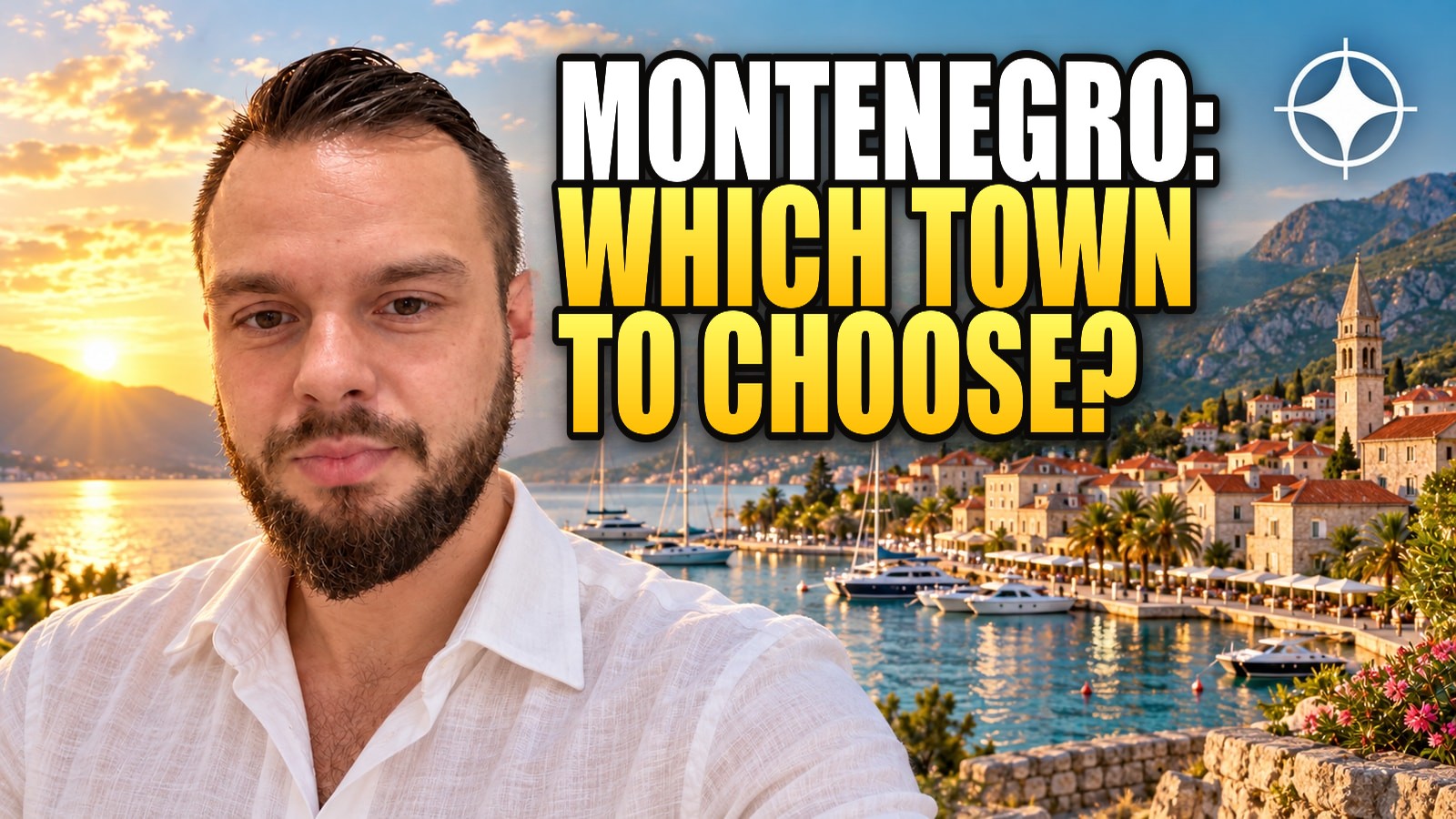
The Montenegrin coast runs about three hundred kilometres, but a foreign buyer almost always chooses between three points in the Bay of Kotor and the Budva riviera. The towns are neighbours, and their markets differ enough that transferring a calculation from one to another is pointless.
Budva: the mass resort
Budva is the country's densest and noisiest market. It has the most new build, the most rental supply and the most pronounced season: July and August produce the bulk of annual short-let revenue.
- The tenant is a tourist for a week, mainly from Serbia, the former Yugoslavia and Eastern Europe.
- The plus is the highest flow and the simplest letting: demand does not need finding, it arrives.
- The minus is competition and seasonality. Outside the three summer months occupancy drops sharply.
- Build quality varies: some mass complexes were built fast and for sale rather than for long service.
Tivat: yachts and a different class of buyer
Tivat changed with the arrival of Porto Montenegro — a marina for large yachts with its own waterfront, hotel and housing. Other master plans of the same class are being built nearby. That created a segment the country did not previously have.
Talk to a licensed broker: 📲 +971 50 120 32 64 on WhatsApp, @dubai_oleg on Telegram
- The tenant and the buyer are different: the yachting season, business visits, wealthy families.
- The season is longer than Budva's, extending into spring and autumn.
- Prices are the highest in the country, and they hold up better than in the mass segment.
- Tivat airport is minutes away — not a detail for a rental flow.
Kotor: UNESCO and restrictions
The old town of Kotor and part of the bay are on the UNESCO World Heritage list. Hence the market's defining feature: not everything can be built or rebuilt here, and approvals are slow. That is simultaneously a risk for a developer and a protection of value for an owner — new supply is physically limited.
- Supply is predominantly secondary: stone houses and small complexes.
- Restoring a historic property is a separate project with its own timeline and permissions.
- The tenant is a tourist who came for the view and the history, not for a beach.
How to choose
Simple letting with maximum flow — Budva, adjusted for a three-month season and competition. Preserving value with a longer season — Tivat, at a higher entry price. A unique property with limited supply — Kotor, provided you are ready for the approvals.
Common to all three: an apartment is bought by an individual, while land and a house with a plot go through a local company for a foreigner. That rule does not depend on the town.
Video on this topic
The same subject on the English channel — each clip has a written version of its own.
 5:41Vida Residence Downtown: ready apartments beside the Burj14 June 2024
 8:54Address Sky View: the twin towers with the bridge, reviewed properly31 May 2024
 13:04Seven Palm on Palm Jumeirah: an infinity pool, a rooftop bar and a hotel underneath8 May 2024
 4:15Lamborghini villas in Meydan: half the price of Ellington, and why26 January 2024
 13:04The best townhouses in Dubai under USD 600 000: Nshama Town Square7 October 2023
 13:00Socio by Emaar in Dubai Hills: buying a whole floor, and skipping the 2% commission4 October 2023
In the news
Other write-ups on the site about the same thing.
Owner taxes in Montenegro: purchase, ownership, letting, sale
Rates here are below European levels, and that creates a false sense that there are no taxes at all. There are — they are simply small, and each of the four points has its own rule.
Bali districts: Canggu, Ubud, Uluwatu and Sanur — four different markets
Bali is sold as one place, but the island long ago split into several markets with different economics. A villa in Canggu and one in Ubud are different businesses.
Tourist letting in Montenegro: the season, real occupancy and registration
The yield figure usually quoted is summer rates multiplied by twelve months. The reality works differently, and the gap between the two calculations decides the purchase.
Taxes in Bali: what a villa owner pays and what a landlord pays
The tax side of Bali is discussed less often than the legal side, wrongly: it is what separates a promised yield from a received one. And the form of ownership changes all of it.
Owner taxes in Greece: ENFIA, the purchase charge and letting
An EU country with a full tax system, and holding property here costs more than in the Gulf. Not an argument against buying, but the costs are recurring and independent of occupancy.
Pattaya and Samui: two Thai resort markets besides Phuket
The Thai market for a foreigner usually reduces to Phuket and Bangkok. Two other notable markets sit around them, and they get considered exactly when Phuket prices surprise.