
Abu Dhabi manages $1.7 trillion — more than Switzerland and the Netherlands combined
The number explains less than the structure does. There is no single pot: several independent institutions with separate mandates, and that arrangement is what makes the capital behave the way it does.
Assets under management by Abu Dhabi institutions are estimated at roughly $1.7 trillion. About 4 million people live in the emirate, and the capital attributable to them exceeds the combined economies of two mid-sized developed European countries.
Why the structure matters more than the sum
The figure on its own explains little — sovereign funds sustain many commodity economies. What differs here is the construction. There is no single pot from which everything is funded; several independent organisations operate, each with its own mandate and its own investment logic.
- Accumulation vehicles. Their task is to preserve and grow oil revenue over a generational horizon, with broad international diversification.
- Development vehicles. Their task is to build the domestic economy — infrastructure, industry, technology.
- Strategic vehicles. Positions taken for reasons beyond return: access to technology, supply chains, partnerships.
What this means for property
Two consequences that show up directly in the market.
Talk to a licensed broker: 📲 +971 50 120 32 64 on WhatsApp, @dubai_oleg on Telegram
First, the emirate's development spending is not hostage to the oil price in the way a single-fund economy's would be. Infrastructure programmes announced here have historically been delivered through commodity cycles, which is why long-dated master plans in Abu Dhabi carry less execution risk than the same announcements elsewhere.
Second, a large domestic institutional base changes who owns and finances real estate. Institutional capital wants transparency and audited records — which is part of why the emirate opened its transaction data, and why the market is becoming legible to outside investors at the same time.
The honest limit
None of this forecasts prices. What it establishes is a floor under the emirate's capacity to keep building and keep employing, which is the underlying support for any property market. Growth still has to come from population, jobs and supply discipline — the same three things it comes from everywhere.
Video on this topic
The same subject on the English channel — each clip has a written version of its own.


Related reading
Other write-ups on the site about the same thing.
Stargate UAE: a 1 GW AI cluster in Abu Dhabi, and what it actually means for property
The first 200 MW goes live in 2026 and the wider campus is planned at 5 gigawatts across ten square miles. Where the effect on housing and offices is real, and where it is being overstated.
HELM Abu Dhabi longevity cluster: 30 000 jobs and $25.6bn of GDP by 2045 — what it means for housing demand
Abu Dhabi launched HELM, a life-sciences and longevity cluster based in Masdar City, in April 2025. Targets for 2045: $11.5bn of investment, 30 000 jobs and $25.6bn added to GDP. The first shared lab opened in 2026. Who it brings to the capital and where they will live.
Abu Dhabi or Dubai: where it makes more sense to buy
Abu Dhabi is cheaper to enter and usually yields more; Dubai is deeper, more liquid and simpler for a foreign owner. A comparison on entry price, ownership rules, tenant profile and — the part that decides it — what happens when you sell.

Abu Dhabi for foreign buyers: investment zones, title and how it differs from Dubai
The capital runs its own register, its own zones and its own pace. What a foreigner may own there, how the market behaves differently, and why it is not simply a cheaper Dubai.
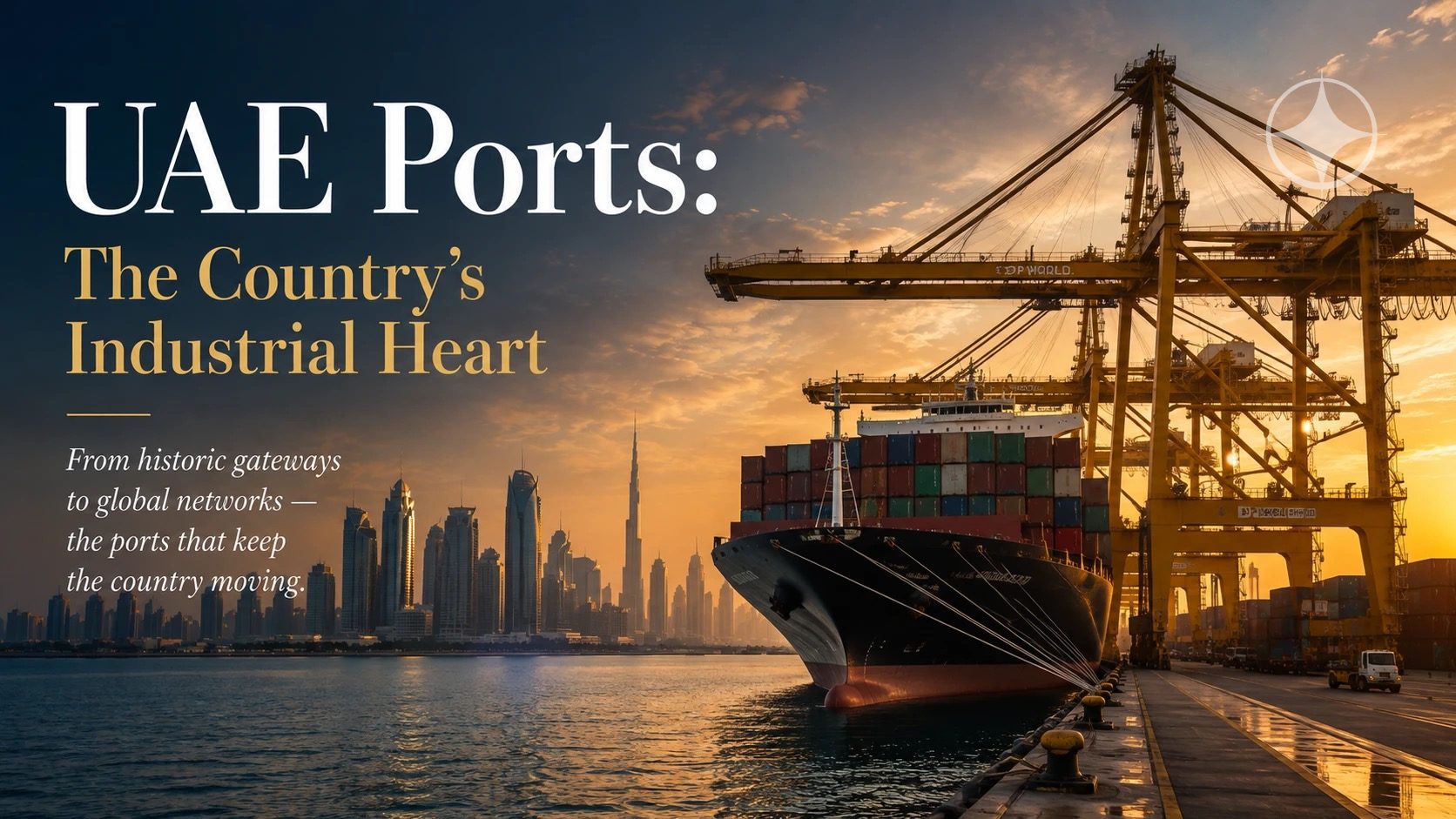
UAE Ports: The Industrial Heart of the Country
From historic gateways to global networks — the ports that keep the country moving. From Mina Zayed in 1972 to Jebel Ali and Khalifa Port, how the UAE's port infrastructure quietly powers its economy.
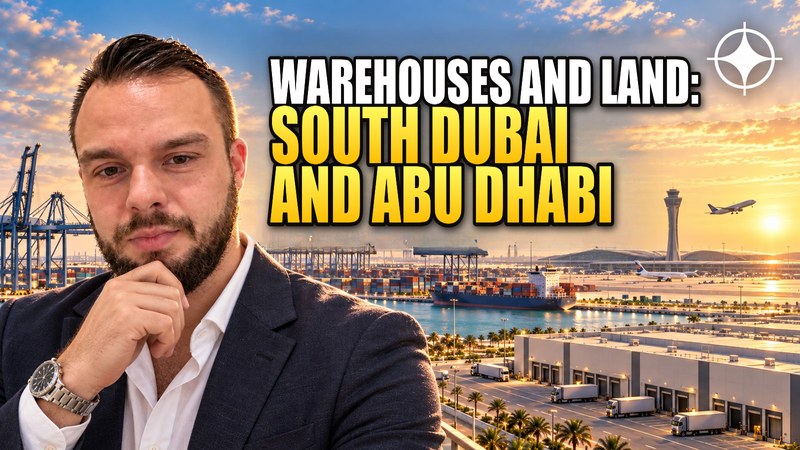
Warehouses and land: industrial property in southern Dubai and Abu Dhabi
Little is said about UAE industrial property, and yet it is a segment with clear economics and long tenants. What feeds it, and the three strategies people use.