Dubai Opera and the floating opera in Dubai South: culture as district infrastructure
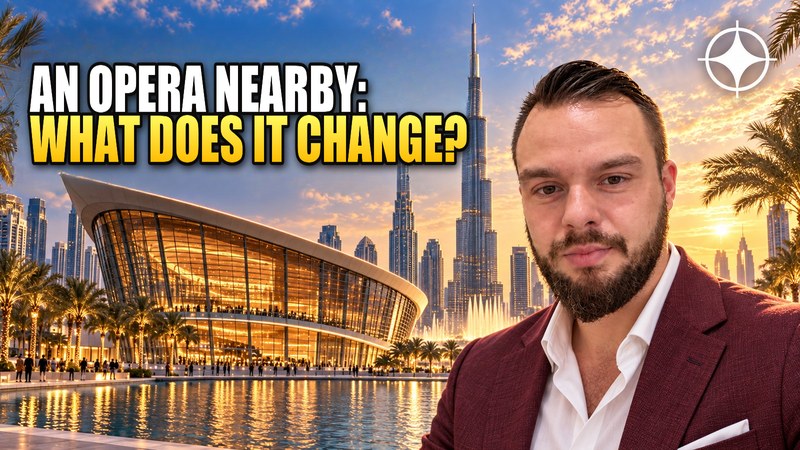
It is easy to fall into two extremes about a cultural landmark next door — that it automatically lifts prices, or that it means nothing. Neither is right.
A 2 000-seat theatre at the foot of Burj Khalifa that gave its name to an entire Downtown quarter. A rare case of a cultural object becoming an address rather than just a landmark.
Dubai Opera opened in August 2016 next to Burj Khalifa. The eight-storey building was designed by architect Janus Rostock, its silhouette recalling the hull of a dhow — the wooden boats this coast traded from long before the towers. Emaar built it and runs it.
The engineering signature is a transformable hall: the same volume reconfigures into theatre, concert and banquet formats. The programme is accordingly broader than opera — ballet and classical music share the calendar with jazz, fashion shows and exhibitions.
The scale is real for the city: one and a half million visitors and more than 2 500 performances in the first ten years. This is a working venue with a full season, not a pavilion built for a ribbon-cutting.
For the property market the more important fact is that the theatre named its surroundings. Opera District is a recognised Downtown sub-area, and in listings the phrase functions as an address of its own.
Around the theatre Emaar built a distinct quarter: Act One | Act Two, IL Primo, Grande, The Address Residences Dubai Opera. This is Downtown’s upper price layer — above the average of a district that is not cheap to begin with.
The premium is built from three honest components: front-line position to Burj Khalifa and the fountain lake, newer stock — the quarter is younger than the core of Downtown — and everything people live in Downtown for within a walk.
The theatre in that formula is not the main multiplier but a mark of the environment’s quality. It guarantees the ground floors are restaurants, the promenade is kept, and the quarter is alive in the evening without turning into a bazaar.
Knowing that ratio helps at the negotiating table: the seller offers “the quarter by the opera”, but what you are paying for first is the view and the location. Check those.
A theatre differs from an observation deck or a ferris wheel in one property: it generates a regular evening flow of an affluent audience rather than a one-off tourist visit.
That flow feeds the quarter’s restaurants and services year-round, and it is what listings mean by “evening life”. For a resident this is real value: the environment works every night, not only in high season.
But the test — “will you go there on a Wednesday evening after a year of living here” — the opera only half passes: people attend a few times a season, not weekly. So the premium is moved not by the hall itself but by the quarter built around it.
The practical conclusion: the Opera District premium is real and holds on resale, but it should be paid for a specific window and floor, not for the word “opera” in the address. Identical flats with a fountain view and a courtyard view differ in price more than buildings by the theatre and three blocks away do.
Buyers of short-let stock in Downtown: proximity to the opera, the fountain and Dubai Mall are the three headline lines of any listing, and guests choose by them. Occupancy in the quarter runs above the district average.
Owner-occupiers who value evening life on foot: this is one of the few quarters in the city where the front door opens onto a theatre, a promenade and restaurants rather than a car park.
And buyers of premium resale who want the value defended: an address with finite supply and a finished environment protects price better than under-construction quarters in the same bracket.
The view from the specific flat. In the opera towers, the difference between Burj-and-fountain and the neighbouring facade is a double-digit percentage of the price, and no render will show it.
The service charge. The quarter is premium, upkeep is expensive, and the charge runs above the Downtown average — it goes into short-let yield in full.
And the rhythm of the evenings: on premiere nights the approaches are congested, and the fountain show draws crowds under front-line windows every night. For an investor that is the point; for quiet living it is a factor to witness before the deal, not after.
Median price, entry price and current stock composition for each one sit on its area page.
 Dubai Metro A fully driverless network of 55 stations, with half the city's liquid housing strung along it — and the second argument in any district decision.
  Burj Khalifa The tallest building in the world for sixteen years running — and the only object in Dubai whose view is a price category in its own right.
  Al Maktoum International The airport the city is building its second half around: a design capacity of 260 million passengers a year, against the ninety-odd million DXB handles today.
  Dubai Tram Eleven stations that close the last mile between the metro on Sheikh Zayed Road and the housing by the sea — and make Marina and JBR a rare walkable pocket of Dubai.
  Dubai Water Canal Three kilometres of water cut through the middle of the city in 2016 — and six kilometres of new waterfront where physically none existed.
  The Dubai Mall The largest mall in the world and the city's main generator of foot traffic: around 105 million visits a year, concentrated on a single block.
  Etihad Rail A railway across all seven emirates: 900 kilometres, freight running since 2023, and a promised 57 minutes from Abu Dhabi to Dubai once passenger services start.
  Dubai International (DXB) The world's busiest airport for international traffic — and the employer that holds up the rental market across half of old Dubai.
  Jebel Ali Port The largest man-made port in the world and the industrial heart of the emirate: not a sight to see, but the thing that pays the rent across an entire belt of districts.
  Sheikh Zayed Road Twelve lanes with the whole of commercial Dubai lined up along them: an address on this road is less about the drive than about which half of the city you ended up in.
  Expo City Dubai The one case in Dubai where an exhibition site was not dismantled but turned into a district with a metro station, a free zone and housing.
  Dubai Creek The inlet the city began on: a trading harbour that became the line between old Dubai and new — and is still a price category of its own.
  Museum of the Future The landmark that gave Sheikh Zayed Road a face: 77 metres of calligraphy with no columns inside — and an honest lesson in what an attraction does not do to prices.
  Ain Dubai The tallest observation wheel in the world at 250 metres — out of service since March 2022. And the best available lesson in how the market treats promised infrastructure.
  Mall of the Emirates A 2005 shopping centre that created an entire residential district single-handedly: before it Al Barsha was an edge of town, after it an address with a metro station, schools and a tenant.
  Dubai Hills Mall The same script as Mall of the Emirates, twenty years later: the centre that in 2022 finished a residential district into a self-sufficient one.
  Palm Monorail Five kilometres of track along the trunk of the Palm with no link to the metro: transport that was built, but that nobody commutes on.
  Infinity Bridge A creek crossing with a 295-metre arch and twelve lanes: an attempt to remove the historic city’s principal price discount — the commute.
  Metro Gold Line Dubai’s first fully underground metro line: 42 kilometres and 18 stations through districts that live without rail today. The map of future stations is a map of future prices — on a 2032 horizon.
  The Dubai Fountain A 275-metre fountain on the lake at Burj Khalifa — and the “fountain view” line in Downtown price lists that costs real money. Here is when that line is honest.
 It is easy to fall into two extremes about a cultural landmark next door — that it automatically lifts prices, or that it means nothing. Neither is right.
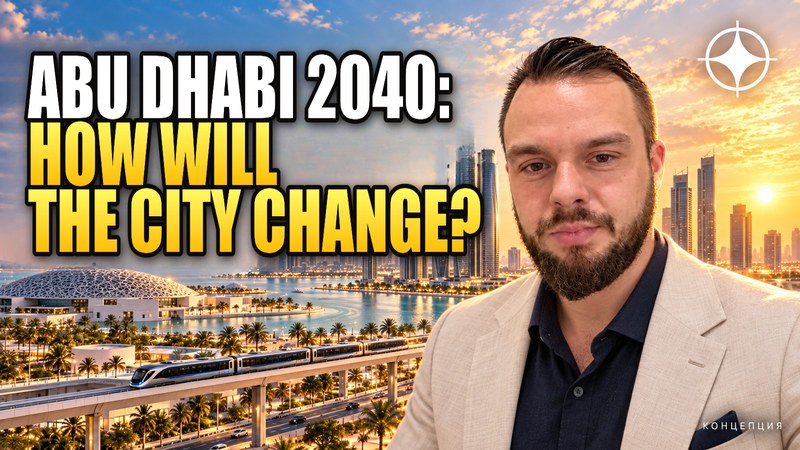
Abu Dhabi expects its population and GDP to double by 2040; the emirate had 4.14m residents at the end of 2024. AED 240bn is earmarked for housing, transport, health and schools. The widely quoted "6 million by 2040" is not an official figure. What is actually being built.
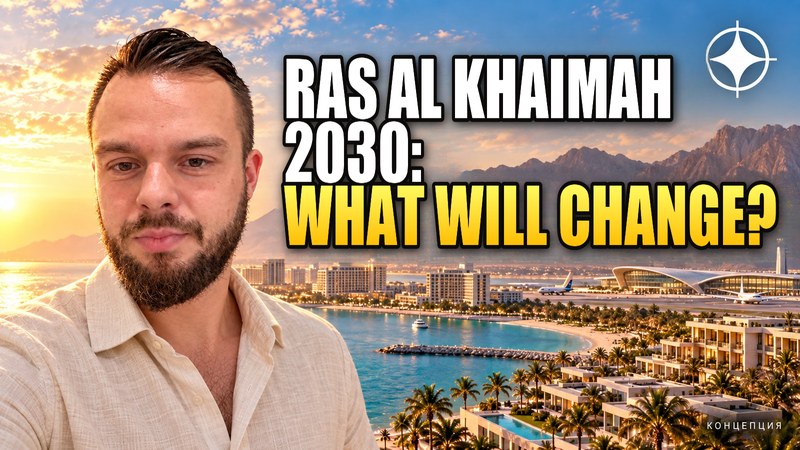
Ras Al Khaimah targets 3.5m visitors a year by 2030 (1.35m in 2025), wants to grow hotel stock from 8 700 to about 16 000 keys with 80% premium, and is building a terminal for 3m passengers by 2028. What it means for property buyers.
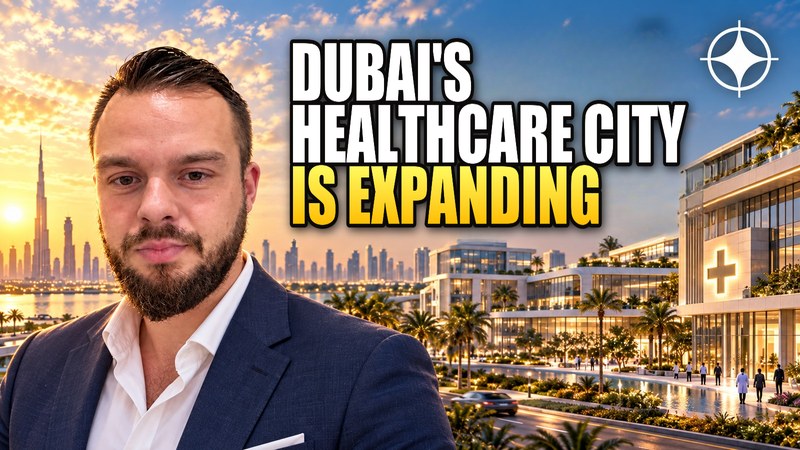
Dubai Healthcare City has started an AED 1.3bn ($354m) phase one expansion: the 13 000 m² PIXEL office building and the 5 800 m² IBN SINA+ medical complex. Ground was broken on 29 April 2026, with completion planned for 2027. What it means for homes in Al Jaddaf and Healthcare City Phase 2.
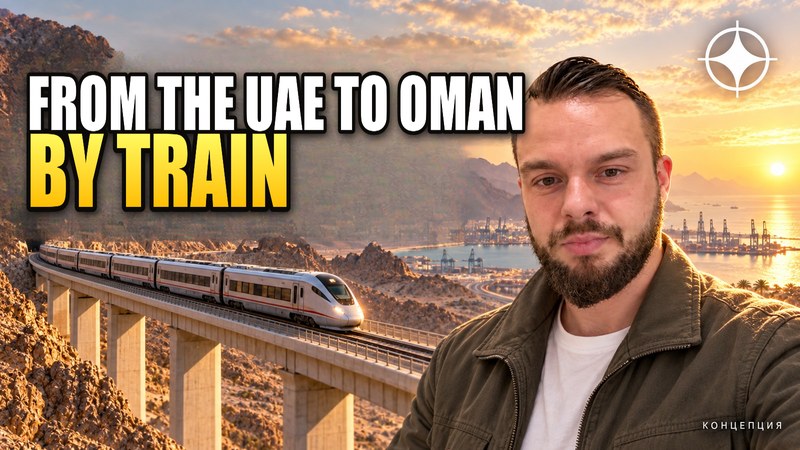
Hafeet Rail is a $2.5bn joint venture between Etihad Rail, Oman Rail and Mubadala: 238km from Abu Dhabi through Al Ain to the Omani port of Sohar. The passenger service will run at up to 200km/h; as of spring 2026 the line was 40% complete, and Oman ratified the agreement in September.
Terminal A at Abu Dhabi’s airport opened in November 2023 after years on hold: 742 000 sq m, capacity for 45m passengers a year. Renamed Zayed International in February 2024, it handled a record 32.5m passengers in 2025 (+12.8%). What that means for housing on Yas Island and in Al Raha.
Dubai ecotourism and green communities: Al Layan Oasis in Al Marmoom, Expo Valley Nature Reserve at Expo City Dubai, Hudayriyat Island in Abu Dhabi and Kalba in Sharjah. What is being built, when it opens and why nature is becoming part of UAE real estate.
In February 2025 Dubai announced Superblock: car-free neighbourhoods with pedestrian streets and more greenery. The first areas are Al Karama, Al Fahidi, Abu Hail and Al Quoz Creative Zone. There is still no public timetable. What it means for rental housing in old Dubai.
Therme Dubai, a 100 m tall wellness resort of about 500 000 sq ft, is planned for Zabeel Park at a cost of AED 2bn (about $545m). It expects 1.7 million visitors a year and is due to open in 2028. What it means for Zabeel, Downtown and the neighbouring districts.
Films from the channel on how the city rebuilds itself: the 2040 masterplan, transport, and the projects that move prices around them. Each one has its own written breakdown here.
 Dubai 2040: the masterplan that tells you where demand goes next
 Air taxis in Dubai: what eVTOL would change, and what it would not
 Wellness resorts: why Dubai is putting hundreds of millions into health
 Hatta: the mountain half of Dubai nobody puts in the brochure
 The world's largest solar park, and why a property buyer should care
 Dubai is learning to walk: the 20-minute city and what it does to rent
 The Jebel Ali coast: Dubai's last big stretch of undeveloped shoreline
 The New Silk Road: what a trade corridor does to the cities on it
 Four cities, four bets on the future: Dubai, New York, London, Tokyo
From the daily off-market feed. Availability and price are confirmed on request.
All below-market listings →Send your budget and what the purchase is for — I will put together a shortlist from live stock and flag where proximity to a station or a tower view is already paid for in the price.
Telegram is the fastest way — I answer personally.
Message on Telegram