Dubai Opera and the floating opera in Dubai South: culture as district infrastructure
It is easy to fall into two extremes about a cultural landmark next door — that it automatically lifts prices, or that it means nothing. Neither is right.
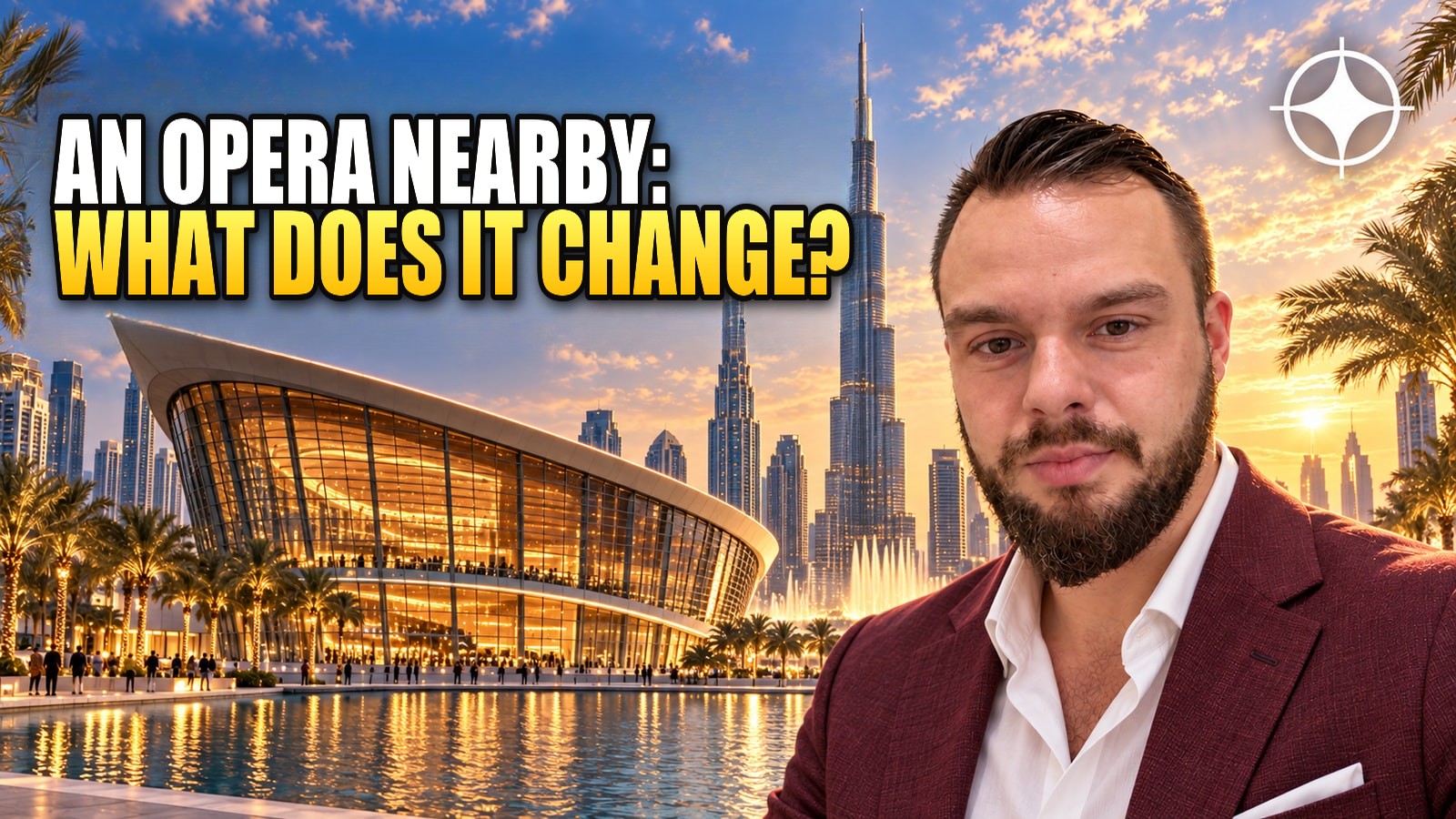
Dubai Opera opened on 31 August 2016 with a performance by Plácido Domingo. The building was designed by Atkins with Danish lead architect Janus Rostock. The auditorium seats 2 000, the building covers around 650 000 square feet, and the format is multifunctional: opera, ballet, symphonic concerts, theatre, conferences and exhibitions in one space.
Form and purpose
The building's silhouette follows a dhow, the traditional Arab sailing vessel. The decision is not decorative: the opera stands about two hundred metres from Burj Khalifa, and the architect had to design something that would not be lost beside the tallest building in the world. A horizontal, elongated form with a sloping "stern" solves that through contrast rather than scale.
An auditorium of 2 000 is slightly larger than the Bolshoi or the Palais Garnier. A transformable stage lets the hall be reconfigured by event type, which for a city without an established opera audience matters more than acoustic perfection: the building has to pay for itself year-round, not only in an opera season.
Talk to a licensed broker: 📲 +971 50 120 32 64 on WhatsApp, @dubai_oleg on Telegram
The second opera, on water in Dubai South
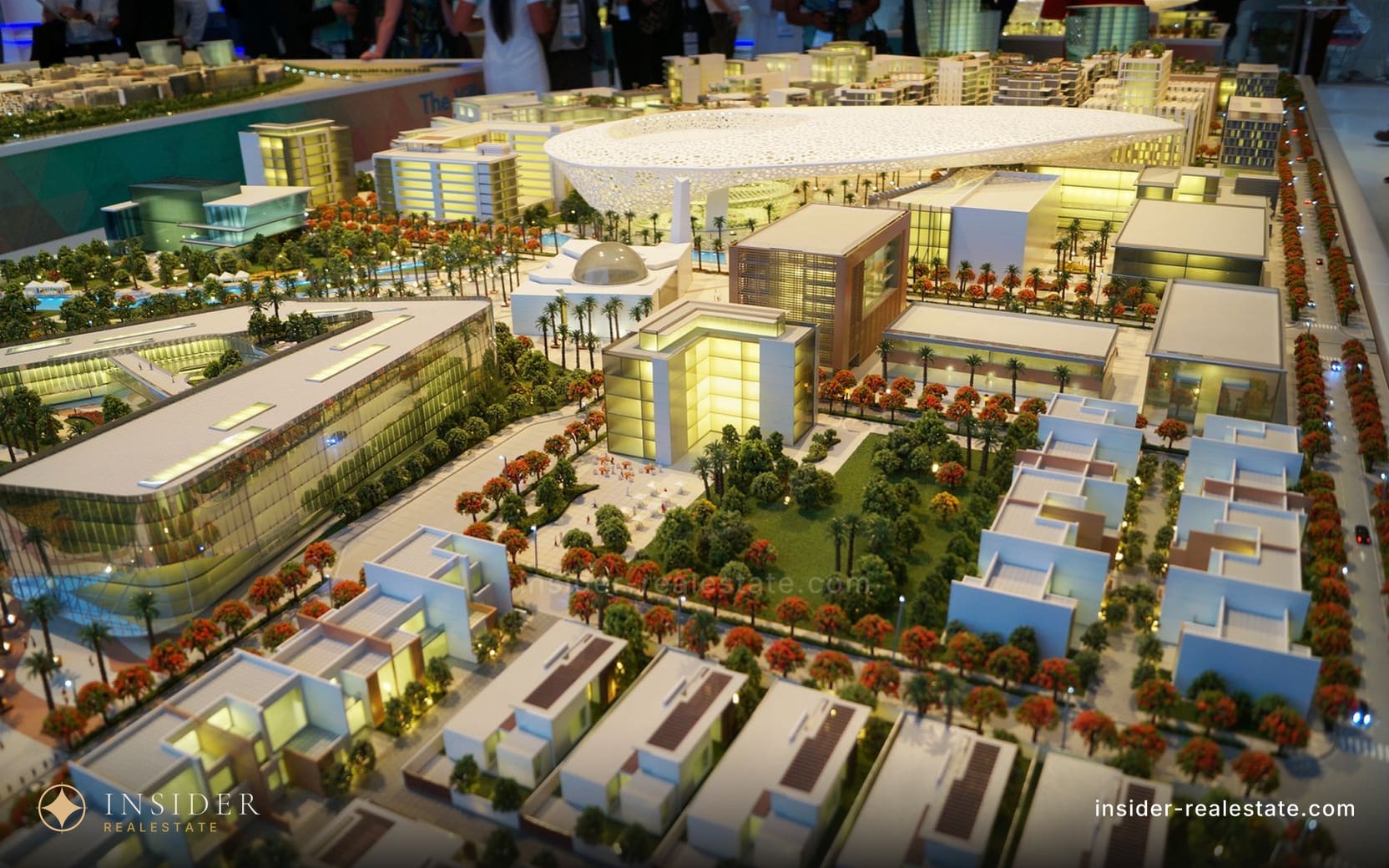
A second opera venue is being built within the Azizi Venice project in Dubai South, next to the new Al Maktoum airport. It is designed as a floating stage on an artificial lagoon using Crystal Lagoons technology, with a fountain synchronised to music. Stated capacity varies across reports between 1 500 and 2 000 seats; no exact opening date has been announced, with references in the range of the next few years.
The siting logic is clear: Dubai South is a district growing around the future main airport, and it needs anchor venues it does not yet have. An opera is an attempt to give the district a reason to travel to it, not only an address to live at.
What a cultural venue does to property prices
It is easy to fall into two extremes here. The first is that an opera nearby automatically lifts prices. The second is that it means nothing. Neither is right.
- What works. A cultural venue raises evening footfall and makes a district usable after six. That directly affects nearby retail and restaurants, and through them the appeal of the housing. The opera in Downtown is part of the same construction as Dubai Mall and the promenade: the district gets a round-the-clock use case.
- What works slowly. The reputation of an address. It forms over years and does not show up in the price per foot in the opening year.
- What does not work. The calculation "they are building a cultural venue nearby, so I will buy now and sell higher in two years". The effect of such a venue is spread across the whole district and stretched over time; in the price of one apartment it is lost against the general cycle.
The practical conclusion for a buyer
An opera, museum or concert hall is an argument for a district as a place to live and as a place where long-let demand will persist. It is not an argument for a speculative purchase. The difference between those two statements is the main line along which any "new attraction" news should be filtered.
And separately, on new districts: a cultural venue announced in a master plan and a cultural venue that operates are different things. Years pass between announcement and first performance, and buying "for the future opera" only makes sense if the district is interesting without it.
Video on this topic
The same subject on the English channel — each clip has a written version of its own.


In the news
Other write-ups on the site about the same thing.
Dubai South Properties: buying next to an airport that is still being built
The developer of the residential districts around Al Maktoum International. What an infrastructure-led location offers, and how to think about a thesis that depends on someone else’s timetable.
Average prices by Dubai district: AED 1 301 a foot in JVC to 2 433 in Downtown
Five districts generate more than 60% of all location searches in the emirate. Their average price per square foot, and the single most useful thing to do with the table: test a developer’s price against the established market.
A company in Dubai in one day: how Dubai South Business Hub works, and why the UAE wants 2 million companies by 2031
Dubai South’s free zone issues a same-day e-licence for qualifying digital activities, from AED 12 500, entirely online. At the national level the goal is bigger: from 1.2 million companies today to more than 2 million by 2031, plus at least ten new unicorns.
Dubai property market in summer 2026: prices, transactions, rents and the rise of Dubai South
August 2026 in numbers: about 10 900 homes sold for AED 23.4bn, average prices 1.7% below a year earlier, three quarters of sales off-plan, and Dubai South leading on volume. What changed over the season and what to expect this autumn.
Investing in Dubai: world number one for creative-industry FDI projects, with 754 projects and 19 304 jobs in 2025
fDi Markets data shows Dubai attracted 754 new greenfield creative-industry projects in 2025, worth $3.76bn and creating 19 304 jobs, the top city out of 233 for the fourth year running. Separately, Al Maktoum airport is getting a 50km underground people mover. What both mean for rental demand.
Dubai Airport Express Line via JVC and the Abu Dhabi high-speed train: what changes for property
The RTA is planning a 55 km, five-station Airport Express Line from DXB via Al Jaddaf and Al Khail Road to JVC and Al Maktoum, with flight check-in at the stations. Etihad Rail is separately building a 350 km/h Abu Dhabi–Dubai line with a 30-minute journey. What it means for JVC and Al Jaddaf.
Below market in Dubai South right now
From the daily off-market feed. Availability and price are confirmed on request.
All below-market listings →