
 Photo of the community −5%
 Muraba
A boutique developer that releases not a building a year but one architectural statement every few years — and both of its major projects were designed by top-tier international architecture firms rather than standard local consultants.
1 lot in stock across 1 project. Of the 1 with a known status: 1 ready, 0 under construction. By median price — 16th of 139.
- One-off architecture rather than a standard tower
- A buyer for whom design outweighs speed of move-in
- A long hold on an expensive asset
- Not for an investor who needs fast turnover and mass liquidity
Median price $2.29M AED 8 400 000
Entry price $2.29M AED 8 400 000 — the cheapest lot
Per square foot $941 AED 3 457 / sq.ft, median
Completed stock 100% no discounted lots right now
Where they build
The districts where this developer has the most lots in our stock.
Palm Jumeirah 1
The company in brief
Checkable facts about the developer itself. Unlike the figures above, these are not about our stock and do not move with what happens to be listed today.
- Founded
- 2014
- Muraba Residences, Palm Jumeirah
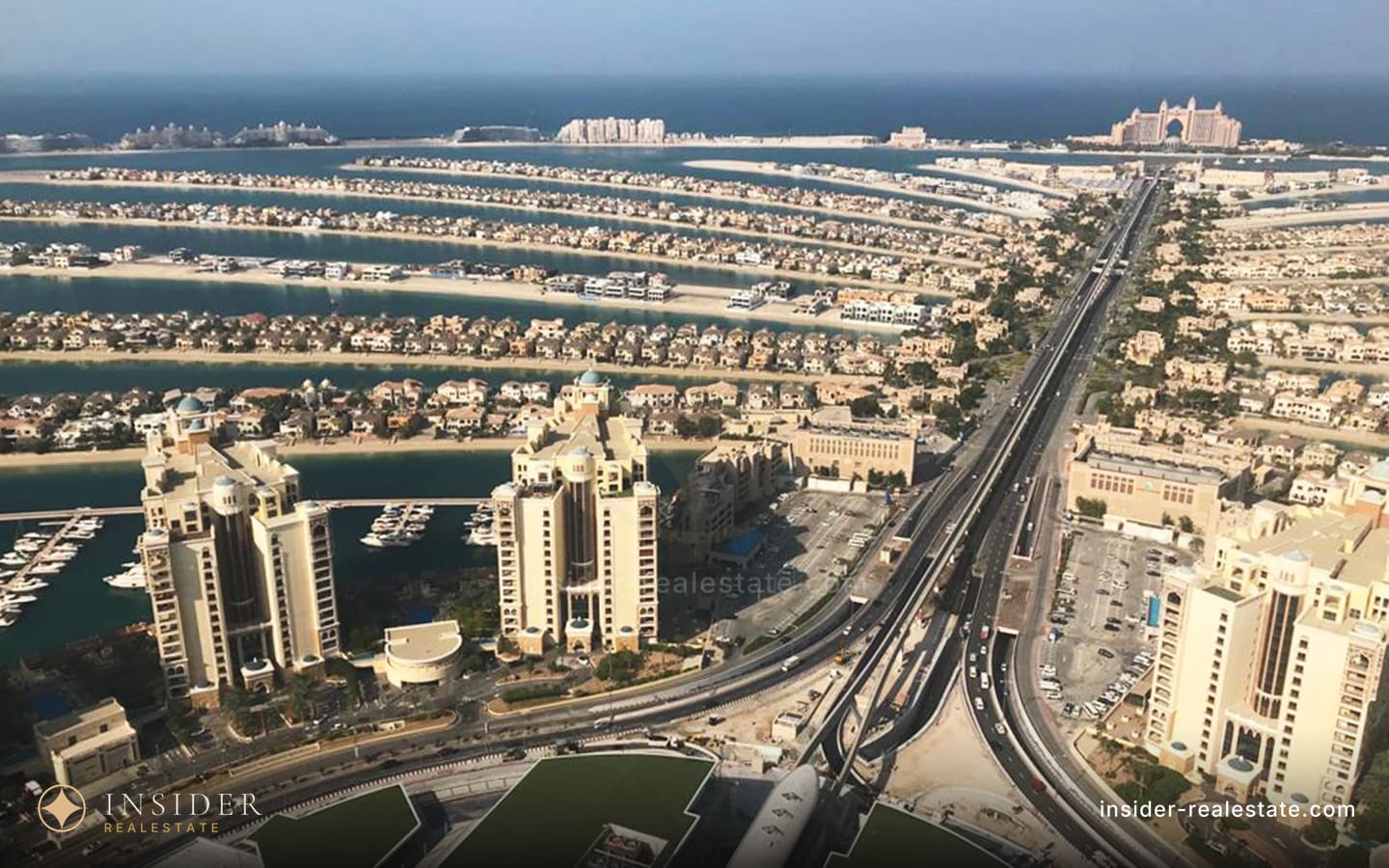
- delivered in 2017 — 46 apartments and 4 townhouses at the eastern tip of the Palm Crescent
- Muraba Veil, Al Wasl
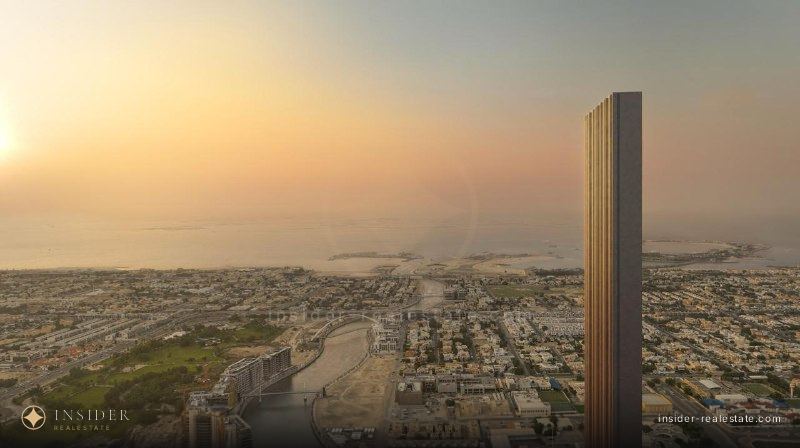
- under construction — 131 units, designed by the Spanish firm RCR Arquitectes (Pritzker Prize laureates)
What kind of developer this is
Who this is, and what the principle is
Muraba is not a mass-market developer but a company that has deliberately chosen quality over frequency: not dozens of projects, but a handful, each aiming for the status of an architectural event rather than simply a new building in the catalogue. Since its founding, the company has delivered only one major project and is building a second — a deliberate strategy, not slowness.
The practical takeaway for a buyer: you will not find this developer's usual conveyor belt of standard layouts and serial finishing. Instead, a one-off product where each project is discussed by the architecture community in its own right, not simply sold to brokers as another listing entry.
Architecture as the core asset, not decoration
Both of the company's major projects were designed by top-tier international architecture firms rather than the in-house or standard local consultants a mass-market developer usually hires. That is a fundamentally different approach to pricing: the buyer is not paying for square footage with a location markup, but for a specific name in architecture and a one-off design you cannot buy in the building next door.
On a market where the overwhelming majority of projects are built to standard templates from local engineering firms, that is rare, and it explains why the developer has so few projects: architecture at that level takes design and approval time that a mass-market developer is usually not willing to build into its schedule.
The product is not an apartment but a position on the city's most expensive coastline
The company's first major project took the eastern tip of Palm Jumeirah — a location where supply is physically limited by the island's own shape, not by demand. The second is being built in Al Wasl, another of the city's most expensive low-rise corridors. Both location choices say the same thing: the company does not enter emerging districts for volume, but chooses sites where land scarcity does the pricing work on its own, without developer effort.
Scale by unit count stays small — dozens, not hundreds, of apartments per project. That means each specific building stays a rare asset even at city scale, rather than one of many comparable offerings in the same district.
What that means for liquidity and ownership
A one-off, low-volume product works differently from mass housing: fewer buyers exist for such an asset by definition, but supply on the market is also thinner, so the price holds not on turnover speed but on the scarcity of comparable alternatives. This is an asset for a long hold, not for a quick resale betting on a stream of similar buyers.
On resale, comparable transactions for such a building are usually few — the one-off quality that works in a buyer's favour at entry makes pricing at exit harder. Here it is especially important to rely on specific registered transactions for the same building, rather than the district's general trend, which may not reflect the specifics of an architectural object.
What to check before buying
The actual construction status of the second project against its stated schedule — small-batch, architecturally complex buildings slip against plan more often than standard ones, because of the design complexity itself and non-standard engineering. Service charge terms and building management after handover — one-off architecture often also means higher upkeep costs for facade and common areas.
The transaction history for the already-delivered Palm project — how price and time on market behave on resale of a one-off asset in that specific location. The exact list of materials and finishing included in the price — on a one-off project, the gap between stated and actual execution costs more than in the mass market.
How I work with its properties
For a client considering a project from this developer, I immediately explain the difference between buying square footage and buying an architectural object: the second logic implies a different holding horizon and different liquidity expectations at exit. If it was specifically this one-off quality and the architect's reputation that drew the client, I show how the firm's name actually shows up in the project, not just as a line in the marketing brochure.
During construction of the second project I watch pace more closely than usual — complex architecture adds delay risk, and a buyer of a one-off asset is typically paying a premium precisely for execution, not just for address. For a client counting on a fast exit, I say plainly this developer is not the right fit, and offer alternatives with a deeper resale history where turnover speed matters more than architecture.
Projects by Muraba
All projects →Muraba listings in stock
All stock → Photo of the community −5% Photo of the community What these numbers mean, and what they do not
Lots are matched to Muraba by project name, since the base has no developer field. The numbers above therefore describe our stock rather than the company’s market share: a developer with a large completed portfolio can show fewer lots than one whose buildings are resold more often.
All prices are asking prices, not sales. For the building you pick I pull the registered Land Department transactions and show the prices deals really closed at.
In the news

Islamic mortgage in the UAE: ijara, murabaha and musharaka explained for buyers
UAE banks offer conventional mortgages and Sharia-compliant financing side by side, open to any buyer regardless of faith. Ijara (lease-to-own) dominates residential deals; murabaha and diminishing musharaka show up less often. The Central Bank caps — 80% LTV, 50% DBR — apply to both.
Other developers
All developers → Questions
Muraba: questions and answers
How much does a Muraba apartment cost?
The median across this developer's lots in our stock is $2.29M (AED 8 400 000), with entry from $2.29M. The median per square foot is $941. These are asking prices out of our own base, recalculated every night; they follow what the developer and its sellers actually have on the market, not the price list on a corporate site.
Is Muraba a reliable developer?
Founded: 2014. A developer is checked against the Land Department’s open register rather than a brochure: it shows the licence status, the construction progress of each project and the registered escrow account. On off-plan the buyer’s money goes into that account under RERA supervision and is released against verified milestones. The full dossier is in the write-up above.
What projects is Muraba building?
Our catalogue holds 1 project by this developer, each with a building passport: storeys, unit count, handover date, the mix of bedrooms. The list is on this page, and the districts where the developer has the most lots in stock are in the “Where they build” block. Under each project sit the lots on sale, where there are any.
Should I buy from Muraba direct or through a broker?
For an off-plan buyer the price is identical, because the developer covers the broker’s commission. Going straight to Muraba is therefore no cheaper, and the choice there is limited to its own projects — you will not get a comparison with neighbouring buildings or a candid read on handover dates. On resale and assignment the commission is standard: 2% plus VAT.
Is Muraba worth buying
That depends on what you buy and why. Describe the budget and the aim — I will point out which of this developer’s buildings are justified today and which are better left alone.
Ask on WhatsAppAsk a question
Telegram is the fastest way — I answer personally.
Message on Telegram