
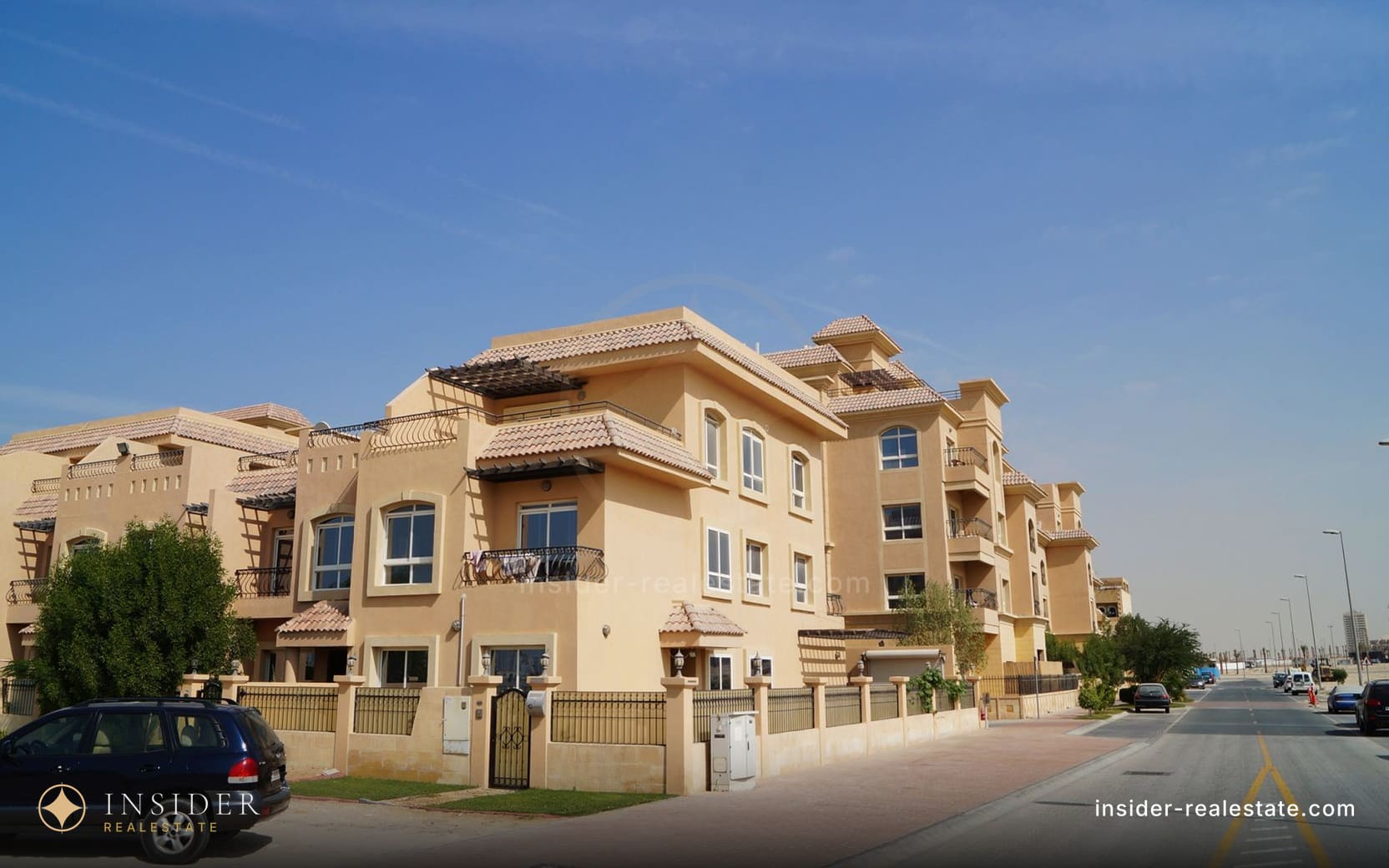
 Photo of the community −4%
 Meteora Real Estate Development
A very young company with two co-founders that sold out its first two projects within days of launch — a pace that speaks to demand for price and location, but says nothing yet about how it will deliver and maintain a third building in a row.
1 lot in stock across 1 project. Of the 1 with a known status: 0 ready, 1 under construction. By median price — 130th of 139.
- Fast entry at an off-plan launch price
- Investors watching sales pace as a demand signal
- JVC as the company's core district
- Not for buyers wanting a proven delivery history
Median price $226K AED 830 000
Entry price $226K AED 830 000 — the cheapest lot
Completed stock 0% 1 lot discounted, deepest −4%
Where they build
The districts where this developer has the most lots in our stock.
JVC 1
The company in brief
Checkable facts about the developer itself. Unlike the figures above, these are not about our stock and do not move with what happens to be listed today.
- Founders
- Praveen Sharma and Omar Al Amour
- Third project
- Vita Grande in JVC
What kind of developer this is
What it is
Meteora Real Estate Development is a young company with two co-founders that entered the market only recently and has already launched several projects in a row in one district, JVC. That is a rapid pace for a company this age: most newcomer developers stretch a first project over years, while here the project count is already at three within a short time of founding.
A market entry pace like this usually requires either significant own capital, a very aggressive sales model, or both. For a buyer, it matters to understand what is driving that pace — a resilient financing model, or a bet on continuous fresh demand to fund each next project off the previous one.
Sales speed as a signal — and its limits
The company's first projects sold out within days of launch — strong evidence on its own that entry pricing and location were attractive to the market at that moment. A fast sell-out lowers the risk that a developer runs short of funds to finish construction due to weak demand, a real plus for an off-plan buyer.
But sales speed speaks to marketing and pricing at launch, not to the quality of final execution: a building sold out in a week still has to be built, delivered on time and maintained for years afterward, and those three things are not yet proven by the company's public history. Keep these two different signals separate when evaluating the developer.
A single-district focus
All of the company's projects to date are concentrated in JVC — a dense, actively developing district with many developers working simultaneously and a constant flow of new supply. A narrow geographic focus may mean the company is building deep specialisation in this specific market, but it also means no diversification: a demand slowdown specifically in JVC would hit the company harder than a developer with projects across several districts.
In a district this dense, competition comes not only from other developers but from the company's own earlier projects if they hit the rental or resale market at the same time — worth keeping in mind when assessing a specific unit's yield.
The risks of a young developer with no delivery history
The company has no property that has gone through a full cycle from construction to several years of operation, and that changes the whole logic of due diligence: what matters is not brand reputation but the specific documents on the specific project — the escrow account, Oqood status, the contractor agreement, and the actual, not the stated, percentage of construction completion at the time of your visit.
A lack of history does not automatically mean higher risk — many of today's successful Dubai developers were once just as new — but it does mean the entire burden of verification falls on the specific facts of the current project rather than a reputation that has not yet had time to build up.
The resale market
None of the company's projects has yet gone through the full cycle to delivery and occupancy, so it is too early to speak of a genuine resale market — all current statistics concern off-plan pricing and sales speed, not market-confirmed rental or resale of completed housing. The first real test of liquidity will only come after handover of the earliest project.
A fast sell-out at launch is no guarantee of an equally easy resale after delivery: off-plan buyer interest driven by an attractive launch price and resale buyer interest in a completed building are different markets with different logic.
How I work with its properties
For this company's projects, I first check the escrow account and actual construction progress on site — with no delivery history at all, that is the only objective source of information available before handover. From there I check who the main contractor is and what experience it has with projects of comparable scale, because for a young developer the contractor carries most of the technical risk.
And separately I explain to clients the difference between sales speed and execution quality — a fast sell-out speaks well of price and location, but says nothing about what the building will be like years after handover.
Projects by Meteora Real Estate Development
All projects →Meteora Real Estate Development listings in stock
All stock → Photo of the community −4% What these numbers mean, and what they do not
The developer is inferred from the project name — there is no developer column in the base. So the figures describe our stock, not the company's share of the Dubai market: a developer sitting on an enormous volume of completed housing can look smaller here than one whose projects reach the resale market more often.
These are asking prices, not closed transactions. For a specific building I pull the registered Land Department sales and show where deals actually closed.
In the news

Meteora Real Estate Development: how to read a floor plan properly
A developer building a tower in JVC. Two apartments of identical size can live completely differently, and the plan shows which — if you know the five things to look for.
Other developers
All developers → Questions
Meteora Real Estate Development: questions and answers
How much does a Meteora Real Estate Development apartment cost?
The median across this developer's lots in our stock is $226K (AED 830 000), with entry from $226K. They are drawn from asking prices in our own base and refreshed every night — a picture of current supply rather than of the official price list.
Are there discounts on Meteora Real Estate Development property?
Right now the base holds 1 lot from this developer priced below the market, with the deepest cut at 4%. The discount comes from the seller on a resale or an assignment, not from the developer: they have their own reason to exit quickly. The size of the cut is computed against comparable property by an algorithm, not typed in by a broker.
What projects is Meteora Real Estate Development building?
Our catalogue holds 1 project by this developer, each with a building passport: storeys, unit count, handover date, the mix of bedrooms. The list is on this page, and the districts where the developer has the most lots in stock are in the “Where they build” block. Under each project sit the lots on sale, where there are any.
Should I buy from Meteora Real Estate Development direct or through a broker?
The price is the same: on off-plan the developer pays the broker’s commission, not the buyer, so going straight to the sales office saves nothing. The difference is elsewhere — a developer’s sales office shows its own projects only, and will not tell you that the same thing next door is cheaper or that this project is running later than advertised. On resale and assignment the commission is the standard 2% plus VAT.
Is Meteora Real Estate Development worth buying
The answer depends on the purpose. Send your budget and goal — I will go through which Meteora Real Estate Development projects are worth considering now and which I would skip.
Ask on WhatsAppAsk a question
Telegram is the fastest way — I answer personally.
Message on Telegram