
Jumeirah Group
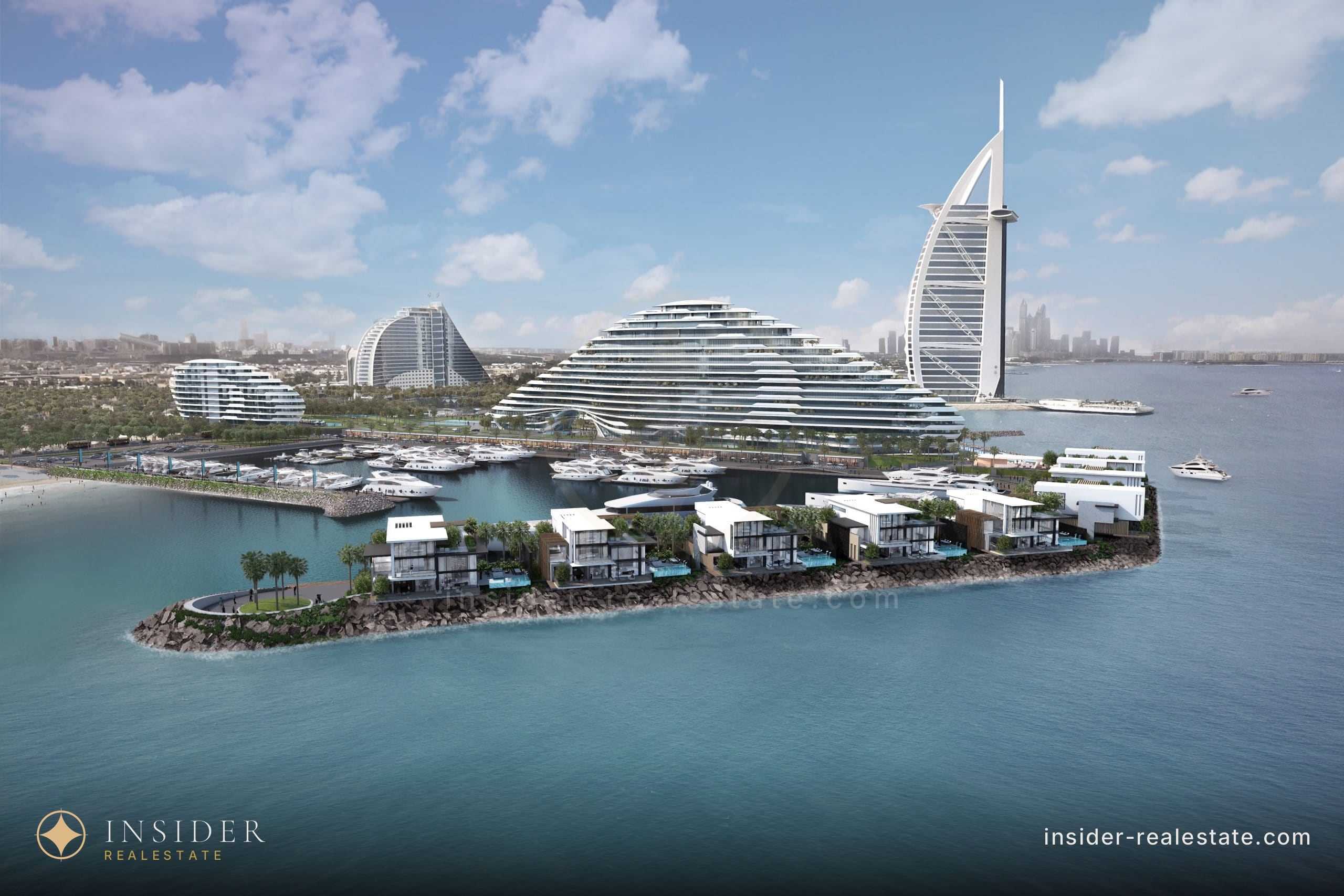
The hospitality company behind the Burj Al Arab — and the housing it builds sits inside resort destinations it creates and then manages itself: buying a home on the purpose-built Marsa Al Arab island works differently from buying an apartment from an ordinary developer.
3 lots in stock across 1 project. By median price — 1st of 139.
- A serviced home in a fully controlled resort setting
- Fixed supply on a closed island
- Long-term owners who will actually use the resort
- Buyers who value privacy and guarded access
Median price $20M AED 75 000 000
Entry price $16M AED 57 500 000 — the cheapest lot
Where they build
The districts where this developer has the most lots in our stock.
Jumeirah 3
The company in brief
Checkable facts about the developer itself. Unlike the figures above, these are not about our stock and do not move with what happens to be listed today.
- Founded
- 1997
- Structure
- part of Dubai Holding, the Dubai ruler's investment holding, since 2004
- Portfolio
- 31 hotels under management, including the Burj Al Arab, Jumeirah Beach Hotel and Madinat Jumeirah
- Residential project
- Marsa Al Arab on a reclaimed island in Al Sufouh — the company's only residential project in Dubai
What kind of developer this is
Who they are
Jumeirah Group is a hospitality company created under the patronage of the Ruler of Dubai and, since 2004, part of Dubai Holding, his global investment holding. Its reputation rests on the Burj Al Arab, a hotel that became the city's symbol before half of Dubai's current landmarks even existed, and on running international-standard resort destinations well beyond a single building.
Unlike a conventional developer, housing is not Jumeirah's main business but a logical extension of hospitality: the company knows how to create and maintain a resort environment, and the Marsa Al Arab residential project carries that same competence into a format buyers can own rather than only book as hotel guests.
What they build
Marsa Al Arab is the company's only residential project in Dubai, sitting on a purpose-reclaimed island in Al Sufouh next to the Burj Al Arab. The format is designed as a resort destination in its own right, not just a home with a sea view: its own waterfront, beach, spa and dining infrastructure, all run by the same company that manages the neighbouring hotels.
That fundamentally sets the project apart from a typical Dubai branded residence, where a developer merely licenses someone else's name: here the developer is itself the hotel operator, and the entire resort environment around the home is created and run by one and the same structure from start to finish.
What a purpose-built island buys you
Fixed supply, permanently: the number of homes is set by the masterplan and the island's coastline, and adding more later is physically impossible — the strongest form of scarcity this market offers. A controlled setting: on a closed island there is no neighbouring plot that could one day be sold to someone with different intentions from the overall concept.
Resort infrastructure works from day one rather than being built out gradually, because it is run by an operator for whom this is the core business rather than a side project. Privacy and access control on an island like this cannot be matched at any price on the mainland — a structural advantage of the format, not a marketing one.
The flip side: dependence on the operator
The resort management agreement has a term, and what happens when it ends or the operator changes is worth clarifying in advance: a destination's reputation is a shared asset, and a home's value moves with how the resort as a whole is run, not just with the specific unit. Access to the island is usually through a single point, meaning one security regime and one potential bottleneck — a trade-off consciously made for privacy and control.
Upkeep on a reclaimed island in sea air costs more than on the mainland, and owners pay for it — not a separate risk line but a permanent part of the cost of ownership, worth budgeting for from day one rather than discovering years in.
What to check
Both charges — the fee for the home and the fee for the destination as a whole — and exactly what each covers. Which resort facilities residents may use, on what terms, and whether that can change in future — in writing, not from what a viewing agent says. Any rental programme on offer: the revenue share, the participation term, your own right to stay there, and the actual payouts after all fees, not the projected yield.
Beach and coastline rights, directly in the title. The destination's masterplan as a whole — what else will be built on the island and when, since early buyers inevitably live next to construction for a while. The escrow account and Oqood registration — a mandatory check for off-plan regardless of the company's reputation.
Who this suits
Those who want a serviced home in a fully controlled setting and will genuinely use the resort infrastructure, rather than simply holding the unit as a paper asset. Patient capital under no obligation to exit on a schedule — the format is built for years of ownership, not quick turnover.
It does not suit an investor focused primarily on percentage yield: at prices of this level, rent structurally fails to keep pace with capital, and that is the norm for this segment rather than a flaw in this specific project. That buyer is better served looking at the mass segment, where the rental arithmetic is simpler and faster.
Projects by Jumeirah Group
All projects →Jumeirah Group listings in stock
All stock → What these numbers mean, and what they do not
The developer is inferred from the project name — there is no developer column in the base. So the figures describe our stock, not the company's share of the Dubai market: a developer sitting on an enormous volume of completed housing can look smaller here than one whose projects reach the resale market more often.
These are asking prices, not closed transactions. For a specific building I pull the registered Land Department sales and show where deals actually closed.
Video
Jumeirah Group on video
Project breakdowns from the English channel. Every clip has a written version on a page of its own.
 13:04Seven Palm on Palm Jumeirah: an infinity pool, a rooftop bar and a hotel underneath8 May 2024
 23:36Madinat Jumeirah Living by Meraas: living opposite the Burj Al Arab30 December 2023
 7:15Christmas in Dubai: Al Habtoor Winter Garden, Madinat Jumeirah, Expo and DIFC22 December 2023
 12:00XXII Carat on Palm Jumeirah: 22 Mediterranean villas compared with Raffles and Zabeel Saray20 September 2023
In the news
Jumeirah Group: buying onto a resort island that is being built for you
A hotel group creating a new resort destination with residences on it. Purpose-built islands have advantages a normal waterfront does not — and one structural dependency.
Other developers
All developers → Questions
Jumeirah Group: questions and answers
How much does a Jumeirah Group apartment cost?
The median across this developer's lots in our stock is $20M (AED 75 000 000), with entry from $16M. The figures come from asking prices in our base, not from the Jumeirah Group price list, and they are recalculated nightly to reflect what is actually for sale today.
Is Jumeirah Group a reliable developer?
Founded: 1997. Delivered: 31 hotels under management, including the Burj Al Arab, Jumeirah Beach Hotel and Madinat Jumeirah. Check Jumeirah Group in the Land Department’s open register, not in the marketing: licence status, per-project construction progress and the registered escrow account are all there. Off-plan payments land in that escrow under RERA supervision and reach the developer only against verified construction milestones. The full dossier is further up the page.
What projects is Jumeirah Group building?
Our catalogue holds 1 project by this developer, each with a building passport: storeys, unit count, handover date, the mix of bedrooms. The list is on this page, and the districts where the developer has the most lots in stock are in the “Where they build” block. Under each project sit the lots on sale, where there are any.
Should I buy from Jumeirah Group direct or through a broker?
Money-wise there is no difference: on off-plan the broker is paid by Jumeirah Group, not by you, so calling the sales office direct saves nothing. What differs is the view — the developer’s sales team sells only its own buildings and will not mention that the same unit costs less next door or that this project hands over later. On resale and assignment the commission is the usual 2% plus VAT.
Is Jumeirah Group worth buying
It depends what you are buying and why. Send me your budget and the job it has to do — I will tell you which of this developer's projects make sense right now and which I would walk past.
Ask on WhatsAppAsk a question
Telegram is the fastest way — I answer personally.
Message on Telegram