
 Illustrative photo −57%
 The First Group
A hospitality company that sells not apartments but rooms in hotel residences with a revenue pool — and has taken that model from modest buildings in Sports City to the tallest hotel in the world.
2 lots in stock across 2 projects. Of the 2 with a known status: 2 ready, 0 under construction. By median price — 135th of 138.
- Passive income through a hotel revenue pool
- An international hotel operator on site
- A managed, ready-to-run asset
- Not for buyers who want to live in the unit themselves
Median price $176K AED 646 000
Entry price $156K AED 572 000 — the cheapest lot
Per square foot $247 AED 906 / sq.ft, median
Completed stock 100% 2 lots discounted, deepest −57%
Where they build
The districts where this developer has the most lots in our stock.
Dubai Sports City 1 Dubai Marina 1
The company in brief
Checkable facts about the developer itself. Unlike the figures above, these are not about our stock and do not move with what happens to be listed today.
- Founded
- 2005
- Flagship project
- Ciel in Dubai Marina — joined IHG's Vignette Collection as the world's tallest hotel
- Earlier projects
- The Matrix and Spirit Tower in Dubai Sports City
- Operating partner
- IHG (InterContinental Hotels Group) manages the company's flagship hotel
What kind of developer this is
What it is, and how the model differs
The First Group is a hospitality company first, not a residential developer that took up hotels on the side. Its product has been structured differently from most developers in this list from the outset: the buyer acquires not an apartment for personal living but a hotel room, managed by an international operator, with a share in the revenue pool from letting all the building's rooms together.
This "investment room" model predates the company as a brand and comes from the hotel business rather than residential development. Legally and in substance, it is a different asset from an ordinary apartment: a right of use rather than unconditional personal ownership in the usual sense, and income depends not on your single unit but on how well the operator fills the whole building.
From Sports City to the tallest hotel in the world
The company's first projects were residential towers in Dubai Sports City, a district that was only starting to develop in the mid-2000s and aimed at a mass rather than a premium segment. Those were relatively modest buildings in both scale and ambition, where the company tested the managed-income model itself on a less risky, less capital-intensive product.
From that starting point the company reached a project of an entirely different calibre — a supertall hotel in Dubai Marina that joined a major international operator's portfolio as the world's tallest hotel at opening. That is not just growth in scale but a qualitative leap: moving from mid-market residential towers to a flagship project for that kind of international operator only happens when execution on earlier collaborations genuinely satisfied the partner.
What an international operator on the building means
A major hotel brand on the facade is not a licensed logo — it is operational management: service standards, staff, room occupancy and the operator's own reputation are tied to this specific address every day, not just at opening. That works in an investor's favour: upkeep and marketing are run by a company whose core business this is, not a residential developer learning hotel operations on the job.
The flip side is that the management agreement becomes the central document of the deal, more important than the unit itself. Its term, what happens when it ends or the operator changes, what share of revenue goes to the room owner and what is retained for upkeep and marketing — that is what actually determines yield, not the rate quoted in a brochure.
Yield and the limits of the model
A revenue pool means the owner receives a share of the building's total revenue, not a fixed rent for their specific room, and that share moves with the hotel's occupancy by season and by the broader market. In a strong season this can outperform ordinary long-term apartment rent, but in a slow season or a dip in tourist flow, income falls with the whole building, not just with your unit.
Personal use of the room under this model is usually capped at a set number of days a year, not free as in an ordinary apartment — that is part of the agreement worth reading upfront if you expect to occasionally live in the property you bought, rather than only collect income from it.
The resale market
Reselling an investment room is a narrower market than reselling an ordinary apartment: a resale buyer has to understand and accept the pool-income model itself, not just want a unit of a certain size in a certain district. That buyer pool is smaller than in the ordinary residential market, and time on market at sale tends to run longer.
Liquidity of a specific unit is also closely tied to the operator's reputation at the time of sale: a change of management company or a decline in the hotel's performance directly affects the asset's appeal to the next buyer, and that is worth checking separately from the general state of the property market.
Who it suits, and how I work with its properties
The model suits buyers looking for a managed asset with no personal involvement in operations, who understand that yield here is variable rather than a guaranteed rate — and does not suit buyers who want to live freely and continuously in the property they bought, or who expect a classic long-term lease with a fixed tenant.
For any property from this company, I start with the management agreement itself — not the marketed yield figures but the revenue-split terms, the agreement's length and how it renews — and separately look at the actual payouts on already-operating rooms in the same building over the past several periods, not a forward projection.
Projects by The First Group
All projects →The First Group listings in stock
All stock → Illustrative photo −57% 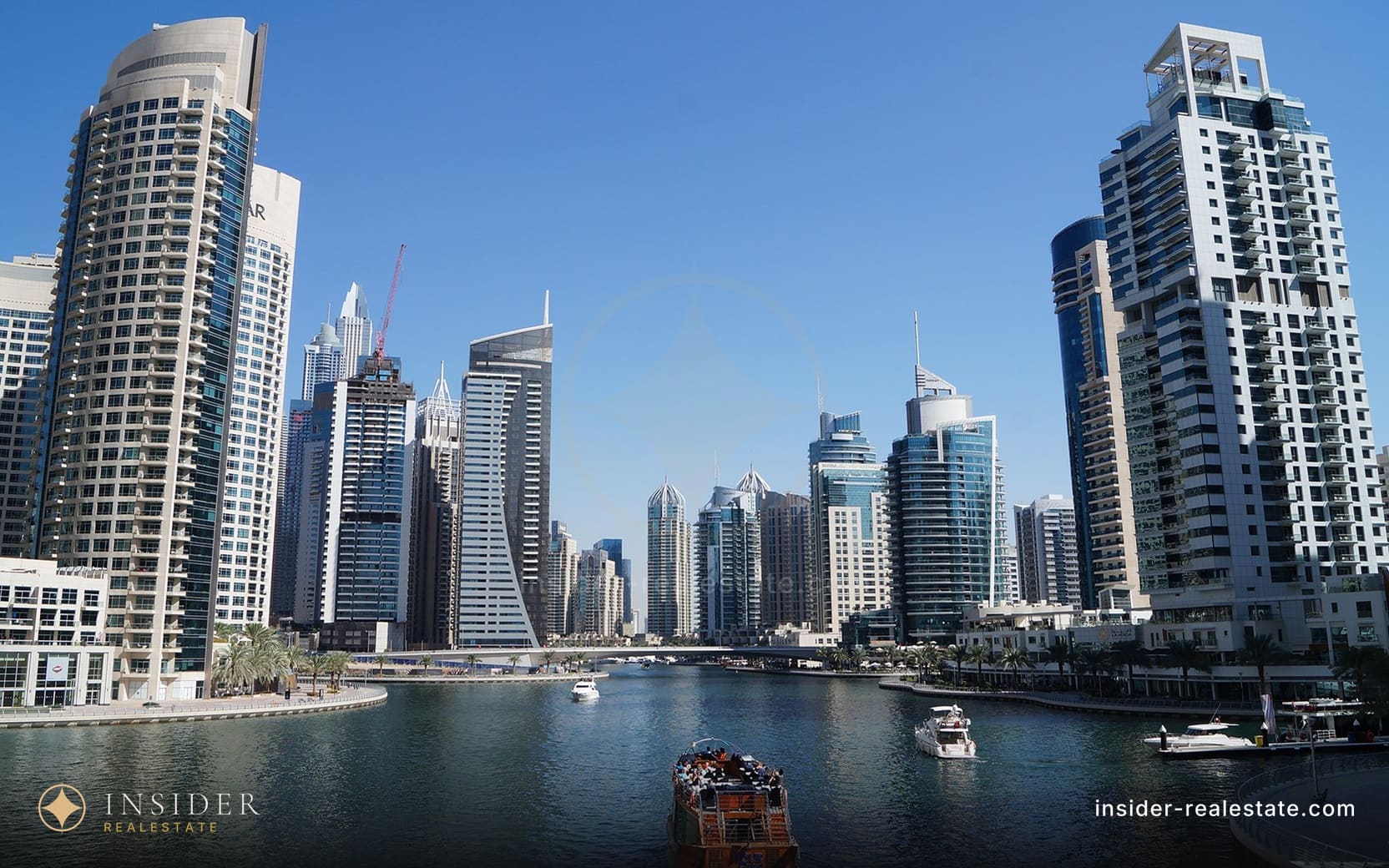 Photo of the community −20%
 What these numbers mean, and what they do not
There is no “developer” column in the base — a lot is attributed by its project name. The figures on this page speak about our stock, not about the company’s share of the Dubai market: a large developer with a big completed portfolio may appear smaller than one whose units come up for resale more often.
Prices come from listings, not from closed deals. For a particular building I retrieve the registered Land Department sales and show the real closing prices.
Video
The First Group on video
Project breakdowns from the English channel. Every clip has a written version on a page of its own.
 Short0:10Trump Tower Dubai: The Saudi Company Behind the Brand28 September 2026
 Short0:20Why the Trump Family's Middle East Ties Run So Deep27 September 2026
 Short0:32Dark Towers and the Bond Between a Developer and Its Bank27 September 2026
 Short0:22Trump's Gaza Resort Plan and the Real Estate Logic Behind It26 September 2026
 Short0:29The Apprentice Was Really a Casting Call for Trump's Company25 September 2026
 Short0:58Inside the Trump Organization's Global Golf Portfolio24 September 2026
In the news

The First Group: hotel investment units, the most misread product in Dubai
A developer selling rooms in operating hotels rather than apartments. What a hotel unit is legally and financially, and the questions that decide whether it makes sense.
Other developers
All developers → Questions
The First Group: questions and answers
How much does a The First Group apartment cost?
The median across this developer's lots in our stock is $176K (AED 646 000), with entry from $156K. The median per square foot is $247. They are drawn from asking prices in our own base and refreshed every night — a picture of current supply rather than of the official price list.
Are there discounts on The First Group property?
Right now the base holds 2 lots from this developer priced below the market, with the deepest cut at 57%. The discount comes from the seller on a resale or an assignment, not from the developer: they have their own reason to exit quickly. The size of the cut is computed against comparable property by an algorithm, not typed in by a broker.
Is The First Group a reliable developer?
Founded: 2005. Check The First Group in the Land Department’s open register, not in the marketing: licence status, per-project construction progress and the registered escrow account are all there. Off-plan payments land in that escrow under RERA supervision and reach the developer only against verified construction milestones. The full dossier is further up the page.
What projects is The First Group building?
Our catalogue holds 3 projects by this developer, each with a building passport: storeys, unit count, handover date, the mix of bedrooms. The list is on this page, and the districts where the developer has the most lots in stock are in the “Where they build” block. Under each project sit the lots on sale, where there are any.
Should I buy from The First Group direct or through a broker?
Money-wise there is no difference: on off-plan the broker is paid by The First Group, not by you, so calling the sales office direct saves nothing. What differs is the view — the developer’s sales team sells only its own buildings and will not mention that the same unit costs less next door or that this project hands over later. On resale and assignment the commission is the usual 2% plus VAT.
Is The First Group worth buying
The answer depends on the purpose. Send your budget and goal — I will go through which The First Group projects are worth considering now and which I would skip.
Ask on WhatsAppAsk a question
Telegram is the fastest way — I answer personally.
Message on Telegram