
Inside the Trump Organization's Global Golf Portfolio
Golf is the core of the Trump Organization's real estate today. It holds courses in Scotland, Britain, the United States, Dubai, Oman and Bali, and Mar-a-Lago in Florida — Trump's main residence — sits beside its own courses. Residence plus resort plus golf is the template.
Is golf a side business or the core?
It would be easy to assume golf courses are a peripheral asset class sitting alongside towers and hotels in the Trump portfolio, but the opposite is closer to the truth.
Of everything the organisation holds today, the golf courses are described as the most interesting and the most consistently in demand — spanning Scotland, Britain, the United States, and further afield in Dubai, Oman, and even Bali.
That geographic spread matters.
Talk to a licensed broker: WhatsApp +971 50 120 32 64 · Telegram
A golf course only works as a long-term asset if it attracts a recurring, affluent membership base and holds its value as land.
That the format has been repeated across so many very different markets suggests it has proven itself as the most durable part of the model — more durable, in some ways, than the branded towers that get more attention.
Some of these properties carry real sporting pedigree beyond the Trump name itself. Turnberry in Scotland, for instance, is a historic championship links course that hosted the Open Championship in past decades, long before it became part of the Trump portfolio.
Acquiring an asset with that kind of built-in sporting history is a different proposition from building a golf course from scratch — the course's reputation predates the brand attached to it, and in a case like this the brand is really being layered onto an existing legacy rather than creating one.
What does Mar-a-Lago actually combine?
Mar-a-Lago in Florida is the clearest example of how the format works end to end. It functions as Trump's main residence, but it's built around its own golf courses, and he reportedly holds meetings there with politicians and influential businesspeople.
Those meetings, in turn, do real marketing work for the courses themselves — every high-profile visitor is, in effect, an endorsement.
This is the mechanism that makes golf-anchored real estate different from a simple sports facility: the course becomes the setting for a network, and the network sustains the value of the course. It's a model that has been exported wherever the brand has gone since, including the golf villas built in Dubai even before Trump's first presidential term.
A developer who knows his buildings cold
One detail from people who worked with Trump during his development years stands out: he could reportedly point at almost any building he'd been involved with and talk for half an hour about who the contractor was, what materials went into it, and what hidden problems surfaced afterward.
That level of granular recall isn't typical of a figurehead who simply licenses a name — it points to someone who treated construction detail as core business knowledge, not delegated trivia.
That reputation, deserved or not, is part of what underpins buyer confidence in Trump-branded projects: the perception that the person behind the brand actually understands what's being built, down to the materials and the contractor.
Why does golf hold up better than other asset types?
Golf-anchored developments tend to carry a built-in scarcity that pure residential towers don't: land, water access and course design can't be replicated quickly, and membership creates ongoing demand even when a broader property market softens.
That's a large part of why this segment shows up as a consistent performer across such different jurisdictions, from Scotland's coastline to Oman's coastline near Muscat.
For a UAE-based investor, the relevant comparison is Dubai's own golf-community real estate — communities like Damac Hills or Jumeirah Golf Estates — where the same principle applies: proximity to a well-run course tends to support both livability and resale demand more reliably than a purely urban tower.
What should you check in a golf-anchored project?
When a client is looking at any golf-community property, branded or not, I encourage them to look past the course itself.
Ask who actually manages it, how the membership structure works, and whether the developer has a track record of maintaining the course once the villas around it are sold out.
A course that's well maintained for the first two years and neglected after can undo the premium a buyer paid for the view.
The Trump Organization's own pattern — golf as the anchor across multiple countries — is a useful reference point precisely because it shows the format can travel well when it's paired with serious operational commitment, and travel poorly when it isn't.
It's also worth noting how differently golf-anchored assets age compared with a pure high-rise. A tower's value depends heavily on the building's own condition and the surrounding skyline decades later, while a well-run golf course can, if anything, become more valuable as the surrounding city grows around it and open land grows scarcer.
That slower, land-driven appreciation curve is part of why this segment of the Trump portfolio has proven more durable across market cycles than some of the branded towers built under the same name.
Frequently asked
What does the Trump Organization actually own in real estate today?
A large part of the current portfolio is golf courses, spread across Scotland, Britain, the United States, Dubai, Oman and Bali, alongside branded residential and hotel projects.
Why is Mar-a-Lago significant beyond being Trump's residence?
It's built around its own golf courses and reportedly hosts meetings with politicians and business figures, which helps sustain the profile and value of the courses attached to it.
Does golf-anchored real estate perform differently from standard residential property?
It can hold value more consistently because course land and membership access are hard to replicate quickly, but that only holds if the course itself is well maintained long after the surrounding homes are sold — something worth checking with any developer, branded or not.
✍️ Message me on WhatsApp for a free consultation — off-market stock, payment plans and honest numbers on any of the projects covered here.
✅ Subscribe on YouTube — investment, property, business and relocation in the UAE and beyond.


In the news
The same subject in writing — analysis and news related to this video.
The Trump Organization: a licensed name, and the specific risk that carries
A brand appearing on Dubai and regional projects through licensing rather than construction. Why the licensing structure matters here more than usual, and what to establish before buying.
Dar Global: a London-listed developer selling branded homes across several countries
The international arm of a Saudi developer, listed in London. What a listing gives you, and what changes when the property you buy sits outside the UAE.
Al Habtoor Group: living inside a hospitality complex
A long-established conglomerate whose Dubai residential towers sit within its own hotel and leisure complex. What a hospitality-anchored address gives a resident, and what it costs.
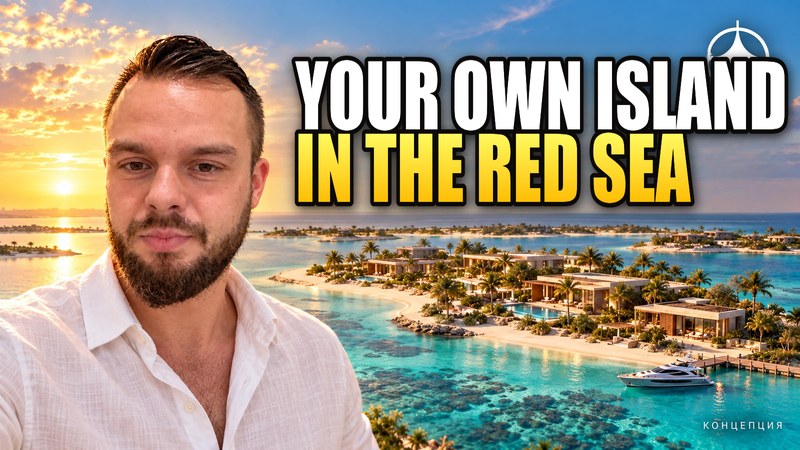
Your own Red Sea island: Saudi Arabia opens sales on Laheq Island from $1.6 million
Saudi Arabia real estate is going global: Laheq Island, a 400-hectare private island on the Red Sea, offers villas from SAR 17.6 million and apartments from SAR 5.9 million. Who is building it, what the masterplan includes and whether buying property in Saudi Arabia makes sense yet.
Akshara Global Real Estate Development: when your neighbours stop paying
A developer with a small JVC building from 2017. Service-charge arrears are somebody else’s problem until they become yours, and in a small building that happens faster.
Al Mana Global and Al Shafar Investment: what selling actually involves
Two companies that together delivered a branded low-rise on Palm Jumeirah. Buyers plan the purchase in detail and the exit not at all — here is the process, the costs and the timeline.