The Dubai ruler's global investment holding — the umbrella under which Meraas, Jumeirah, Dubai Properties and dozens of other names on this site actually sit — and this entry is about the parent entity itself as a direct developer, not about one of its many sub-brands.
3 projects by this developer in the catalogue. Nothing of
theirs is in the discounted stock right now — nearby listings are below.
A project inside a state-run masterplan
Buyers who value the strength of the structure behind the developer
Investors who want predictable district zoning
A long ownership horizon
The company in brief
Checkable facts about the developer itself. Unlike the figures above, these are not
about our stock and do not move with what happens to be listed today.
Founded
2004
Owner
Sheikh Mohammed bin Rashid Al Maktoum, Ruler of Dubai
Scale
one of the region's largest investment holdings, with assets across dozens of countries and thousands of employees worldwide
Key divisions
Dubai Properties, Tecom Group, Jumeirah Hotels & Resorts, Dubai International Capital — each with its own projects and brands
What kind of developer this is
Who they are
Dubai Holding is a global investment holding personally owned by Sheikh Mohammed bin Rashid Al Maktoum, Ruler of Dubai, spanning businesses in real estate, hospitality, technology, manufacturing, logistics, education, retail and tourism. It is not a developer in the ordinary sense but a parent structure under which dozens of names recognised across the real estate market actually operate.
Meraas, the developer behind projects such as City Walk and Bluewaters that have long become part of the city's landscape, and Jumeirah Group, the hotel operator behind the Burj Al Arab, both grew out of the Dubai Holding portfolio. Both are independent enough in their own market activity to deserve separate treatment, and both are covered separately on this site from the parent holding.
When Dubai Holding is the developer directly
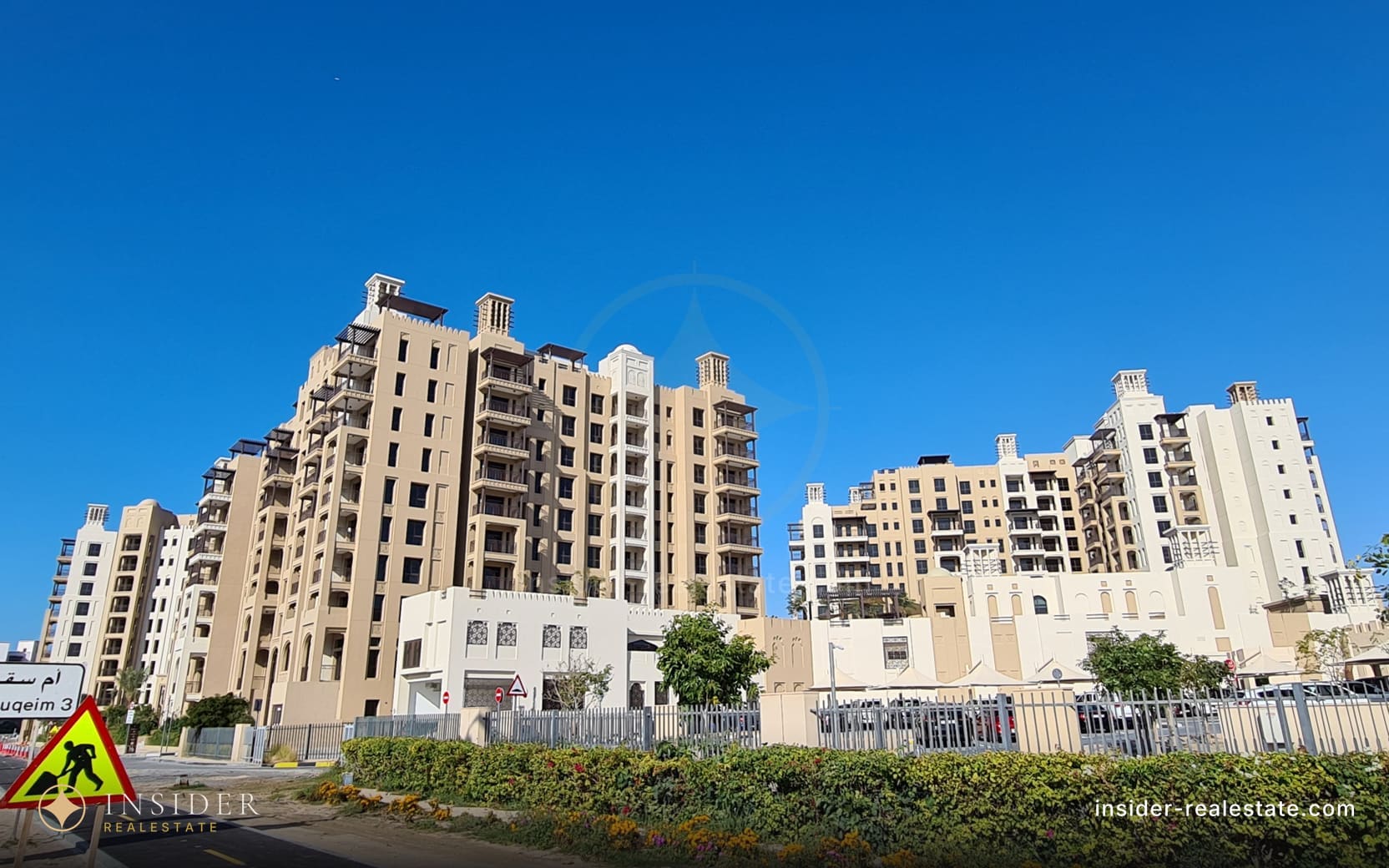
Alongside its major subsidiary brands, some projects are registered directly to the parent structure — typically where a project sits at the intersection of several of the holding's business lines or is part of a masterplan curated centrally rather than spun off into its own sub-brand. An example is the residential buildings in Asayel, part of the larger Madinat Jumeirah Living masterplan, developed under the Dubai Holding name.
For a buyer this means the full strength of the parent structure stands behind the project, rather than a sub-brand with its own narrower portfolio — but that does not remove the need to check the specific project as carefully as any other.
What this means for developer stability
The scale and state origin of the parent holding bring a real advantage: the financial resilience of a structure like this is fundamentally higher than that of an average private developer, and its land bank and access to capital are not comparable to any other company on this market. For an off-plan buyer that reduces one of the key risks — that the developer physically runs out of money before completion.
That does not turn due diligence into a formality: even at this scale, specific projects are delivered through separate legal entities, and a buyer's money is still protected by the escrow account and project registration number, not by the parent name's reputation.
How the masterplan around these projects is structured
Projects delivered directly by Dubai Holding are usually embedded in a wider state-run masterplan — with centralised zoning, infrastructure and a long-term district development plan that rarely shifts as sharply under market pressure as it might for a smaller private developer. That gives a buyer predictability about the surroundings for years ahead.
The flip side of that same predictability is pace: state-run masterplans proceed on their own schedule, which does not always match market demand, and some infrastructure can arrive more slowly than in projects run by private developers focused on the fastest possible sale and handover.
What to check
Who exactly is named as developer in the contract — Dubai Holding directly, or one of its sub-brands — because these are different legal entities with different project histories, even under one holding. The escrow account and registration number for the specific project, regardless of how solid the parent name sounds in the marketing material.
The status of the other phases of the masterplan around your building and their pace of delivery — especially significant for state projects, where a district's full infrastructure often arrives after the residential blocks. The finish specification line by line: the developer's large scale does not automatically guarantee premium finishing in every single building in the portfolio.
How I work with Dubai Holding projects
I always explain to clients the difference between the name on the contract and the general impression of a state holding's scale: the parent structure's stability is real and factors into risk assessment, but it does not replace the ordinary check of the specific building and the specific developer entity. I look at the masterplan's overall status — what is already built around it and what is still on the drawing board — so the client understands the district's real, rather than rendered, timeline to feeling lived-in.
I am equally clear that brands such as Meraas or Jumeirah, formally part of the same holding, are independent market stories with their own positioning, pricing and reputation, and carrying an impression from one sub-brand over to a project where Dubai Holding is named as the developer directly would be a mistake.
The developer is inferred from the project name — there is no developer column in the base. So the figures describe our stock, not the company's share of the Dubai market: a developer sitting on an enormous volume of completed housing can look smaller here than one whose projects reach the resale market more often.
These are asking prices, not closed transactions. For a specific building I pull the registered Land Department sales and show where deals actually closed.
Video
Dubai Holding on video
Project breakdowns from the English channel. Every clip has a written version on a page of its own.
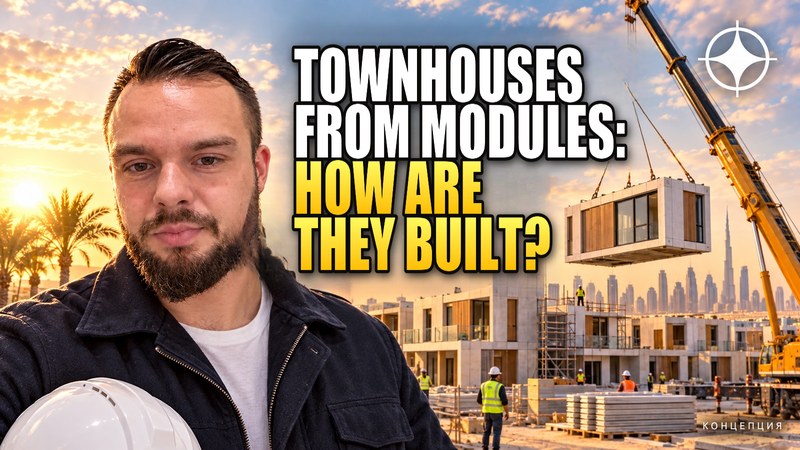
Dubai Holding awarded a AED 680m (~$185m) contract to build Lantana Hills, 390 townhouses in Dubai Science Park. The modular method cuts construction waste by 30%; handover is set for the second half of 2027. Not to be confused with the existing Villa Lantana next door.
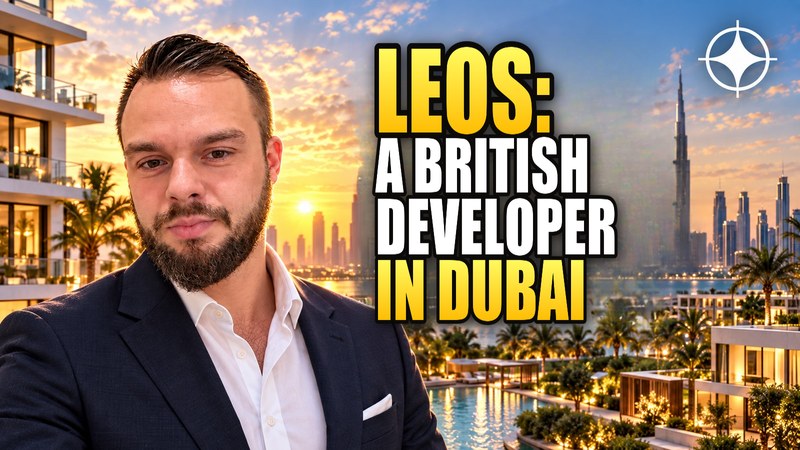
In October 2024 UK-founded LEOS moved its global headquarters to Dubai and announced a $7bn fund for 10+ UAE projects. A year later it launched LEOS Royal with Dubai Holding: about 800 villas and townhouses in Wadi Al Safa 5, valued at AED 5bn+. How to read a developer like this.
In March 2024 Nakheel and Meydan were folded into Dubai Holding and their boards dissolved. By 2026 Palm Jebel Ali has 544 villas on Fronds A–F and 728 on K–P in finishing works, and 892 homes at Jebel Ali Village are being handed over. What changed for buyers, and what did not.
The RTA and Dubai Holding signed an AED 6bn (about $1.6bn) road programme: four new JVC access points with interchanges, double the capacity and 70% shorter journeys. Hessa Street phase two adds a 780 m bridge and a 480 m tunnel out of JVC. What it means for owners and buyers.
In May 2026 Dubai Holding took ICD's 22.27% of Emaar for AED 23.9bn, lifting its stake to 29.73%. Mubadala raised its Aldar holding from 26.26% to 28.03% between March and August. What the reshuffle means for buyers of the UAE's two flagship developers.
Founded: 2004. Check Dubai Holding in the Land Department’s open register, not in the marketing: licence status, per-project construction progress and the registered escrow account are all there. Off-plan payments land in that escrow under RERA supervision and reach the developer only against verified construction milestones. The full dossier is further up the page.
What projects is Dubai Holding building?
Our catalogue holds 3 projects by this developer, each with a building passport: storeys, unit count, handover date, the mix of bedrooms. The list is on this page. Under each project sit the lots on sale, where there are any.
Should I buy from Dubai Holding direct or through a broker?
For an off-plan buyer the price is identical, because the developer covers the broker’s commission. Going straight to Dubai Holding is therefore no cheaper, and the choice there is limited to its own projects — you will not get a comparison with neighbouring buildings or a candid read on handover dates. On resale and assignment the commission is standard: 2% plus VAT.
Is Dubai Holding worth buying
It depends what you are buying and why. Send me your budget and the job it has to do — I will tell you which of this developer's projects make sense right now and which I would walk past.