
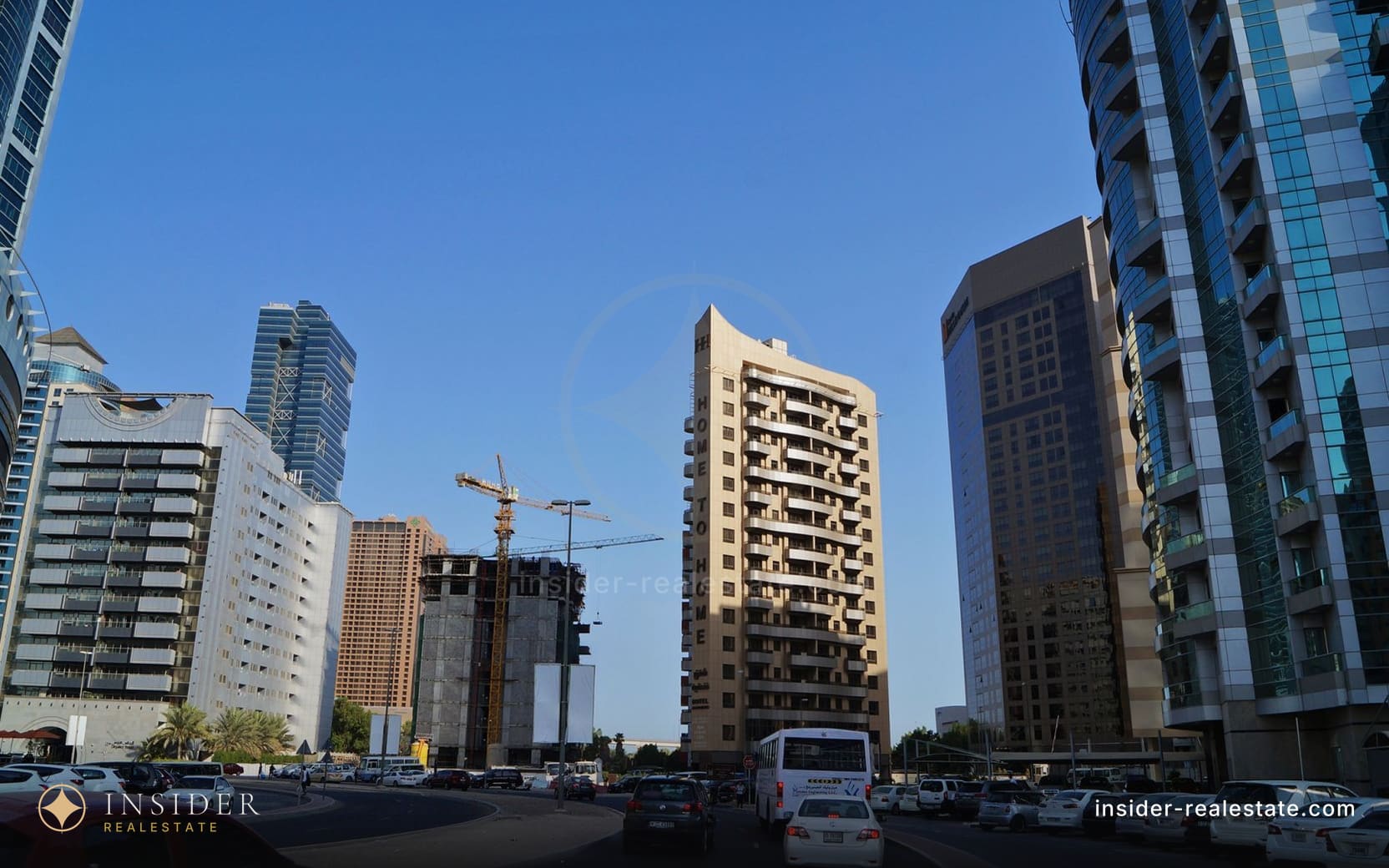
 Photo of the community
 Al Fahad Holding
A developer headquartered in Abu Dhabi with a Dubai arm: in Barsha Heights it owns a twin-block complex with its own infrastructure, and the company's footprint stretches further, into the Maldives and Egypt.
1 lot in stock across 1 project. Of the 1 with a known status: 1 ready, 0 under construction. By median price — 103rd of 139.
- A completed apartment in an established district near the metro
- A parking space as an asset in its own right
- Families who want an in-building pool and gym
- Letting to professionals working in TECOM
Median price $368K AED 1 350 000
Entry price $368K AED 1 350 000 — the cheapest lot
Completed stock 100% no discounted lots right now
Where they build
The districts where this developer has the most lots in our stock.
Barsha Heights / TECOM 1
The company in brief
Checkable facts about the developer itself. Unlike the figures above, these are not about our stock and do not move with what happens to be listed today.
- Founded
- 2009, headquartered in Abu Dhabi, with a separate Dubai business arm
- Footprint
- beyond the UAE — projects in the Maldives and Egypt
- Flagship Dubai asset
- the Al Fahad Towers complex in Barsha Heights (formerly TECOM) — two connected blocks, Tower 2 delivered in 2016
- Complex infrastructure
- two swimming pools, a gym, sauna, steam room, squash court, a barbecue area, a children's play area; underground parking for several hundred cars
What kind of developer this is
Who this is, and why it has two bases
The company is registered with its head office in Abu Dhabi and a separate arm in Dubai — a structure typical of developers who started in one emirate and expanded into the neighbouring one while keeping the legal separation intact. Abu Dhabi's property market runs on a more conservative logic than Dubai's, and a company rooted there often carries that same caution into its Dubai projects — a more measured launch pace than purely Dubai-based developers who continuously roll out new phases.
The company's footprint is not limited to the UAE: alongside the local market it has projects in the Maldives and Egypt. For an investor that is more context than a direct practical takeaway — a presence in several markets suggests accumulated experience across different jurisdictions and property types, but it should not substitute for checking the specific Dubai asset on its own merits.
The Barsha Heights complex as the core asset
The company's flagship Dubai project is two connected residential blocks in a district known as TECOM before its renaming, now Barsha Heights. The district formed around office clusters for tech and media companies, and housing here has traditionally been rented by that same audience — professionals who work nearby and value a short commute more than a prestigious address.
The complex has substantial infrastructure of its own: two pools, a gym, lounge areas, a children's play area — a set typical of a large residential block rather than a compact single-core tower. That simplifies upkeep and service-charge allocation: common-area costs are pooled across one shared complex rather than split between several smaller buildings with different amenities.
Parking as a real district asset
The complex provides several hundred parking spaces — a substantial number for a building of this format, and in a dense district without a metro station within walking distance, a parking space functions as a genuine value line item for the apartment rather than an afterthought. Most tenants in Dubai drive, and a second parking spot attached to a unit is a real uplift to achievable rent for a couple or flatmates with two cars.
When viewing, check not just whether a space is included but where it sits — near the lift lobby or in a far corner of the underground garage — and whether it is titled with the unit permanently or allocated by the management company, since the latter can be reassigned in some buildings.
Barsha Heights is an established district, not a growing one
Unlike new master plans on the city's edges, Barsha Heights is a settled district with a long rental history and predictable price behaviour: there is no construction boom in neighbouring blocks and none of the sharp supply swings typical of actively developing areas. For a buyer that means more predictable but also less explosive price growth than in newer quarters.
That profile suits an investor after stable rather than speculative returns: tenants here pay for proximity to their workplace, not a view of a waterfront under construction, and demand for such units does not depend on the marketing activity of neighbouring developers.
What to check before buying
Confirm the developer's legal entity on the contract — Dubai or Abu Dhabi, as noted above — and make sure it matches the Land Department registry record. Confirm the status of the specific parking space and whether its upkeep is folded into the general service charge or billed separately.
Check the complex's service-charge history over several years and the owners' association minutes for any planned major works — for a building delivered some years ago, that is a standard and necessary part of due diligence.
How I work with this developer
For this complex I always ask a client whether proximity to specific office clusters in the district matters to them — that determines which block and which floor is worth viewing first. Second, I pull live rental listings specifically for Barsha Heights rather than Dubai as a whole, because in an established district local rate movement often differs from citywide statistics.
Third, if a client is interested in markets beyond Dubai, I check whether the company's other markets are relevant to them — a developer's track record across different jurisdictions can be useful context when considering diversification beyond the UAE.
Projects by Al Fahad Holding
All projects →Al Fahad Holding listings in stock
All stock → Photo of the community What these numbers mean, and what they do not
Lots are matched to Al Fahad Holding by project name, since the base has no developer field. The numbers above therefore describe our stock rather than the company’s market share: a developer with a large completed portfolio can show fewer lots than one whose buildings are resold more often.
All prices are asking prices, not sales. For the building you pick I pull the registered Land Department transactions and show the prices deals really closed at.
In the news
Al Fahad Holding: parking, the cheapest thing that changes your rent
A developer with a tower in Barsha Heights. Parking allocation is a line most buyers skim and tenants treat as decisive — and in some districts it is worth more than the finish.
Other developers
All developers → Questions
Al Fahad Holding: questions and answers
How much does a Al Fahad Holding apartment cost?
The median across this developer's lots in our stock is $368K (AED 1 350 000), with entry from $368K. The figures come from asking prices in our base, not from the Al Fahad Holding price list, and they are recalculated nightly to reflect what is actually for sale today.
Is Al Fahad Holding a reliable developer?
Founded: 2009, headquartered in Abu Dhabi, with a separate Dubai business arm. The register of the Land Department is the source that matters, not the brochure: it lists the licence, each project’s progress in per cent and the escrow account. On off-plan the buyer’s money sits in that account under RERA control and is paid out as construction stages are verified. The complete dossier is in the write-up above.
What projects is Al Fahad Holding building?
Above on this page: 1 project by Al Fahad Holding from our catalogue, each with a passport covering floors, units, handover and bedrooms. The districts holding most of its lots are grouped under “Where they build”. Lots on sale, when there are any, sit right under the project.
Should I buy from Al Fahad Holding direct or through a broker?
Money-wise there is no difference: on off-plan the broker is paid by Al Fahad Holding, not by you, so calling the sales office direct saves nothing. What differs is the view — the developer’s sales team sells only its own buildings and will not mention that the same unit costs less next door or that this project hands over later. On resale and assignment the commission is the usual 2% plus VAT.
Is Al Fahad Holding worth buying
That depends on what you buy and why. Describe the budget and the aim — I will point out which of this developer’s buildings are justified today and which are better left alone.
Ask on WhatsAppAsk a question
Telegram is the fastest way — I answer personally.
Message on Telegram