
UAE warehouses in 2026: a Grade A shortage, rising rents and who owns the market
Grade A warehouses in Dubai are close to full: JLL put occupancy in Jafza and Dubai Investments Park at 97–100% at the end of 2025, and industrial rents rose 6.8% year on year in Q2 2026 (5% in Abu Dhabi). Leases now run 7–9 years, not 3–5. Who owns the stock and what to check.
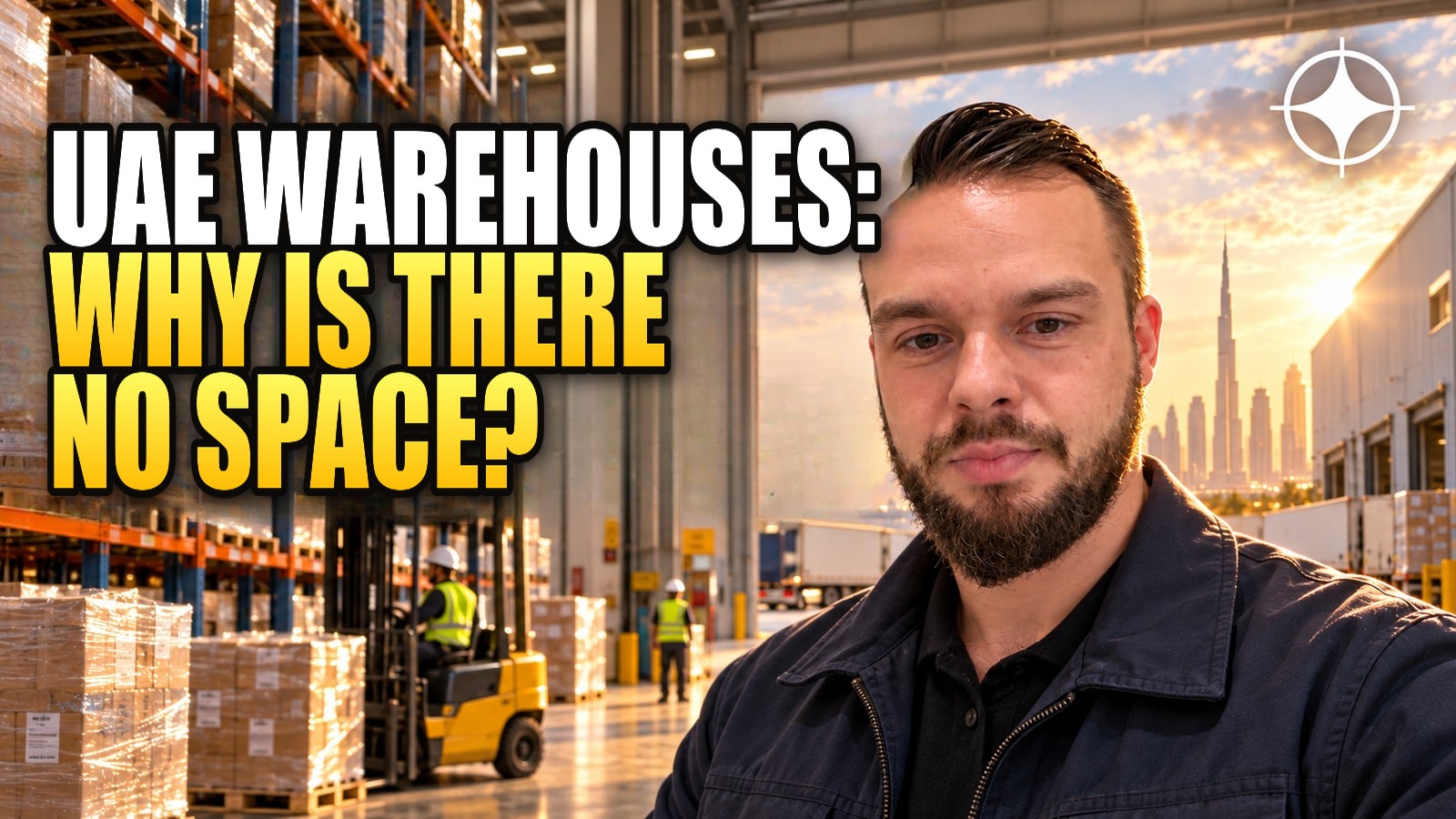
Warehouses are the segment of UAE property that private investors notice least. They are not advertised, nobody tours them, yet in 2025–2026 logistics together with offices proved more resilient than housing. The reason is straightforward: the country is building itself into a trade and logistics hub, and there is not enough modern space to do it in.
What the numbers show
- Rents are rising. JLL reports Dubai industrial rents up 6.8% year on year and 2.3% quarter on quarter in Q2 2026; Abu Dhabi was up 5%.
- Grade A is nearly full. At the end of 2025 JLL put occupancy of modern warehouses in Jafza and Dubai Investments Park at 97–100%, and Dubai's industrial stock overall at about 94%.
- Leases are longer. On the same assessment, average terms have stretched to 7–9 years from 3–5, as occupiers lock in space rather than search for more.
- Fewer contracts. Cavendish Maxwell counted about 10 000 warehouse leases in Dubai in H1 2026, 4.5% fewer than a year earlier — a symptom of scarcity rather than weak demand: little space frees up and more tenants renew.
Consultants' figures differ because their samples differ, but the direction is the same. JLL also notes the other side: in some locations landlords of older stock now offer concessions of up to 15% to hold occupancy.
Who owns the market
| Location | Operator | Why it matters |
|---|---|---|
| Jafza and National Industries Park | DP World | next to Jebel Ali port and the main highways |
| Dubai Investments Park | Dubai Investments | mixed district of warehousing, industry and housing |
| Dubai Industrial City | TECOM Group | light industry and logistics |
| Dubai South | Dubai South | Al Maktoum airport and its logistics district |
| KEZAD (Abu Dhabi) | AD Ports Group | Khalifa Port and the capital's industrial zones |
Most quality stock belongs to government operators and institutions. What a private buyer can realistically access is a finished, tenanted building or a small free-zone unit. CBRE highlights rental growth in Dubai Industrial City, DIP and National Industries Park, while in Abu Dhabi AED 48.5bn of investment commitments under the Make it in the Emirates programme support demand.
Talk to a licensed broker: 📲 +971 50 120 32 64 on WhatsApp, @dubai_oleg on Telegram
What to check as a private investor
- You are buying the tenant. The return depends on lease length, escalation clauses and the tenant's covenant.
- The land is often leased. In many free zones the building sits on land leased from the operator; the term and renewal conditions drive resale value.
- Liquidity is thin. Buyers for a multi-million-dollar warehouse are few, and a sale can take months.
- Specification beats price. Clear height, floor loading, truck access and fire systems decide whether the building finds a tenant in ten years.
Why southern Dubai is the main logistics platform is covered in our piece on warehouses and industrial land, and the role of the ports in UAE Ports: The Industrial Heart of the Country.
Homes and commercial property in the main logistics district are on the Jebel Ali area page.
Video on this topic
The same subject on the English channel — each clip has a written version of its own.
 6:43
6:43 Retail in Maritime City: Danube Oceanz compared with Nautica by Select Group
How to buy commercial property in Dubai and where the difficulties actually are, plus a side-by-side of the remaining stock in Danube Oceanz and Select Group Nautica — and why pre-launch pricing is almost always the better entry.
WatchIn the news
Other write-ups on the site about the same thing.
Dubai Auto Market: DP World's 22-million-sq-ft car trading hub, and what it means for warehouses and housing
DP World was mandated in 2024 to expand Dubai's car market eightfold; in November 2025 the project was unveiled at 22 million sq ft — 1 500 showrooms, capacity for 800 000 vehicles a year, an auction house and a hotel. Current turnover of AED 6.8bn is expected to double.
Ras Al Khor warehouses and workshops: how the industrial rental market works
The industrial part of Ras Al Khor is a separate rental market with its own logic. It is more stable than residential, and it calls for a different approach.
Dubai Investment Park: how letting commercial property differs from letting a home
In a mixed-use zone, apartments are not the only thing for sale. Offices and warehouses come with a different tenant, a different lease and different economics.

Russian retail brands in Dubai in 2026: a quarter of them left, and what it tells a mall-space investor
By mid-2026, 78 Russian-owned retail and F&B brands were trading in Dubai, down 27% from 107 in April. No new brand entered the market in the first half of the year, and mall leasing tightened across the board. What one cohort’s retreat says about Dubai’s retail leasing cycle.
UAE office shortage: prime vacancy at 0.3% in Dubai and 0.1% in Abu Dhabi
JLL puts prime office vacancy at about 0.3% in Dubai and 0.1% in Abu Dhabi. In Q2 2026 Dubai Grade A rents rose 26.2% year on year and Grade B 31.5%; CBRE puts occupancy at 94% in Dubai and 96% in Abu Dhabi. What the squeeze means for office owners and buyers.
Grade A offices in Dubai: DMCC launches One Uptown Place and Two Uptown Place
DMCC is adding two office towers to Uptown Dubai — 21 and 15 storeys, more than 560 000 sq ft of Grade A space and 82 000 sq ft of retail. Leasing opens in the second half of 2026 and completion is due in Q1 2028, taking the district past 1m sq ft. What it means for nearby owners.