
The UAE and Jordan are building a $2.3bn railway
The project is designed to move up to 16 million tonnes of freight a year to the port of Aqaba, as part of a broader regional logistics strategy. Why overland corridors matter to the UAE property market.

The UAE and Jordan are launching a railway project worth $2.3 billion. The line is designed to carry up to 16 million tonnes of freight a year to the Jordanian port of Aqaba. The agreement forms part of a broader strategy for infrastructure development and strengthening the region's logistics capability.
What the project delivers
- Up to 16 million tonnes of freight to Aqaba — Jordan's only seaport and its outlet to the Red Sea.
- Supply chain efficiency and lower transport costs.
- A stronger regional role as a logistics hub and wider trade links between the countries.
Why overland corridors suddenly matter
Recent years have demonstrated the fragility of maritime routes: disruption in a strait feeds through immediately to shipping costs and times, and for an economy built on transit that is a direct hit. The UAE's answer is route diversification — a railway to the Red Sea offers an alternative that does not depend on a single chokepoint.
It is the same logic as Etihad Rail domestically: connect ports and industrial zones by rail first, then extend the network across borders.
Talk to a licensed broker: 📲 +971 50 120 32 64 on WhatsApp, @dubai_oleg on Telegram
What it means for property
The link is not obvious but it is real, and it runs through one channel — the resilience of a transit economy.
Dubai earns from goods passing through it, and a substantial share of jobs — from port operators to warehouse logistics and trading companies — exists because of that flow. Transport and logistics delivered 37% of Dubai's entire GDP growth in Q1 2026. Anything that makes the flow less vulnerable supports employment, and employment supports housing demand.
- Direct beneficiaries — industrial and warehouse property: Jebel Ali, Dubai Industrial City, Dubai South.
- Indirect ones — the residential districts around those zones, where the people who work there live.
- The horizon is long. Railways of this scale take years; this is a resilience factor, not an event that moves prices this season.
Based on official announcements on the UAE–Jordan agreement.
In the news
Other write-ups on the site about the same thing.

UAE Central Bank: growth slows to 1.7% in 2026 — then accelerates to 9.8% in 2027
The UAE Central Bank cut its 2026 growth forecast to 1.7%, after 6.2% a year earlier — geopolitics and logistics took their toll. For 2027 it projects 9.8% growth. How to read the swing, and what it means for timing a property purchase.
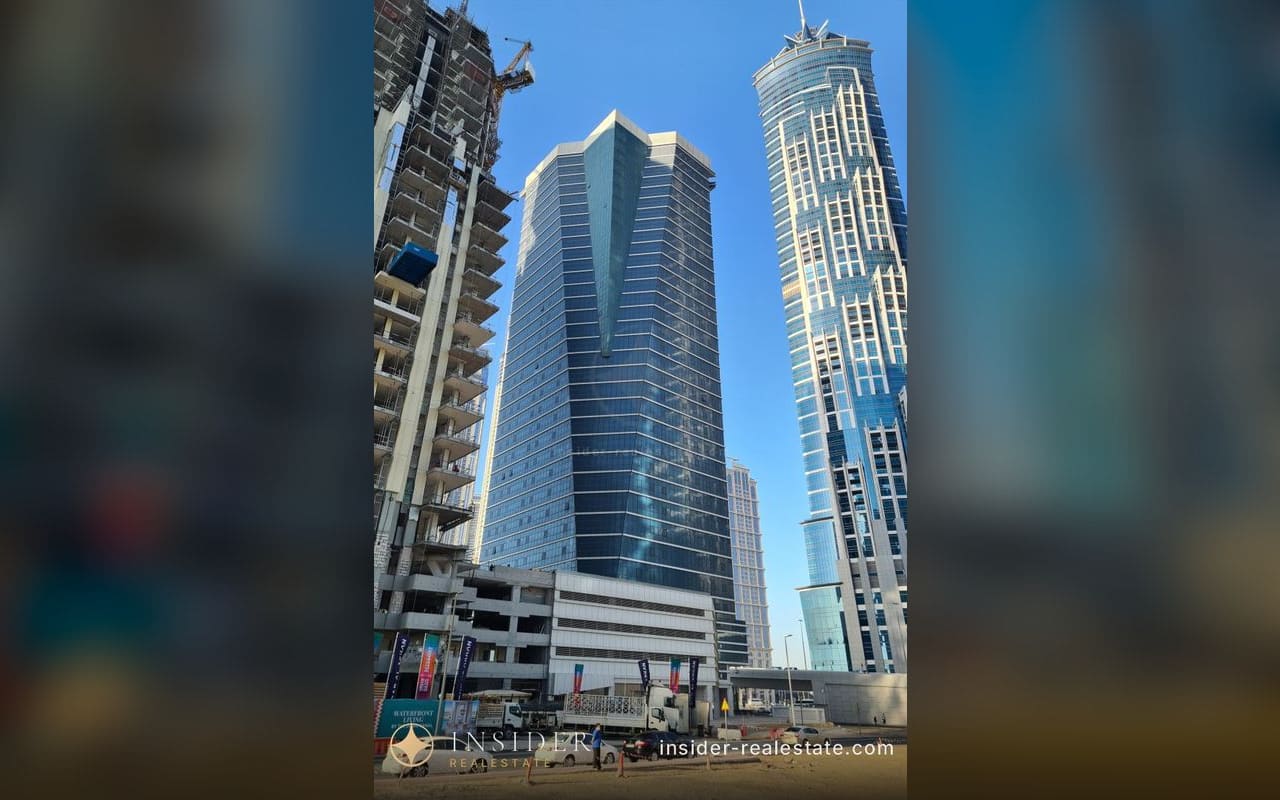
UAE ranks first in the world for entrepreneurship conditions for a fifth year running
The Emirates again topped the Global Entrepreneurship Monitor, which measures not success stories but the environment for creating a business: finance, regulation, taxes, infrastructure and digitalisation. Five years at number one is a position, not a ranking.
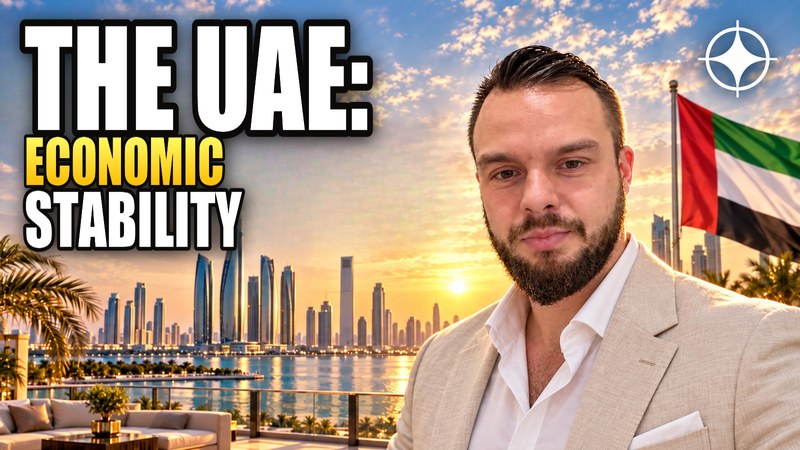
UAE Economic Stability: Second in the World, Behind Only Switzerland
An international stability study ranks the UAE second worldwide, ahead of Canada, Germany and Japan. GDP per capita rivals Western Europe, and the country’s sovereign wealth funds hold trillions of dirhams in assets.

Sharjah is spending AED 1.65bn on roads and stormwater drainage
Two of the largest construction programmes in the emirate’s history are running at once. They, rather than any developer’s payment plan, will determine what these districts look like in five years.

Abu Dhabi manages $1.7 trillion — more than Switzerland and the Netherlands combined
The number explains less than the structure does. There is no single pot: several independent institutions with separate mandates, and that arrangement is what makes the capital behave the way it does.

Stargate UAE: a 1 GW AI cluster in Abu Dhabi, and what it actually means for property
The first 200 MW goes live in 2026 and the wider campus is planned at 5 gigawatts across ten square miles. Where the effect on housing and offices is real, and where it is being overstated.