
Twenty-fold in fifteen years: three record Dubai deals and what is behind them
Three transactions Dubai quotes as benchmarks. Looking at them together is more useful than at any of their percentages — and what they have in common is not repeatable.

Three transactions that get quoted in Dubai as benchmarks. It is useful to look at them together, because what they have in common matters more than their individual percentages.
Dubai Marina: AED 13m to 275.5m
Bought in 2009 for AED 13m, sold in December 2024 for AED 275.5m — a rise of 2 019% over fifteen years. Per unit area: AED 320 a square foot in 2009 against 6 831 in 2024.
The key here is the entry point. 2009 was the bottom after the global financial crisis, when the Dubai market fell harder than most in the world. A purchase like that requires not analysis but a willingness to buy when everyone is selling.
Talk to a licensed broker: 📲 +971 50 120 32 64 on WhatsApp, @dubai_oleg on Telegram
Dubai Hills: a villa from 36.6m to 145m
A villa in the Hills Grove cluster bought in 2020 for AED 36.6m and sold in October 2024 for AED 145m — a rise of 296% over four years, at AED 4 169 a foot.
Context: across 2024 Dubai villas gained around 24.8%, and prices in Dubai Hills Estate itself rose 45.7% over two years with rental yields of 5.5–7%. So this individual case far outran its district, and the explanation is simple — limited supply of villas of that class beside a golf course.
Emaar Beachfront: 4.8m to 15m in two years
An apartment in the Beach Vista project bought in 2022 for AED 4.8m and sold in 2024 for AED 15m — a rise of 212%. The average price in the location in 2024 was around AED 7 000 a foot.
A different mechanism was at work here: buying during construction in a project with limited front-row supply, and selling at the peak of completion.
What they share
- Limited supply. Front row, a villa by a golf course, a one-off unit — in all three cases there is no more land.
- Entry in a weak phase. 2009, 2020 and 2022 were periods when the market was cautious.
- Exit at the peak. All three sales fell in 2024.
And the thing these cases do not contain: repeatability. Successful transactions get published; unsuccessful ones never do. Planning your own return around them is the same error as judging the stock market by the people who bought Apple in 2003.
Video on this topic
The same subject on the English channel — each clip has a written version of its own.
 19:59
19:59 Imperial Avenue: a profitable resale in Downtown Dubai
Imperial Avenue by Shapoorji Pallonji in Downtown Dubai — a full breakdown of why this project has produced good resale outcomes and how to evaluate a resale opportunity in a completed Downtown tower.
WatchIn the news
Other write-ups on the site about the same thing.
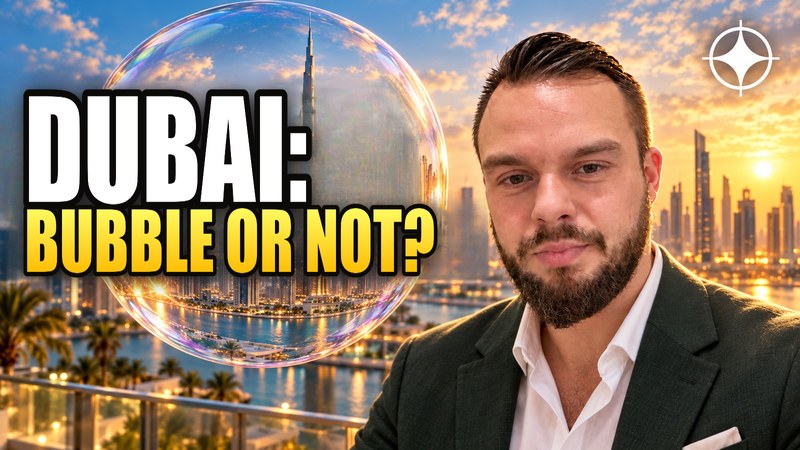
Is Dubai property a bubble? What the UBS index says about Dubai, Frankfurt, Hong Kong and Singapore
The Swiss housing-bubble index places Dubai in fair-value territory: inflation-adjusted prices were still about a quarter below the 2014 peak, and rents grew faster than prices. How that compares with cities the index rates as overvalued.

Non-Oil Sector Now 74.6% of UAE GDP; Dubai Draws $14bn in Foreign Investment
The UAE’s non-oil economy has grown to 74.6% of GDP, up 4.5%. Dubai alone attracted $14bn in foreign direct investment — up 33% year on year — and a record 1 117 new greenfield projects.

CIS Buyers in the Dubai Market Are Turning From Buyers Into Sellers
In 2022–2024, buyers from post-Soviet countries entered payment plans expecting fast growth. By 2026, the pattern of agency enquiries has shifted: increasingly it’s not a purchase but an exit or an assignment. Here’s why — and what it changes for the market.

Dubai's Big-Ticket Office Deals Triple as DIFC Registers 1 081 New Companies
Deals on offices over AED 10 million tripled in six months to 83. DIFC set a record for new company registrations. Why the gap between prime and secondary buildings is set to widen.
Eight projects on Palm Jumeirah: where investors made money and where they got stuck
A closed site with a similar buyer pool and comparable asset classes — so the spread in outcomes is explained by the projects rather than by the market. Up to 40% during construction in one, no registered resales at all in another.
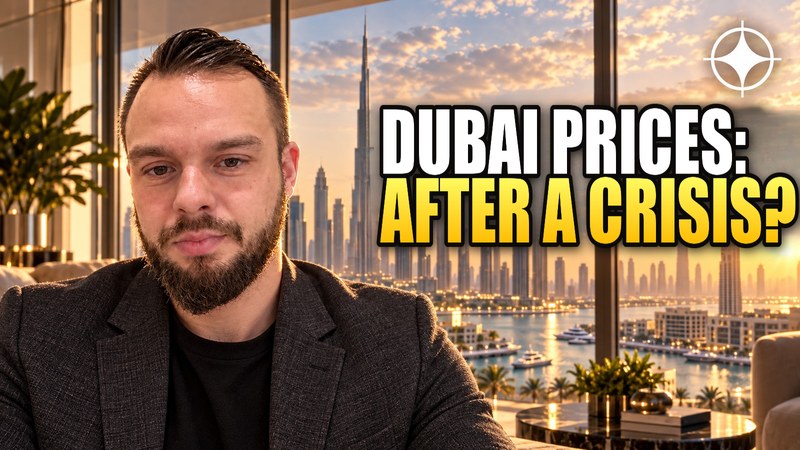
Dubai property prices after 2008 and the pandemic: what history actually shows
Dubai prices fell roughly 45% in 2009 and barely dipped in 2020 — then both times the market recovered and pushed past old highs. We walk through both cycles with sourced numbers, and what that means for anyone timing a purchase in 2026.