
Pure Gold: a retail group that moved into property
A jewellery and retail business developing residential buildings in Al Furjan. What carries over from another industry, what does not, and how to check a first-generation developer.
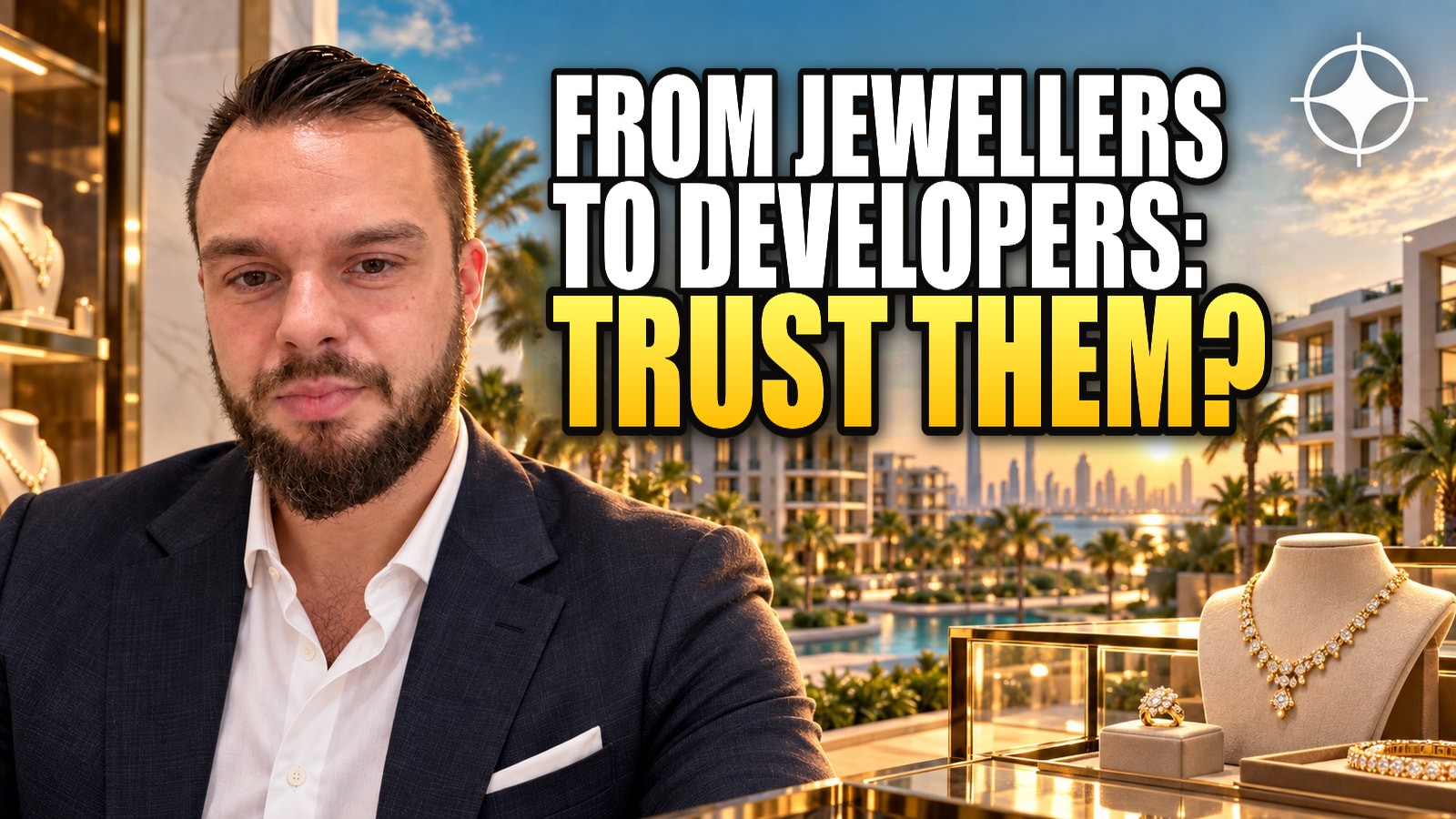
Pure Gold built its business in jewellery and retail before developing residential buildings in Al Furjan. Companies crossing into property from another industry are common in this market, and the assessment is specific: some of what they bring is genuinely valuable, and some of what buyers assume transfers does not.
What carries over
- Capital that did not come from presales. A profitable business elsewhere means the project is less dependent on sales velocity — a real advantage in a slow quarter.
- A reputation the group will not risk. A company with a consumer brand in another sector has more to lose from a failed building than a single-purpose developer does.
- Commercial discipline. Retail is an unforgiving business, and cost control and customer service habits do transfer.
What does not
- Construction management. Running a build is a specialist discipline, and it is learned on the first projects. The contractor and the supervising consultant therefore carry more weight here than usual — find out who they are.
- Regulatory routine. Escrow administration, Oqood, licensing sequence and handover procedure are unfamiliar to a first-time developer.
- Aftercare. Snagging, defects liability and the formation of an owners' association are development skills. Ask specifically how the group handles them.
- Delivery record. Success in another industry is not evidence about a handover date.
The district matters here
Al Furjan is a dense apartment district with metro access and a large amount of comparable supply. In a cluster like that, your unit competes directly with many similar ones nearby, and that competition sets your achievable rent regardless of who built it. Check live listings within a few hundred metres, and ask how many units complete around you in the same period.
What to check
- The main contractor and the supervising consultant, whose records exist even when the developer's is short.
- Escrow account and Oqood registration, confirmed by project number.
- Completed buildings, visited — with a small portfolio each one carries a lot of the evidence.
- Payment schedule weighting, and the delay remedy.
- Service charge in a delivered building nearby.
- Distance to the metro, which in Al Furjan visibly affects both rent and resale.
Who it suits
- Mid-budget buyers who will verify the contractor rather than the brand.
- Yield investors who have done the cluster arithmetic.
- Not a buyer who reads success in another industry as a delivery record.
Based on the Dubai Land Department register and standard off-plan escrow practice.
Talk to a licensed broker: 📲 +971 50 120 32 64 on WhatsApp, @dubai_oleg on Telegram
Video on this topic
The same subject on the English channel — each clip has a written version of its own.
 19:45
19:45 Oceano on Al Marjan Island: the Luxe Developers project and the island being built around it
A walkthrough of Al Marjan Island as it is being built: current infrastructure, the resort plots still under construction, and the architectural vision for the hotels going up around Oceano.
WatchIn the news
Other write-ups on the site about the same thing.
Land Department registration does not make a developer reliable: eight questions first
Every developer selling off-plan in Dubai has a registration and an escrow account. That is not an achievement, it is the condition of entry — and buyers read it as a guarantee.

How to check a Dubai developer: go and inspect one of their finished buildings
Developer marketing here is exceptional — renders, showrooms, immersive galleries. None of it tells you what you will receive. The only method that works, and specifically which building to visit.
Nabni Developments: how to calculate rental yield honestly, on an Al Furjan example
A developer with a completed building in Al Furjan. Gross yield, net yield and return on invested capital are three different figures — and sales decks show the least useful one.
Ghreiwati Property Development: choosing an agent, and knowing whose side they are on
A developer with a completed Al Furjan building. Brokers are licensed and the licence is checkable — and the more useful question is who pays them.
CPL Real Estate Development: buying a property that already has a tenant
A developer with a completed Al Furjan building. A tenanted unit comes with income from day one and with a contract you did not write — and you inherit both.
Landmark Holdings: verifying a developer yourself, in twenty minutes
A developer with a completed JVC building. Whoever you are buying from, the checks that matter are public, quick and almost never done — here they are in order.