
National Bonds: when the developer is a savings institution
A regulated savings company that also develops property. What an institutional balance sheet changes for an off-plan buyer, and where it makes no difference at all.
National Bonds is a savings and investment institution with state participation, and property development is one of the things it does with the capital it manages. That origin makes it a different kind of counterparty from a merchant developer, and the difference is worth reading precisely — because it is narrower than it looks.
What an institutional developer changes
- Development is not the only source of income. A company funded by a managed savings pool is far less dependent on presales velocity than a developer that lives on it.
- Regulatory supervision. A regulated financial institution reports to a supervisor and operates under governance requirements that no private developer faces.
- Longer horizons. Institutions hold assets and think in decades, which shows in specification and in willingness to retain rather than sell everything.
- Lower counterparty risk on the off-plan promise, which is the risk that matters most before handover.
Where it makes no difference
This is the part sales conversations tend to elide:
- Construction is still done by a contractor, and a strong balance sheet does not build faster or better. Ask who the contractor is.
- Your protection is still the project escrow account, not the parent's assets. Confirm it and confirm the Oqood registration.
- Which entity signs your contract matters. A development subsidiary is not the institution, and any comfort from the parent needs to be contractual to be worth anything.
- The location and the layout are what they are. No counterparty quality improves a badly positioned unit.
What it holds and builds
A mix that includes a Dubai Marina tower and residential development in Dubai Hills Estate — established districts with deep rental and transaction data, which makes independent price-checking straightforward.
Talk to a licensed broker: 📲 +971 50 120 32 64 on WhatsApp, @dubai_oleg on Telegram
What to check
- The signing entity, and whether the institution stands behind it contractually.
- Escrow and Oqood, the contractor, and the delay remedy.
- Service charge in delivered buildings, with history.
- Real comparables and achieved rents in the specific district, both readily available for these locations.
- For delivered stock: survey, reserve fund and association minutes.
Who it suits
- Buyers who weight counterparty risk heavily and want a regulated institution on the other side of the contract.
- Long-horizon investors in established districts with checkable data.
- Not a buyer who treats an institutional name as a substitute for escrow, contractor and location checks.
Based on the Dubai Land Department register and the institution's published structure.
Video on this topic
The same subject on the English channel — each clip has a written version of its own.
 19:45Oceano on Al Marjan Island: the Luxe Developers project and the island being built around it14 August 2026
 1:35Binghatti Aquarise, Business Bay: the pitch and the reality check12 September 2025
 1:17Skyrise by Binghatti: a landmark tower at mid-market pricing11 September 2025
 1:38Binghatti Hills at Arjan: the volume play, examined10 September 2025
 1:31Binghatti Haven in Dubai Sports City: cheap for a reason, or cheap for a good reason?9 September 2025

In the news
Other write-ups on the site about the same thing.
LIV Real Estate: one district, and what concentration does to risk
A boutique developer working almost entirely in Dubai Marina. Why a single-district portfolio is both the strongest and the weakest thing about a company like this.
Select Group: waterfront towers and what a marina address really costs
A developer built around Dubai Marina and the harbour districts. Why the water is the whole thesis, what a waterfront service charge looks like, and where the resale market for these units sits.

Condor Group: buying a just-finished flat from someone who never lived in it
A Dubai Marina tower completed in 2023. Much of the stock in a newly delivered building is sold on by off-plan investors — and buying from one is its own transaction.
Sheffield Holding: what a buyer can actually do when a project stalls
A developer with a supertall Dubai Marina project long under construction. Stalled projects are the risk off-plan buyers fear most — and Dubai has a defined process for them.
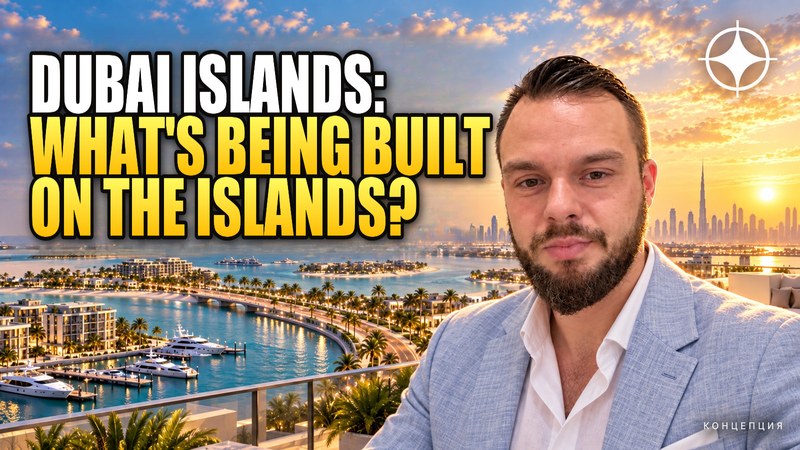
Dubai Islands: JW Marriott Residences by CG Developers, and Nakheel's AED 527m infrastructure contract
CG Developers is building Dubai's first JW Marriott residence, priced from AED 1.72 million with a Q1 2028 handover. In parallel, Nakheel has awarded a AED 527 million contract for Island B's core infrastructure — roads, water and sewage for a future 49 000 homes.

UAE developers under S&P and Moody's review: liquidity, construction costs and handover dates in 2026
In March 2026 S&P saw no liquidity pressure at Emaar, DAMAC, Omniyat and PNC Investments. In July Moody's reported most UAE projects due in 2026–27 on schedule despite imported materials costing 20–25% more. What off-plan buyers should take from both.