
Istanbul and Antalya: two different property markets in Turkey
The Turkish market is usually discussed as a whole, though inside it splits into two almost unconnected stories — one urban with domestic demand, one coastal and foreign-funded.
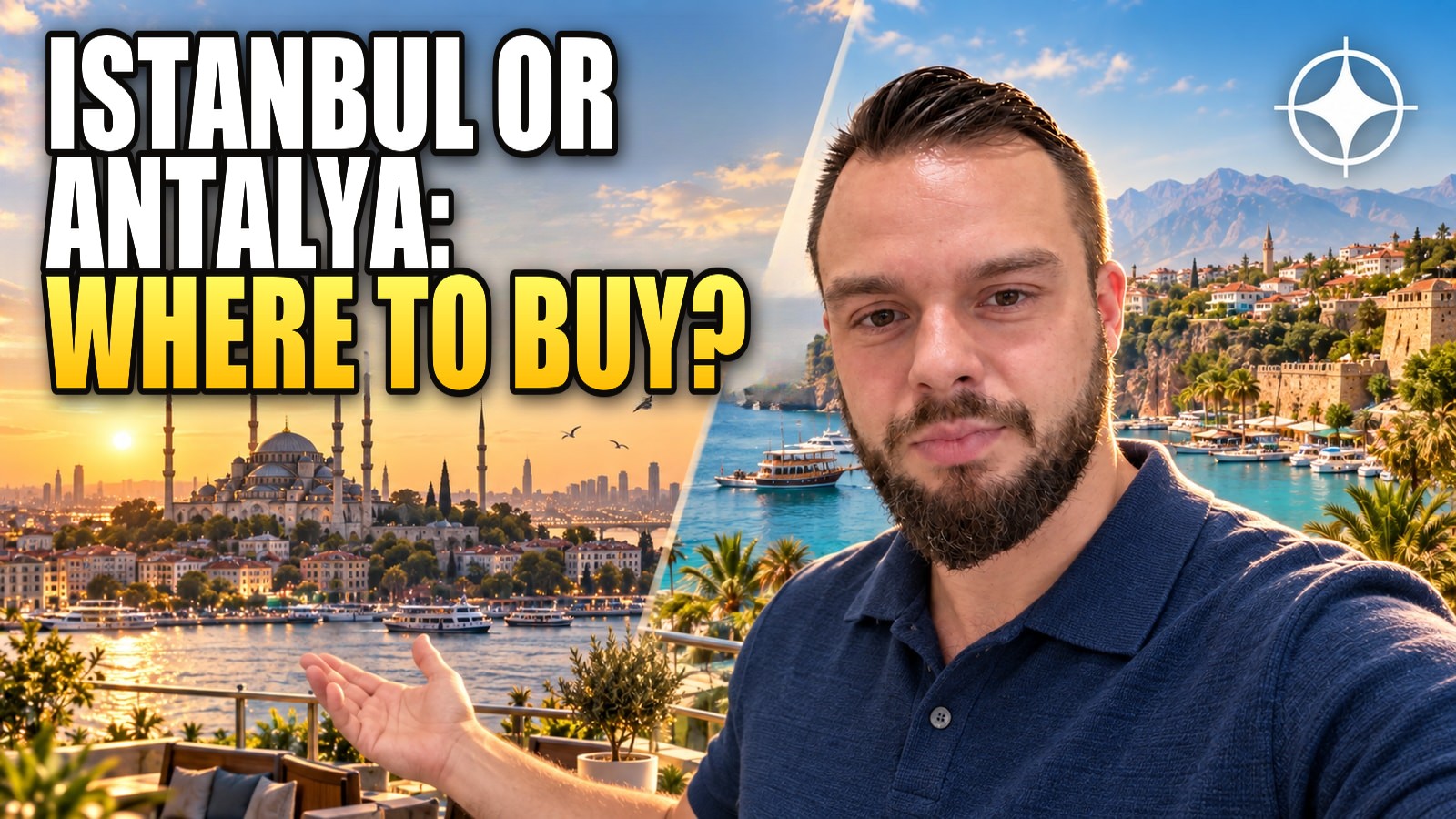
The Turkish market is usually discussed as a whole, though inside it splits into two almost unconnected stories. Istanbul is a large urban market with domestic demand. Antalya and the coast are a resort market, a significant part of which rests on the foreign buyer.
Istanbul: a city, not a resort
Fifteen million residents, the country's business centre, universities, industry. Demand here is domestic and work-driven: people rent and buy because they live and work in the city, not because the sea is nearby.
- The tenant is a local family, a student, an arriving professional. There is almost no seasonality.
- Liquidity is the highest in the country: the market is deep and there is always a buyer.
- Geography decides everything. European and Asian sides, proximity to metro lines, travel time to the business centre — that is the price.
- The risk is seismic. Istanbul sits in a zone of expected strong earthquakes, and the age and structure of a building matter more here than the view.
Antalya and the coast: season and foreign demand
The resort market lives in summer and is sold to a significant degree to foreigners — in different years buyers from Russia, Iran, Germany, the Gulf states.
Talk to a licensed broker: 📲 +971 50 120 32 64 on WhatsApp, @dubai_oleg on Telegram
- Rental demand is touristic, with a pronounced peak.
- The tenant is a tourist in summer and a wintering foreigner in the cold months.
- Supply is built to foreign taste: complexes with a pool, security, amenities.
- Concentration risk. When the flow of buyers from one country stops, a segment built for them loses both sellers and tenants.
- The exit is slower than Istanbul's: you wait for a buyer.
What both markets share
- The currency question. The lira depreciated fast and for a long time, and a property's return in dollars can diverge radically from its return in lira.
- Settlement. Turkish currency regulation requires transactions between residents to be conducted in lira; transactions with a foreign buyer have their own procedure with mandatory conversion and a certificate of it. Technical, but compulsory.
- A mandatory valuation by a licensed valuer when selling to a foreigner — a document that also protects the buyer from an inflated price.
Video on this topic
The same subject on the English channel — each clip has a written version of its own.
 4:15Lamborghini villas in Meydan: half the price of Ellington, and why26 January 2024
 13:04The best townhouses in Dubai under USD 600 000: Nshama Town Square7 October 2023
 13:00Socio by Emaar in Dubai Hills: buying a whole floor, and skipping the 2% commission4 October 2023
 12:00XXII Carat on Palm Jumeirah: 22 Mediterranean villas compared with Raffles and Zabeel Saray20 September 2023
Related reading
Other write-ups on the site about the same thing.
Property in Turkey: TAPU, military clearance and a mandatory valuation
One of the most open markets in the region and simultaneously one of the most procedural. Buyers usually learn about the filters at the moment one of them trips.
Turkey’s Closed Neighbourhoods: Where Buying an Apartment Won’t Get You Residency
Turkey closes neighbourhoods to foreigner registration once their share of foreign residents crosses a set threshold. The apartment purchase is legal, but a residence permit at that address can be refused. How to check an address before a deal.

Turkey: revocations and what they teach about buying a citizenship
Turkish authorities have annulled grants made through the property route where the underlying transaction did not meet the conditions. The pattern is worth studying whatever programme you are considering.
A property transaction in Greece: a tax number, a notary and the cadastre
A continental transaction: notary, registration, a buyer’s own lawyer as standard practice. What tends to alarm foreigners is not the structure but the time — and the reason is historical.

Letting a villa in Bali as a business: zoning, licences and what changed
“Buy a villa, let it to tourists” is sold as passive income. Legally it is hotel activity, requiring land rights, a building permit, an accommodation licence and tax registration.
Aparthotels in Batumi: how guaranteed yield programmes are built
The Batumi market rests largely on one product: a small studio in a seafront tower sold with a promise of fixed income. The structure looks simple, which is why it is rarely taken apart.