
Dubai cooled but did not crash: fewer transactions, prices holding
The change needs describing precisely, because headlines describe it wrongly. Price is what something sells for; liquidity is how long it takes to find the buyer.
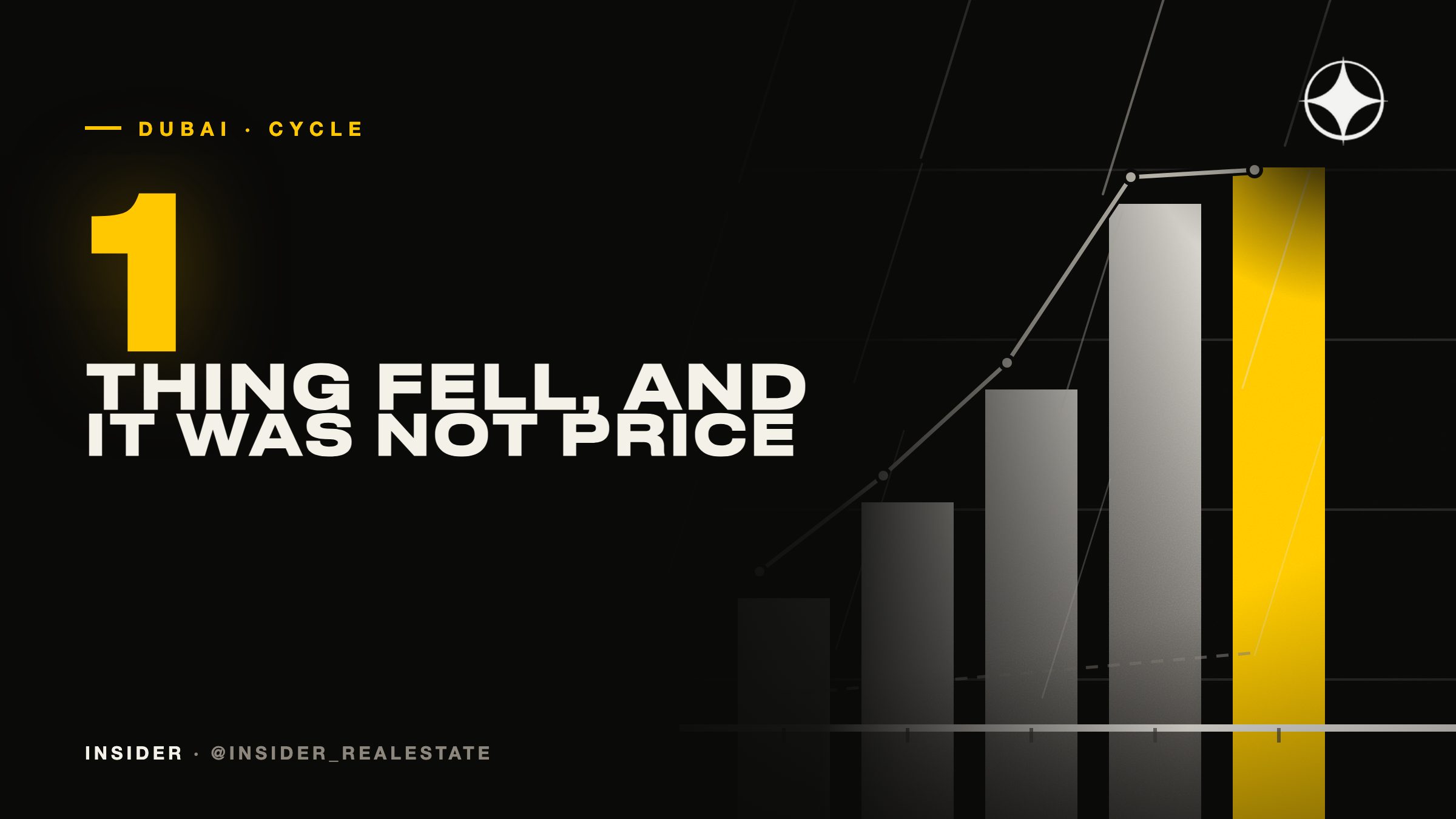
In spring 2026 the Dubai property market changed, and the change is worth describing precisely, because the headlines describe it wrongly.
What happened
There was no collapse in prices. There was a cooling of transaction activity with property values relatively stable. The distinction is fundamental: price is what something sells for, liquidity is how long it takes to find a buyer.
- Transaction numbers fell.
- Buyers became more selective and negotiate for longer.
- Marketing periods lengthened across every segment.
- Developers' list prices barely moved.
Why prices do not fall with transactions
The primary market holds its list because cost sits behind it: materials and contracting have become more expensive, and selling below a certain level is worse for a developer than slowing sales down.
Talk to a licensed broker: 📲 +971 50 120 32 64 on WhatsApp, @dubai_oleg on Telegram
The secondary market holds because most owners are not obliged to sell: there is no mortgage pressure, no ownership tax, and holding costs the service charge. In a phase like this, only those who genuinely need to sell do. Hence the appearance of listings noticeably below market — there are not many, but they are real.
How this phase differs for buyer and seller
For a buyer there is, for the first time in several years, something to choose between and time to think. Negotiating has stopped being impolite.
For a seller it means allowing a longer period and pricing soberly: a property listed "at the last transaction in the building" simply sits in a phase like this.
An important note about data lag
Official transaction statistics are published with a lag of four to eight weeks. That means any conclusion about "the current state of the market" describes the month before last. Decisions cannot be made on fresh headlines — the headline runs ahead of the data, and the data runs ahead of the feeling.
Video on this topic
The same subject on the English channel — each clip has a written version of its own.
 19:59
19:59 Imperial Avenue: a profitable resale in Downtown Dubai
Imperial Avenue by Shapoorji Pallonji in Downtown Dubai — a full breakdown of why this project has produced good resale outcomes and how to evaluate a resale opportunity in a completed Downtown tower.
WatchIn the news
Other write-ups on the site about the same thing.
The main risk in the Dubai market is not falling prices — it is delivery
Assessing this market by current prices is close to useless: they react last. Three other things say far more — liquidity, buyer caution and the accumulating volume of future supply.

Vida Residences +117%: what the Dubai Marina project statistics actually show
The largest developer’s return to Dubai Marina prompted a look at its earlier projects there. The valuable number in that statistic is not the growth percentage.
Is Dubai property a bubble? What the UBS index says about Dubai, Frankfurt, Hong Kong and Singapore
The Swiss housing-bubble index places Dubai in fair-value territory: inflation-adjusted prices were still about a quarter below the 2014 peak, and rents grew faster than prices. How that compares with cities the index rates as overvalued.

AED 41 Billion in a Month: What Dubai’s Market Peak Looked Like
In February 2025, Dubai property transactions reached AED 41 billion — 17% more than a year earlier. Off-plan made up 59% of deals, villa prices rose 60%, apartments 30%. Worth remembering as the baseline the current correction is measured from.

Dubai property prices after 2008 and the pandemic: what history actually shows
Dubai prices fell roughly 45% in 2009 and barely dipped in 2020 — then both times the market recovered and pushed past old highs. We walk through both cycles with sourced numbers, and what that means for anyone timing a purchase in 2026.

A developer share index is not house prices: how not to confuse two markets
When the index falls, headlines turn it into “the Dubai property market is falling”. In some weeks of 2026 the index dropped 17% — and not one apartment moved by 17%.