
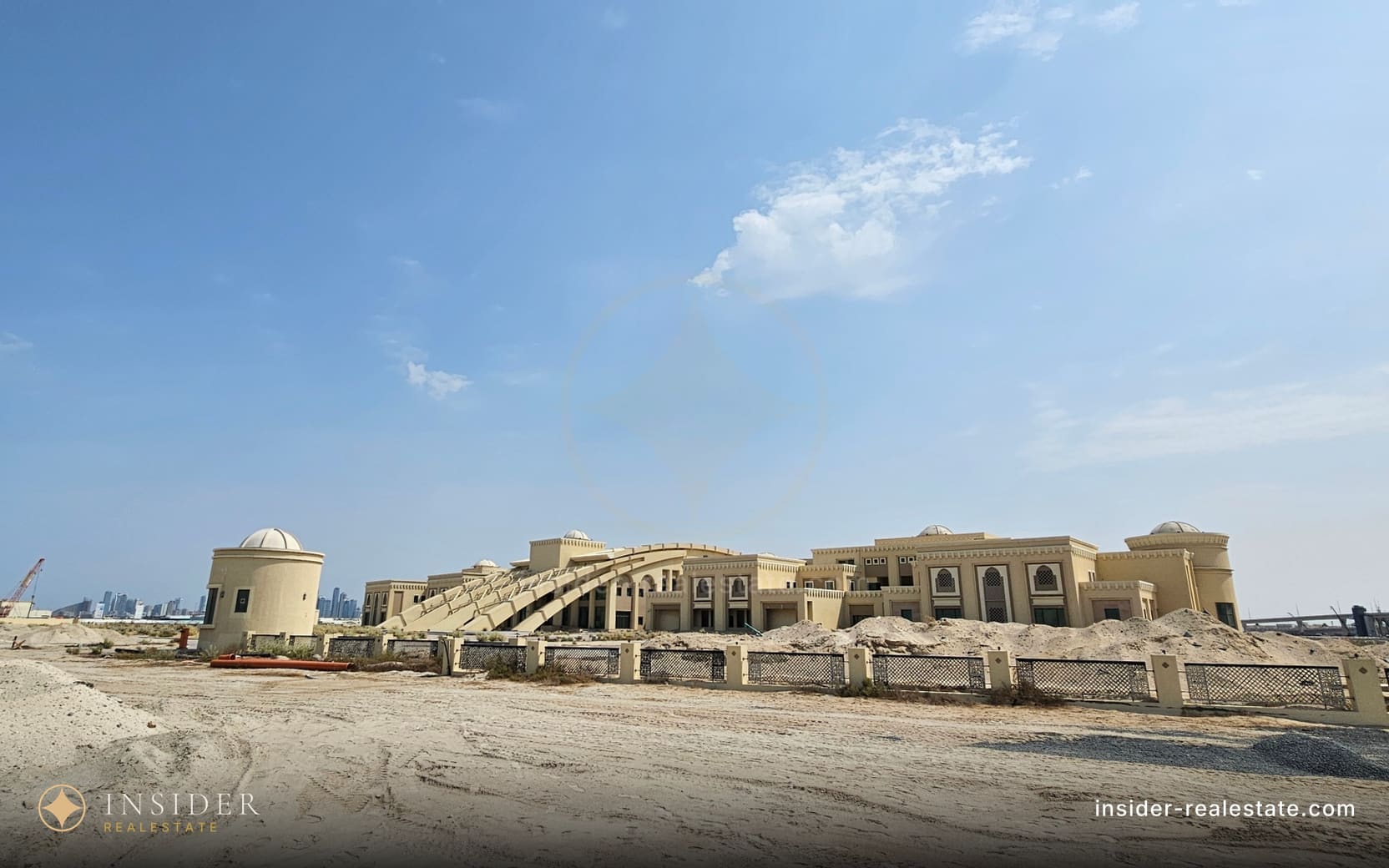
 Photo of the community
 Tomorrow World Group
A brand-new entrant to the Dubai market: the developer registered only recently, has not yet handed over a single residential building, and is selling a future backed by a parent group's reputation rather than by finished addresses — a fundamentally different bet from buying from a company with a delivery record.
1 lot in stock across 1 project. Of the 1 with a known status: 0 ready, 1 under construction. By median price — 92nd of 139.
- An early-stage investor deliberately taking on newcomer risk for a lower entry price
- Someone willing to personally verify escrow and construction progress at every stage rather than trust a name
- A buyer specifically targeting Dubai Islands, where the developer's stated focus sits
- Not for anyone who needs a predictable handover date
Median price $408K AED 1 500 000
Entry price $408K AED 1 500 000 — the cheapest lot
Completed stock 0% no discounted lots right now
Where they build
The districts where this developer has the most lots in our stock.
Dubai Islands 1
The company in brief
Checkable facts about the developer itself. Unlike the figures above, these are not about our stock and do not move with what happens to be listed today.
- Developer registration with Dubai Land Department
- No. 1977, June 2024
- Parent entity
- Tomorrow World Properties, part of Tomorrow World Group
- Announced pipeline
- an AED 8 billion pipeline announced in the mid-2020s
- Partnership
- an agreement with Octa Properties to develop around 20 projects in 2026-2028, starting on Dubai Islands
- First project
- Tomorrow 166 on Dubai Islands — a boutique residential development
What kind of developer this is
Who they are, and what 'new developer' means in practice
Tomorrow World Properties recently registered with the Dubai Land Department — the formal starting point of its history as a residential developer, regardless of what its founders did before. The parent Tomorrow World Group presents itself as a structure with years of experience in global investment and trading, but for an apartment buyer that is experience from a different industry: being able to model an international holding company's finances does not guarantee the ability to pour concrete on schedule and hand over a building at the promised finish quality.
That is not a disqualifier — Dubai's market regularly produces new developers that go on to become major players, and getting in at an early stage has historically sometimes meant a better entry price. But statistically, new companies without delivered buildings carry a higher risk of delays and spec changes than a developer with a decade of handovers, simply because quality-control and scheduling processes have not yet been tested on real projects.
What the announced pipeline and the Octa Properties partnership actually give you
The company has announced a pipeline of significant stated value and an agreement with Octa Properties to develop roughly twenty projects over the next few years, starting with a project on Dubai Islands. Partnering with an external developer or contractor at an early stage is a common model for new entrants: it offloads part of the operational risk onto a more experienced party. But it also means the quality of future buildings will depend on how responsibilities are actually split between the two organisations in the specific project agreement — terms that are rarely visible from the outside and are worth asking the developer or agent about directly at viewing.
The pipeline figure itself is a statement of intent, not a commitment: announcements of this kind from young developers are often larger than what ultimately gets built. Treat it as a marker of ambition rather than a guaranteed construction volume.
Why the first project sits on Dubai Islands, and what that changes
The flagship Tomorrow 166 sits on Dubai Islands — a relatively new direction for large-scale development, where the island's own infrastructure (roads, utilities, the waterfront) is still being built out alongside the buildings themselves. For a buyer, that doubles the horizon of uncertainty: the developer's own risk stacks on top of the risk that the district's infrastructure does not keep pace with the building's handover, and either one can delay the other even with flawless execution on the developer's part.
The upside is that a developer betting on a growth district at an early stage usually competes harder on price and specification than one in an established area with guaranteed demand — competition for the island's first buyers is not yet as tight as in mature clusters.
How to vet a developer with no delivery history
Since past buildings cannot be used to judge the company, the weight shifts to documentary checks: is the specific project and its escrow account registered and tied to that exact address rather than to the company generally; does the claimed completion percentage match independently tracked construction progress; and who is contractually the main contractor — in the announced partnership that is Octa Properties, whose own record and current workload matter almost as much as the developer's brand.
It is also worth watching the payment structure: the more aggressive the instalment plan at launch from a new company with no delivered buildings, the greater the risk that the project's finances depend on the flow of new buyers' money rather than the developer's own capital — a fragile setup at the first sign of a market slowdown.
Who this suits, and who it does not
A developer like this suits an investor who deliberately takes on newcomer risk for a more flexible entry price and is willing to track a specific construction site in person rather than through marketing material. It does not suit a buyer for whom a predictable move-in date matters — a wedding, relocating a family, the end of a current lease — because without a delivery history the company cannot back that date with anything beyond its own promise.
Projects by Tomorrow World Group
All projects →Tomorrow World Group listings in stock
All stock → Photo of the community What these numbers mean, and what they do not
The developer is inferred from the project name — there is no developer column in the base. So the figures describe our stock, not the company's share of the Dubai market: a developer sitting on an enormous volume of completed housing can look smaller here than one whose projects reach the resale market more often.
These are asking prices, not closed transactions. For a specific building I pull the registered Land Department sales and show where deals actually closed.
Other developers
All developers → Questions
Tomorrow World Group: questions and answers
How much does a Tomorrow World Group apartment cost?
The median across this developer's lots in our stock is $408K (AED 1 500 000), with entry from $408K. These are asking prices out of our own base, recalculated every night; they follow what the developer and its sellers actually have on the market, not the price list on a corporate site.
What projects is Tomorrow World Group building?
The site catalogue covers 1 project by Tomorrow World Group, each with a building passport — storeys, units, handover date and bedroom mix. They are listed above, and the “Where they build” block shows the districts with the most of its lots. Any lots on sale appear directly beneath their project.
Should I buy from Tomorrow World Group direct or through a broker?
Money-wise there is no difference: on off-plan the broker is paid by Tomorrow World Group, not by you, so calling the sales office direct saves nothing. What differs is the view — the developer’s sales team sells only its own buildings and will not mention that the same unit costs less next door or that this project hands over later. On resale and assignment the commission is the usual 2% plus VAT.
Is Tomorrow World Group worth buying
The answer depends on the purpose. Send your budget and goal — I will go through which Tomorrow World Group projects are worth considering now and which I would skip.
Ask on WhatsAppAsk a question
Telegram is the fastest way — I answer personally.
Message on Telegram