
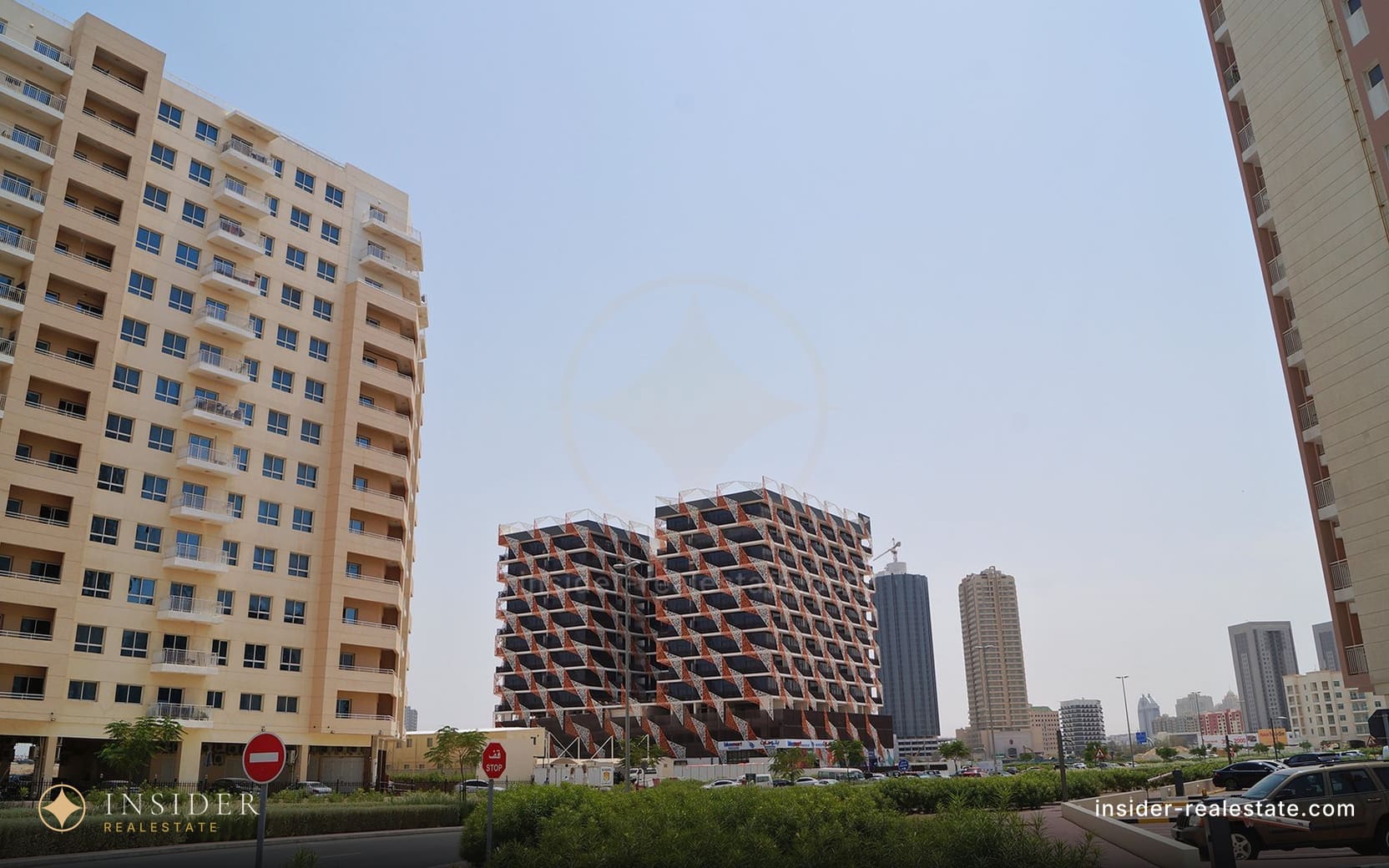
 Photo of the community
 Symbolic Real Estate Development
A young boutique residential line from a company that, until 2023, was known not for buildings but for a home-improvement retail chain in Dubai — and that origin explains its first project better than any render.
1 lot in stock across 1 project. By median price — 114th of 139.
- A first Dubai purchase on an emerging but already inhabited corridor
- A smaller budget with premium finishing
- Buyers who value a completed building over a hole in the ground
- Not for anyone pricing on a resale track record
Median price $313K AED 1 150 000
Entry price $313K AED 1 150 000 — the cheapest lot
Per square foot $396 AED 1 456 / sq.ft, median
Where they build
The districts where this developer has the most lots in our stock.
Liwan 1
The company in brief
Checkable facts about the developer itself. Unlike the figures above, these are not about our stock and do not move with what happens to be listed today.
- Parent company
- Speedex Group, founded in 1991 by Moiz Tayebali as a hardware shop in Deira
- The group's actual business
- the Speedex Tools DIY chain — three stores, in Al Quoz, Dubai Investments Park and Circle Mall in JVC
- Symbolic Developments
- launched in 2023 as the group's separate premium development arm
- First project
- Symbolic Alpha in Liwan, delivered in 2025, ahead of its stated date
What kind of developer this is
Who this is, and why an old business stands behind the new name
Symbolic Developments is not a startup in the pure sense — it is a new division of a group that spent thirty-odd years doing something else entirely: hardware and home-improvement retail. Speedex began as a single shop in Deira and grew into a DIY superstore chain, the kind Dubai shoppers know from shelves of tools and building materials, not from renders of residential towers. The group recently decided to enter development as a separate premium line, and this is a case where it is worth looking past the age of the name on the sign to the age and stability of the business behind it.
The practical takeaway for a buyer: this is not an anonymous SPV set up for one hole in the ground and able to vanish along with it, but a division of a group with an active retail business, property and staff — one that has something to lose on reputation. That does not substitute for the developer's own track record, but it explains why a brand-new name in housing is not backed by nothing, but by a working company with revenue from elsewhere.
What it actually builds
The stated format is boutique premium — a small number of apartments, a compact building, close attention to finishing and layouts rather than a tower with hundreds of identical units. That is a deliberate niche: in districts that have not yet become the centre of the city, the developer competes not on scale but on making a unit feel like a one-off product rather than one of a thousand identical studios next door.
The first project's location is an emerging residential district on the edge of the centre, where land is cheaper than in established locations, which also means a cheaper entry point for a buyer. Such districts become more comfortable as the surrounding infrastructure fills in — schools, shops, later phases of neighbouring projects — and that is worth building into expectations: comfort will grow with the district over the first years, not arrive fully formed on day one the way it does in an established centre.
How it performs in practice — ahead of schedule, once
The only project completed so far was delivered ahead of its announced date — a rare outcome on a market where the opposite is far more common. For a conglomerate with an active logistics and retail business, that makes sense: such a structure carries its own experience of managing contractors and supply chains into development, which differs from a company for which construction is the sole activity and the sole source of cash.
Even so, one early delivery is one data point, not a statistic. Keeping to schedule is proven across several projects in a row, including phases when the market slows and holding the pace gets harder than it is on the way up. That test still lies ahead for this developer, and it is too early to call it systematic discipline.
What is not there yet — a resale history
A fresh project has almost no resale history of its own: too few transactions have gone through since handover to know how the building behaves on the secondary market — whether it holds its price, how readily it resells, what a listing looks like two or three years after move-in. That is normal for a new name, but it means a purchase decision currently rests on the parent group's reputation and build quality, not on the property market's own statistics.
The same goes for the management company and post-handover upkeep: how the service charge is collected and spent, how carefully lifts and the facade are maintained — that will be visible two or three years after the first residents move in, not in a sales-stage brochure.
What to check before buying
Who exactly signs the contract — Symbolic Developments itself or a separate project company for that specific building — and how that relates to parent Speedex Group. The building's actual, not stated, completion status and whether an escrow account exists for that specific project. Payment plan terms and what happens to them if you fall behind on a payment.
How the surrounding district is actually developing — what is genuinely under construction nearby right now, not just on the master-plan map, and how quickly infrastructure is arriving. The future building's management company and who is responsible for common-area upkeep after handover.
How I work with its properties
When a client looks at a project from this developer, I always walk them through Speedex Group separately from the developer's own marketing — understanding that a real, active business stands behind the new name, not an empty shell, changes how you should weigh the risk. At the same time I say plainly that the track record in development specifically is one project deep, and I advise pricing that in: premium positioning should carry a discount against a comparable building from a developer with history.
On specific layouts, I check whether the claimed "premium" is backed by actual finishing and floor area rather than brochure language, and compare the price per square foot against neighbouring projects in the same district from more established names. If the price gap does not compensate for the gap in history, I tell the client that before showing the unit.
Projects by Symbolic Real Estate Development
All projects →Symbolic Real Estate Development listings in stock
All stock → Photo of the community What these numbers mean, and what they do not
The developer is inferred from the project name — there is no developer column in the base. So the figures describe our stock, not the company's share of the Dubai market: a developer sitting on an enormous volume of completed housing can look smaller here than one whose projects reach the resale market more often.
These are asking prices, not closed transactions. For a specific building I pull the registered Land Department sales and show where deals actually closed.
Other developers
All developers → Questions
Symbolic Real Estate Development: questions and answers
How much does a Symbolic Real Estate Development apartment cost?
The median across this developer's lots in our stock is $313K (AED 1 150 000), with entry from $313K. The median per square foot is $396. The figures come from asking prices in our base, not from the Symbolic Real Estate Development price list, and they are recalculated nightly to reflect what is actually for sale today.
What projects is Symbolic Real Estate Development building?
Our catalogue holds 1 project by this developer, each with a building passport: storeys, unit count, handover date, the mix of bedrooms. The list is on this page, and the districts where the developer has the most lots in stock are in the “Where they build” block. Under each project sit the lots on sale, where there are any.
Should I buy from Symbolic Real Estate Development direct or through a broker?
Money-wise there is no difference: on off-plan the broker is paid by Symbolic Real Estate Development, not by you, so calling the sales office direct saves nothing. What differs is the view — the developer’s sales team sells only its own buildings and will not mention that the same unit costs less next door or that this project hands over later. On resale and assignment the commission is the usual 2% plus VAT.
Is Symbolic Real Estate Development worth buying
That depends on what you buy and why. Describe the budget and the aim — I will point out which of this developer’s buildings are justified today and which are better left alone.
Ask on WhatsAppAsk a question
Telegram is the fastest way — I answer personally.
Message on Telegram