
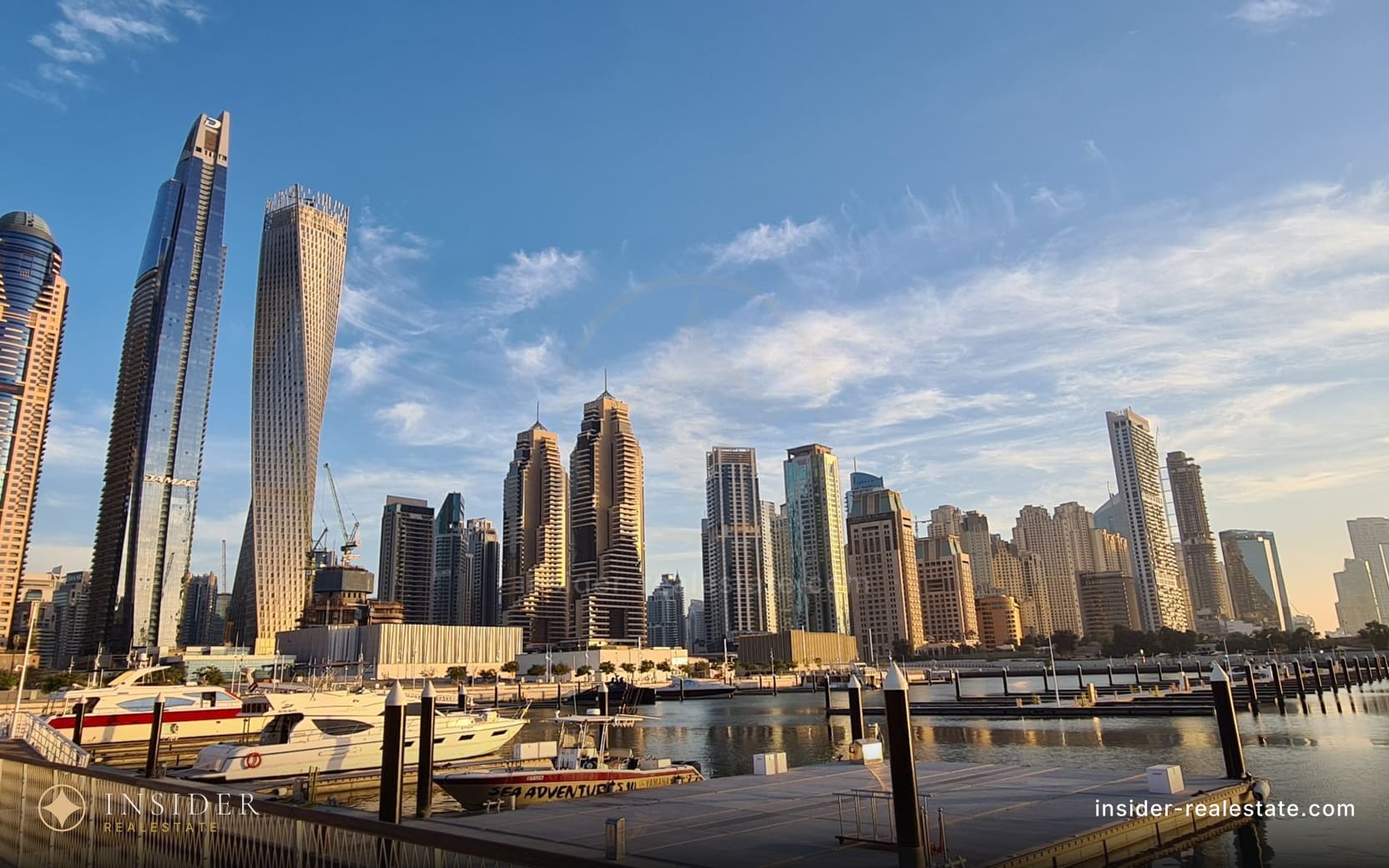
 Photo of the community
 Sheffield Holding
The developer of one super-tall tower in Dubai Marina that spent nearly two decades listed as "under construction" and became, arguably, the city's most famous cautionary case study in what can go wrong with an off-plan project — before finally approaching handover.
2 lots in stock across 1 project. Of the 1 with a known status: 1 ready, 0 under construction. By median price — 93rd of 139.
- Buyers considering ready-to-hand-over units after decades of construction
- Studying off-plan risk through a real, not hypothetical, example
- Not for buyers seeking a developer with a predictable timeline history
- Not for an early-stage purchase without independent verification of build status
Median price $402K AED 1 475 000
Entry price $340K AED 1 250 000 — the cheapest lot
Per square foot $329 AED 1 210 / sq.ft, median
Completed stock 100% no discounted lots right now
Where they build
The districts where this developer has the most lots in our stock.
Dubai Marina 2
The company in brief
Checkable facts about the developer itself. Unlike the figures above, these are not about our stock and do not move with what happens to be listed today.
- Project
- a super-tall tower in Dubai Marina — the second-tallest building in the UAE after the Burj Khalifa
- Sales launch
- 2005
- Construction start
- April 2008
- Original handover date
- Q1 2010, later pushed to 2015, and then delayed repeatedly over the following decade and a half
- What happened
- the developer ran out of funding; lenders sought a new developer to complete the project; the tower is close to completion as of the mid-2020s
What kind of developer this is
Who this is, and why one project became a case study for the whole market
Sheffield Holding is remembered in Dubai development history not for a portfolio of dozens of successful projects but for a single one that ran to an unprecedented length. The Dubai Marina tower was announced at the peak of the construction boom and sold out among investors almost instantly — at the time that looked like an ordinary hot launch, of which there were many that year.
Construction began right before the global financial crisis that hit Dubai's property market and left dozens of the city's projects frozen for years. Most of those projects were eventually either completed with a delay of a few years or cancelled by the regulator, with funds returned through an escrow liquidation procedure. This project took a third, far rarer path — it stretched for nearly two decades but was never cancelled, and by the most recent reports is approaching completion.
What went wrong — and what that says about the company itself
The originally stated handover date was pushed once, then again, and over the following decade and a half the project kept stalling over payment and funding problems. At some point the lenders financing construction started independently searching for a new developer capable of finishing the building — a clear sign that the original developer had exhausted its own resources to complete the project.
For a buyer, this is a rare and maximally vivid example of how off-plan differs from a brochure's promise: the legal status of ownership, the right to a refund and the very possibility of ever getting a finished unit depend not on how good the render looked at launch, but on the developer's financial resilience across the entire construction cycle, which can run far longer than stated.
What protected buyers over that time, and what did not
Even on a project delayed for decades, buyers were not left entirely unprotected: the escrow regime, under which payments go into a project-specific account and are released only against confirmed construction progress, kept the developer from simply taking the money and stopping work entirely. Registration in the interim Oqood register gave buyers a recognised legal position rather than the status of a party to an unconfirmed private deal.
That said, none of these mechanisms guaranteed speed: the protection was real, but it was not a button for an instant refund or a faster build. Buyers who invested in the early years of sales genuinely waited almost two decades for handover — a colossal span, even accounting for all of the regulator's formal guarantees.
Why the project was not cancelled, and is instead close to completion
Unlike many crisis-era projects, this tower was never cancelled or liquidated through a buyer-refund procedure — apparently because of the scale of funds already invested and the building's status as one of the city's architectural landmarks, which made completion a more advantageous outcome for all parties than a full stop. Finding new financing and, apparently, a change in operational control over the project eventually allowed construction to resume and reach its final stage.
For a buyer, this means even the most delayed project does not necessarily end in a loss of money — but reaching that outcome took nearly twenty years of waiting, court and creditor procedures that most private investors were not prepared to build into their planning horizon at the start.
What to check before buying in this specific building today
The project's official regulator status in writing — not verbally from a sales office — and the building's actual, not stated, completion percentage today. The escrow account's balance and disclosure history, if you have the right to it as a buyer, and exactly who is now the developer or contractor of record finishing the project.
The payment history — whether you or the unit's seller paid exactly in line with confirmed construction progress, not ahead of it, and what the contract's delay clause says. Independent local legal advice on this specific property, separate from general off-plan advice — the history here is unusual enough to warrant an individual check.
How I work with its properties
For a client considering a unit in this building, I first show them the project's entire history, not just the current listing — understanding the scale of the delay changes how you should weigh the risk of the road still ahead to handover. If the building is genuinely close to completion, I advise demanding the freshest, documented state of construction rather than relying on general reassurances about an imminent handover, which have been heard here for many years running.
I separately explain to the client that this project's own history is a useful lesson for evaluating any other off-plan offer on the market: escrow and Oqood registration genuinely protect against losing your money, but not against years of waiting, and that is worth building into any early-stage purchase decision with any developer, not just this one.
Projects by Sheffield Holding
All projects →Sheffield Holding listings in stock
All stock → Photo of the community Photo of the community What these numbers mean, and what they do not
There is no “developer” column in the base — a lot is attributed by its project name. The figures on this page speak about our stock, not about the company’s share of the Dubai market: a large developer with a big completed portfolio may appear smaller than one whose units come up for resale more often.
Prices come from listings, not from closed deals. For a particular building I retrieve the registered Land Department sales and show the real closing prices.
In the news
Sheffield Holding: what a buyer can actually do when a project stalls
A developer with a supertall Dubai Marina project long under construction. Stalled projects are the risk off-plan buyers fear most — and Dubai has a defined process for them.
Other developers
All developers → Questions
Sheffield Holding: questions and answers
How much does a Sheffield Holding apartment cost?
The median across this developer's lots in our stock is $402K (AED 1 475 000), with entry from $340K. The median per square foot is $329. The figures come from asking prices in our base, not from the Sheffield Holding price list, and they are recalculated nightly to reflect what is actually for sale today.
What projects is Sheffield Holding building?
The site catalogue covers 1 project by Sheffield Holding, each with a building passport — storeys, units, handover date and bedroom mix. They are listed above, and the “Where they build” block shows the districts with the most of its lots. Any lots on sale appear directly beneath their project.
Should I buy from Sheffield Holding direct or through a broker?
For an off-plan buyer the price is identical, because the developer covers the broker’s commission. Going straight to Sheffield Holding is therefore no cheaper, and the choice there is limited to its own projects — you will not get a comparison with neighbouring buildings or a candid read on handover dates. On resale and assignment the commission is standard: 2% plus VAT.
Is Sheffield Holding worth buying
That depends on what you buy and why. Describe the budget and the aim — I will point out which of this developer’s buildings are justified today and which are better left alone.
Ask on WhatsAppAsk a question
Telegram is the fastest way — I answer personally.
Message on Telegram