
 Illustrative photo
 Manjothi Real Estate Development
A small private developer with a compact building in International City — the very bottom of Dubai's price ladder, where units are bought almost exclusively for yield rather than status or price growth.
2 lots in stock across 1 project. By median price — 128th of 139.
- An investor calculating net, not gross, yield
- A small entry budget with a genuine tenant base
- Someone with reliable on-the-ground management
- Not for someone expecting price growth or easy financing
Median price $244K AED 895 000
Entry price $244K AED 895 000 — the cheapest lot
Per square foot $338 AED 1 243 / sq.ft, median
Where they build
The districts where this developer has the most lots in our stock.
International City 2
The company in brief
Checkable facts about the developer itself. Unlike the figures above, these are not about our stock and do not move with what happens to be listed today.
- Project
- Silver Park Residency — the developer's only known project
- Specs
- 6 storeys, 78 units, per the project record — studios and one- to two-bedroom units
- Location
- International City
What kind of developer this is
Who this is, and why the district matters more than the developer
Manjothi Real Estate Development is a small private company with a single known project in International City, and in this segment the specific developer's identity matters less than in any other part of the market: brand reputation has almost no effect on the rental rate, while a specific building's condition and management decide it. That does not mean the developer is irrelevant — but it is best assessed through the lens of the district rather than the other way round.
International City sits at the very bottom of Dubai's price ladder, and units there are bought almost exclusively for yield — a legitimate strategy with a genuine tenant base, but with honest limitations that presentations do not usually state directly.
What the low price actually delivers
A high rent-to-price ratio — the lowest capital values in the city, with rates that do not fall proportionally to the entry price, and that is the entire investment argument for the segment. A large and stable tenant base: very many people work in Dubai on modest incomes and need affordable housing, and this demand is structural — it does not disappear in a downturn, if anything it grows.
A low entry point lets a small budget own something rather than nothing, and low service charges in absolute terms matter for the final yield even when, as a percentage of price, they do not differ from other districts.
The limitations, stated plainly
Price growth is not this story. Abundant land and supply in this segment structurally caps its growth potential, and if the purchase is being considered for capital appreciation, the product has been misread from the start. Resale is slow and the buyer pool narrow — mostly other yield-focused investors pricing primarily on cost rather than emotional attachment to a specific building.
Financing is harder: some banks restrict or simply do not lend in the city's cheapest districts, and that limits your unit's future buyer just as much as it limits you today. Building quality varies widely across the segment, and two buildings on the same street can be very different assets at nominally the same price.
What actually decides the outcome
The condition and management of the specific building — this variable matters more here than anywhere else in the market, and it is what separates a good purchase from a bad one at the same entry price. The charge and how well it is collected: arrears are common in cheap buildings, and they reach conscientious payers through deferred repairs and reduced service.
Actual rental rates and vacancy periods in the specific cluster from live listings — not district averages, but the building's immediate surroundings. And perhaps most importantly, whether the buyer has reliable on-the-ground management: this segment requires active management, and an absentee owner without a good agent will almost always underperform the original yield calculation.
Net yield runs noticeably below gross
Charges, management, vacancy between tenants and upkeep eat proportionally more in this segment than in the city's mid-market, and tenant turnover here tends to run higher — people on tighter budgets move more often chasing work. Vacancy and re-letting costs take a noticeably larger share of a small rent than the same absolute amount would take from a pricier unit.
That is exactly why buying here only makes sense after calculating net yield adjusted for realistic, not ideal, occupancy — the gross figure quoted in a sale listing systematically overstates the expectation.
How I work with this property
For Silver Park Residency, I start not with the developer but with the district: I look at the condition of neighbouring buildings of the same age and price level to gauge the typical standard of management in the cluster, rather than judging by a single building. Next I calculate net yield adjusted for realistic occupancy and tenant turnover, not the gross rate from a presentation.
I separately discuss the question of on-the-ground management with the client before, not after, the purchase — in this segment, having no management plan almost guarantees a result worse than the calculation, and it is worth stating honestly upfront rather than discovering it a year later through an empty unit. For a client looking at this market segment for the first time, I always say plainly: what you are buying here is not a dream home but a cash flow, and the decision only makes sense in that logic, not in the logic of buying a home to live in.
Projects by Manjothi Real Estate Development
All projects →Manjothi Real Estate Development listings in stock
All stock → Illustrative photo Illustrative photo What these numbers mean, and what they do not
The developer is inferred from the project name — there is no developer column in the base. So the figures describe our stock, not the company's share of the Dubai market: a developer sitting on an enormous volume of completed housing can look smaller here than one whose projects reach the resale market more often.
These are asking prices, not closed transactions. For a specific building I pull the registered Land Department sales and show where deals actually closed.
In the news
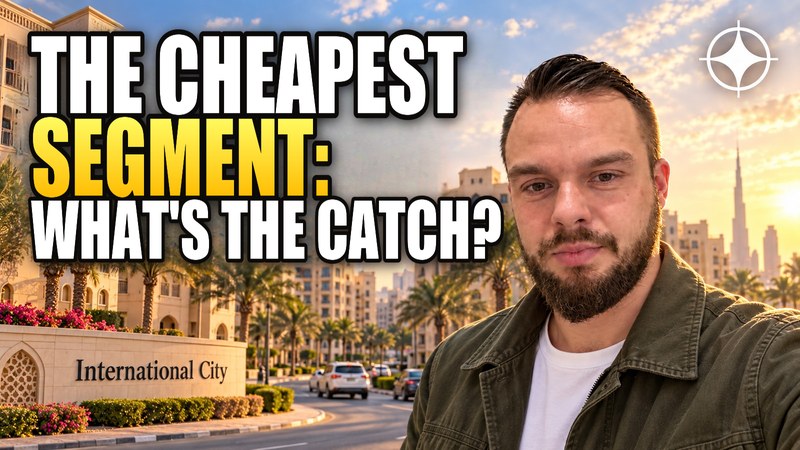
Manjothi Real Estate Development: the cheapest end of the market, honestly
A developer building in International City. The lowest entry prices in Dubai buy a real asset with a real yield — and a specific set of limitations worth stating plainly.
Other developers
All developers → Questions
Manjothi Real Estate Development: questions and answers
How much does a Manjothi Real Estate Development apartment cost?
The median across this developer's lots in our stock is $244K (AED 895 000), with entry from $244K. The median per square foot is $338. The figures come from asking prices in our base, not from the Manjothi Real Estate Development price list, and they are recalculated nightly to reflect what is actually for sale today.
What projects is Manjothi Real Estate Development building?
The site catalogue covers 1 project by Manjothi Real Estate Development, each with a building passport — storeys, units, handover date and bedroom mix. They are listed above, and the “Where they build” block shows the districts with the most of its lots. Any lots on sale appear directly beneath their project.
Should I buy from Manjothi Real Estate Development direct or through a broker?
Money-wise there is no difference: on off-plan the broker is paid by Manjothi Real Estate Development, not by you, so calling the sales office direct saves nothing. What differs is the view — the developer’s sales team sells only its own buildings and will not mention that the same unit costs less next door or that this project hands over later. On resale and assignment the commission is the usual 2% plus VAT.
Is Manjothi Real Estate Development worth buying
The answer depends on the purpose. Send your budget and goal — I will go through which Manjothi Real Estate Development projects are worth considering now and which I would skip.
Ask on WhatsAppAsk a question
Telegram is the fastest way — I answer personally.
Message on Telegram