
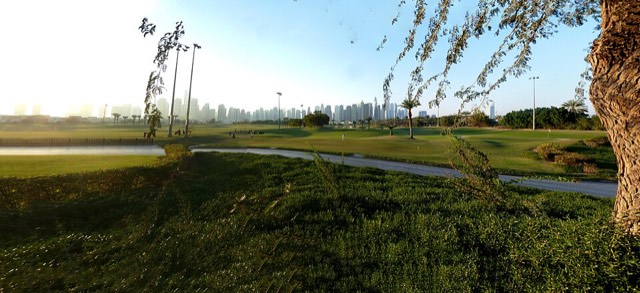
 Illustrative photo −25%
 Jubail Island Investment Company
An island between Yas and Saadiyat in Abu Dhabi built by a single company under one project: Nad Al Dhabi, Ain Al Maha, Marfaa Al Jubail and the island's other named quarters are not separate developments by different builders but successive phases of one master plan around preserved mangrove forests.
7 lots in stock across 2 projects. Of the 7 with a known status: 6 ready, 1 under construction. By median price — 10th of 139.
- A villa with its own waterfront on an island
- Families who want nature on their doorstep
- Abu Dhabi as a second market alongside Dubai
- A long horizon — the island is being built out in phases over many years
Median price $3.53M AED 12 950 000
Entry price $1.55M AED 5 700 000 — the cheapest lot
Per square foot $1 356 AED 4 981 / sq.ft, median
Completed stock 86% 7 lots discounted, deepest −25%
The company in brief
Checkable facts about the developer itself. Unlike the figures above, these are not about our stock and do not move with what happens to be listed today.
- Structure
- Jubail Island Investment Company (JIIC) is the project company; the developer and master planner behind it is LEAD Development (Abu Dhabi)
- LEAD Development
- founded in 2011, an Abu Dhabi-headquartered developer and master planner
- The island
- announced in 2019 as part of Abu Dhabi's urban growth programme
- Land area
- several thousand hectares of natural mangrove forest and coastal estuaries between Yas and Saadiyat islands
- Progress so far
- over a thousand homes delivered by the mid-2020s; the latest announced phase is the beachfront quarter Bada Al Jubail, due for completion by the end of 2027
- In our catalogue
- the island's quarters — Nad Al Dhabi, Ain Al Maha, Marfaa Al Jubail, Seef Al Jubail, Bada Al Jubail, Souk Al Jubail
What kind of developer this is
One island, one master plan
Unlike districts where several independent developers operate under one shared area name, here it is the reverse: differently named quarters — Nad Al Dhabi, Ain Al Maha, Marfaa Al Jubail and others — are not separate projects by different companies but sequential phases of one master plan by one developer. Understanding that matters when choosing between them: comparing a villa in one quarter of the island against a villa in another means comparing different phases of the same build released at different times, not different developers.
The island sits between two already-established Abu Dhabi destinations — Yas, with its entertainment cluster, and Saadiyat, with its museums and beaches. For a buyer that is a genuinely useful middle position: the neighbouring islands' infrastructure is already running, while the island itself keeps a quieter, more intimate character of its own rather than dissolving into someone else's development.
Nature as part of the product, not a backdrop
The island is being built around preserved mangrove forests and coastal estuaries rather than on a cleared, flattened plot. That is a deliberate positioning choice: a substantial share of the island's land stays genuinely natural rather than being built over entirely, and villas are designed to face water and mangrove stands rather than each other across a road.
The practical consequence is that build density here is deliberately lower than a typical mainland residential district, which means supply within each phase is limited to what that specific plot can hold. That structurally supports pricing on completed homes, but it also requires patience if the villa format you want in the phase you want has already sold out — waiting for the next phase is sometimes faster than hunting for a resale.
How the island grows, phase by phase
The company releases the island for sale in stages, quarter by quarter, rather than putting the whole island up for sale as one catalogue. Each new phase is announced as its own release with its own set of villas and apartments rather than a continuation of the previous lot list — the same disciplined release pace used by the large master developers of mainland Dubai and Abu Dhabi.
For an early buyer in a phase, that means a wider choice of plot position within the quarter but fewer completed comparables to price against — the neighbouring phase is already sold out and not always directly comparable. For a later buyer, the reverse holds: more comparables exist, but the choice of specific lots within already-released phases is noticeably narrower.
Abu Dhabi alongside Dubai, not instead of it
Abu Dhabi's property market runs on its own logic, distinct from Dubai's: less off-plan flipping, a more conservative pace of price growth, and a buyer profile weighted more toward long-term family ownership than fast resale. The island is a typical Abu Dhabi product in that sense, not a Dubai playbook transplanted into a different emirate.
For a CIS investor already looking at Dubai projects, the island can be a way to diversify geographically within the same understood UAE jurisdiction. But the expected return and exit timeline should be recalculated for the Abu Dhabi market on its own terms rather than carried over from Dubai assumptions.
What to check before buying on the island
Confirm the exact phase name and its developer entity on the contract — as noted above, the legal name can differ from the island's marketing name. Second, check what is physically built and functioning on the island at the time of your viewing against what the master plan promises: the island is being built out over many years, and on early phases some of the promised infrastructure is still under construction nearby.
Third, check the title structure and foreign-ownership eligibility for the specific zone of the emirate: Abu Dhabi's freehold-zone rules differ from Dubai's, and that is worth confirming before, not after, reserving a villa.
How I work with this developer
For the island I never look at a single villa in isolation — I look at the whole phase: how much of the quarter is already delivered and occupied, and how much is still under construction nearby, because for a family moving in right away, living beside a construction site for years is a real factor a brochure will not mention. Second, I check the specific plot's position against the map of preserved mangrove zones — a water view and proximity to the island's natural core command a real premium over a plot set back inside the quarter.
Third, for every new phase I check the actual sales and delivery pace of the previous ones, to understand the real rather than advertised speed at which the developer turns a phase into a lived-in quarter. That is the only honest way to estimate how many years a specific phase will take to go from a building site with scattered neighbours to a settled community.
Jubail Island Investment Company listings in stock
All stock →
What these numbers mean, and what they do not
Lots are matched to Jubail Island Investment Company by project name, since the base has no developer field. The numbers above therefore describe our stock rather than the company’s market share: a developer with a large completed portfolio can show fewer lots than one whose buildings are resold more often.
All prices are asking prices, not sales. For the building you pick I pull the registered Land Department transactions and show the prices deals really closed at.
Other developers
All developers → Questions
Jubail Island Investment Company: questions and answers
How much does a Jubail Island Investment Company apartment cost?
The median across this developer's lots in our stock is $3.53M (AED 12 950 000), with entry from $1.55M. The median per square foot is $1 356. They are drawn from asking prices in our own base and refreshed every night — a picture of current supply rather than of the official price list.
Are there discounts on Jubail Island Investment Company property?
Right now the base holds 7 lots from this developer priced below the market, with the deepest cut at 25%. This is not a Jubail Island Investment Company promotion: below-market prices come from private sellers on resale or assignment who need a quick exit. An algorithm sets the size of the discount against comparable property; no broker types it in by hand.
Should I buy from Jubail Island Investment Company direct or through a broker?
The price is the same: on off-plan the developer pays the broker’s commission, not the buyer, so going straight to the sales office saves nothing. The difference is elsewhere — a developer’s sales office shows its own projects only, and will not tell you that the same thing next door is cheaper or that this project is running later than advertised. On resale and assignment the commission is the standard 2% plus VAT.
Is Jubail Island Investment Company worth buying
It depends what you are buying and why. Send me your budget and the job it has to do — I will tell you which of this developer's projects make sense right now and which I would walk past.
Ask on WhatsAppAsk a question
Telegram is the fastest way — I answer personally.
Message on Telegram