
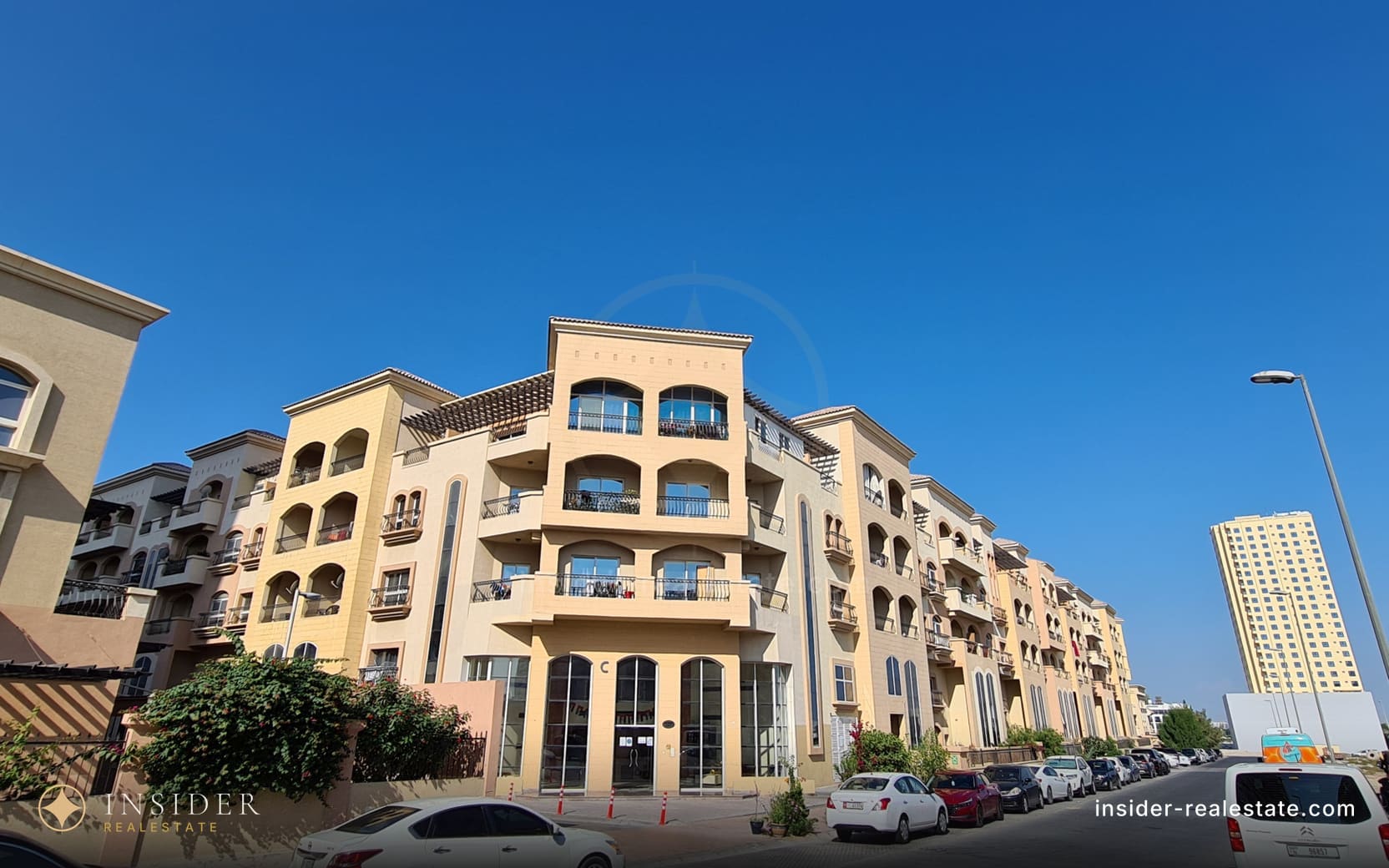
 Photo of the community
 Green Group
A boutique family developer that built a low-rise building in JVC instead of yet another 20- or 30-storey tower — not an aesthetic choice but an engineering one, with real, calculable savings on upkeep that rarely make it into a buyer's comparison.
2 lots in stock across 1 project. By median price — 78th of 139.
- A lower service charge than neighbouring towers
- Buyers willing to trade status for economics
- A low-rise format over a high-rise
- Investors who cost out a decade of upkeep
Median price $496K AED 1 820 000
Entry price $406K AED 1 490 000 — the cheapest lot
Per square foot $481 AED 1 766 / sq.ft, median
Where they build
The districts where this developer has the most lots in our stock.
JVC 2
The company in brief
Checkable facts about the developer itself. Unlike the figures above, these are not about our stock and do not move with what happens to be listed today.
- Structure
- a private family company operating in the boutique development segment
- Project
- The Autograph, a low-rise residential building in JVC
What kind of developer this is
Who they are
Green Group is a private family company working in a boutique development format: a small portfolio rather than mass construction, and a deliberate bet on a low-rise format in a district increasingly filling up with high-rise towers around it. In an industry where more storeys is treated almost as a synonym for progress, that choice is a notable exception rather than an accident.
The company is known for eco-friendly construction methods, including rooftop solar panels — an emphasis rarely seen at a developer of this scale and one that points to an engineering rather than a purely marketing approach to the project.
What they built
The Autograph is a six-storey residential building in JVC, a district being actively built out with 20- and 30-storey towers. Against that backdrop, the low-rise format looks unfashionable, but it carries real, calculable advantages that rarely make it into a buyer's comparison at the selection stage.
The format also defines its audience: not buyers who want the status of an address in a recognisable tower, but those willing to cost out the real ownership expense over years and who prefer a calmer, more intimate setting to a multi-unit tower with hundreds of neighbours.
Why a low-rise building is cheaper to run
This is engineering, not the developer's opinion. Lifts: a six-storey building needs one or two simple lifts, while a 30-storey tower needs a bank of high-speed ones, whose maintenance and eventual replacement rank among a residential building's largest expenses. Water pressure and pumping equipment: a low-rise building needs noticeably less pumping capacity, meaning less equipment, less energy and fewer parts that eventually need replacing.
Facade access: washing and repairing a six-storey facade is routine work, while on 30 storeys it means specialist access at specialist rates, year after year. Fire-safety systems in high-rises are more complex and require more safety zones and more regular testing. The upshot is fewer common areas per unit — less to clean, light, cool and maintain — and a low-rise building's charge per square foot is usually noticeably lower than a tower's of the same class.
What the buyer pays for in exchange
The view — from the sixth floor you look at neighbouring buildings, and in an increasingly built-up JVC there are more of them every year. Amenities — fewer units in the building means a smaller pool and gym, or none at all, which is the flip side of the lower service charge.
Status, and with it some of the rental appeal for tenants who want an address in a recognisable tower rather than a low-rise building. And, importantly to understand up front: the cost of a major repair is split among fewer owners, so the reserve fund in a building like this carries proportionally more weight than in a building with hundreds of units.
How to compare correctly against neighbouring towers
Take the annual charge for both options, multiply it by the planned ownership period, and weigh the difference against the gap in purchase price — the only way to see the real economics rather than relying on a first impression of the lobby and the pool. Then check actual rental rates for both formats against live listings, not a forecast from a marketing brochure.
A low-rise building usually lets for slightly less than a tower of the same size, but costs noticeably less to maintain — which one wins is decided by numbers that take one evening with a calculator to gather, not by whichever looks more impressive in a photo.
What to check
The actual service charge on the completed building — since it has a history, there is no need to rely on a forecast. Rental rates in this specific building and in neighbouring towers at comparable sizes — the comparison should rest on real numbers, not a general impression of the district.
What has been approved on neighbouring plots: a new tower next door changes light and view for a low-rise building more than it does for a high-rise of the same class. The reserve fund — in a building with few owners it carries disproportionately more weight, and its condition is worth checking more closely than in a large complex with a broad base of contributors.
Who this suits
A buyer who genuinely costs out upkeep for years ahead rather than just the entry price and how the lobby photographs — for that buyer, the gap between a low-rise building and the tower next door pays off in full. An investor willing to trade some of the status of a recognisable address for a lower annual charge and a calmer, more intimate setting with fewer neighbours.
It does not suit someone for whom an address in a recognisable tower is part of a strategy for letting to a specific tenant category: part of rental demand is driven by a building's status rather than its running costs, and the low-rise format does not serve that segment of demand. That buyer should be comparing against the towers next door, not against Green Group.
Projects by Green Group
All projects →Green Group listings in stock
All stock → Photo of the community Photo of the community What these numbers mean, and what they do not
Lots are matched to Green Group by project name, since the base has no developer field. The numbers above therefore describe our stock rather than the company’s market share: a developer with a large completed portfolio can show fewer lots than one whose buildings are resold more often.
All prices are asking prices, not sales. For the building you pick I pull the registered Land Department transactions and show the prices deals really closed at.
In the news
Green Group: the case for a six-storey building in a district of towers
A developer with a low-rise building in JVC, a district otherwise going vertical. Low-rise has structural cost advantages that almost nobody prices in.
Other developers
All developers → Questions
Green Group: questions and answers
How much does a Green Group apartment cost?
The median across this developer's lots in our stock is $496K (AED 1 820 000), with entry from $406K. The median per square foot is $481. They are drawn from asking prices in our own base and refreshed every night — a picture of current supply rather than of the official price list.
What projects is Green Group building?
The site catalogue covers 1 project by Green Group, each with a building passport — storeys, units, handover date and bedroom mix. They are listed above, and the “Where they build” block shows the districts with the most of its lots. Any lots on sale appear directly beneath their project.
Should I buy from Green Group direct or through a broker?
The price is the same: on off-plan the developer pays the broker’s commission, not the buyer, so going straight to the sales office saves nothing. The difference is elsewhere — a developer’s sales office shows its own projects only, and will not tell you that the same thing next door is cheaper or that this project is running later than advertised. On resale and assignment the commission is the standard 2% plus VAT.
Is Green Group worth buying
The answer depends on the purpose. Send your budget and goal — I will go through which Green Group projects are worth considering now and which I would skip.
Ask on WhatsAppAsk a question
Telegram is the fastest way — I answer personally.
Message on Telegram