 Illustrative photo −4%
 Western Residence South Western Residence South · 5 BR · Villa 7 980 000 AED 8 340 000
Ask about lot NP4-437679
A private company that, more than two decades ago, conceived a falcon-shaped masterplan with districts themed on world landmarks — and is still building it out piece by piece, through a mix of contractors and sub-developers, rather than as one finished project delivered by a single team.
1 lot in stock across 1 project. Of the 1 with a known status: 1 ready, 0 under construction. By median price — 22nd of 139. The company was founded in 2005.
Checkable facts about the developer itself. Unlike the figures above, these are not about our stock and do not move with what happens to be listed today.
The company conceived its masterplan more than two decades ago as an ambitious themed district: a plot of land shaped like a falcon, quarters modelled on world landmarks and cities, and its own theme park. The vision was large even by Dubai standards, and that scale is precisely why the territory has been built out over decades rather than years.
Parts of the original themed concept have gone unbuilt or been revised along the way — a typical fate for a masterplan of this size: market conditions shift over the years, some sub-contractors exit the project, and some plots get repurposed toward a more realistic housing format. A buyer should treat the original themed vision as the district's marketing origin story, not as a commitment to specific delivery dates.
Inside the masterplan, several different contractors and sub-developers build, each on its own plot and at its own pace — not a single company delivering to one shared schedule. That fundamentally distinguishes the territory from districts built by one developer: quality, timing and reputation for a specific building depend on who actually built it, while the masterplan's name is just an umbrella brand for the territory.
The practical consequence is that when choosing a specific unit, what matters is not the masterplan's overall name but the actual seller named on the contract and that entity's own delivery history. One sub-developer on the territory may have an excellent reputation, another none at all, and both sell housing under the same umbrella district name.
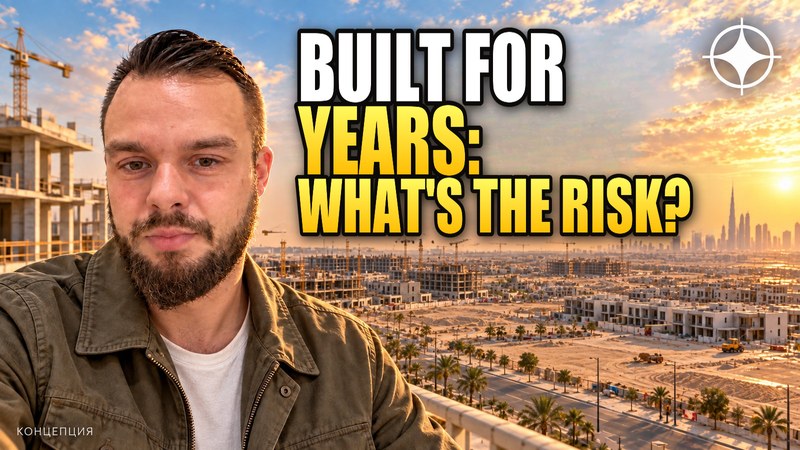
An early buyer here can spend years living next to a construction site — noise, dust and blocked access roads on neighbouring plots are common even where your own building is already handed over. Infrastructure arrives with critical mass, not on the masterplan's schedule: a supermarket opens once there are physically enough residents to sustain it, not on the date printed in a two-decade-old presentation.
Vacant, not-yet-built plots between finished clusters are just as important a signal as the buildings themselves — they show what the district will genuinely look like in the coming years, more accurately than the final render on the website. The road network is also worth judging in its current, not its planned, state — in this outer part of Dubailand it's usually the practical bottleneck on everyday life.
The right approach is to value what's actually standing, not what's drawn on the masterplan. Anything that still exists only on paper is potential upside for a patient investor, not part of today's price, and should be treated accordingly — as an opportunity, not a guarantee.
Each delivered phase deserves its own check: exactly when it was handed over, who built it, and whether the real pace of construction matches what was promised at the start of sales. The territory is inherently uneven, and the masterplan's average reputation says little about a specific building.
The territory's main advantage is a low price per square foot compared with more developed parts of the city, and that remains its core investment case. But time on market for a resale here tends to be longer than in mature districts — end-buyer demand is limited by the fact that parts of the territory still look like a construction site rather than an established neighbourhood.
Rental rates and resale timelines are best judged from live listings in the built-out part of the district specifically, not from averages across the whole masterplan — the gap between lived-in and still-empty clusters is wide, and averaging distorts the picture in both directions.
The territory suits buyers seeking floor area at a low price per square foot who knowingly accept the district in its current, not-yet-finished state — a villa or apartment here can be several times larger than comparably priced property in more established locations. It suits patient capital willing to wait for the territory to mature without rushing a resale.
It doesn't suit buyers pricing in a fully completed themed masterplan — the odds of the original vision being realised in full, over the decades so far, have proven low. Nor does it suit anyone who needs a finished, lived-in district right now rather than years from now.
Illustrative photo −4% The developer is inferred from the project name — there is no developer column in the base. So the figures describe our stock, not the company's share of the Dubai market: a developer sitting on an enormous volume of completed housing can look smaller here than one whose projects reach the resale market more often.
These are asking prices, not closed transactions. For a specific building I pull the registered Land Department sales and show where deals actually closed.
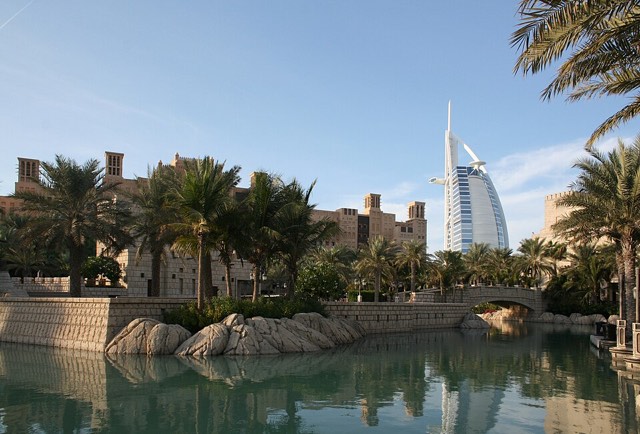
A development shaped like a falcon, with quarters themed on world landmarks. Long-running master plans have a particular risk profile, and it is not the one buyers usually expect.
The median across this developer's lots in our stock is $2.17M (AED 7 980 000), with entry from $2.17M. These are asking prices out of our own base, recalculated every night; they follow what the developer and its sellers actually have on the market, not the price list on a corporate site.
Right now the base holds 1 lot from this developer priced below the market, with the deepest cut at 4%. It is the seller on the secondary market or on an assignment who cuts the price, not the developer — each has a reason to hurry. The discount is calculated by an algorithm relative to comparable property, with no manual broker estimate.
Founded: the masterplan launched in 2005, backed by a private company established by a well-known Emirati business house. Check Falconcity of Wonders in the Land Department’s open register, not in the marketing: licence status, per-project construction progress and the registered escrow account are all there. Off-plan payments land in that escrow under RERA supervision and reach the developer only against verified construction milestones. The full dossier is further up the page.
The site catalogue covers 1 project by Falconcity of Wonders, each with a building passport — storeys, units, handover date and bedroom mix. They are listed above. Any lots on sale appear directly beneath their project.
The price is the same: on off-plan the developer pays the broker’s commission, not the buyer, so going straight to the sales office saves nothing. The difference is elsewhere — a developer’s sales office shows its own projects only, and will not tell you that the same thing next door is cheaper or that this project is running later than advertised. On resale and assignment the commission is the standard 2% plus VAT.
It depends what you are buying and why. Send me your budget and the job it has to do — I will tell you which of this developer's projects make sense right now and which I would walk past.
Ask on WhatsAppTelegram is the fastest way — I answer personally.
Message on Telegram