
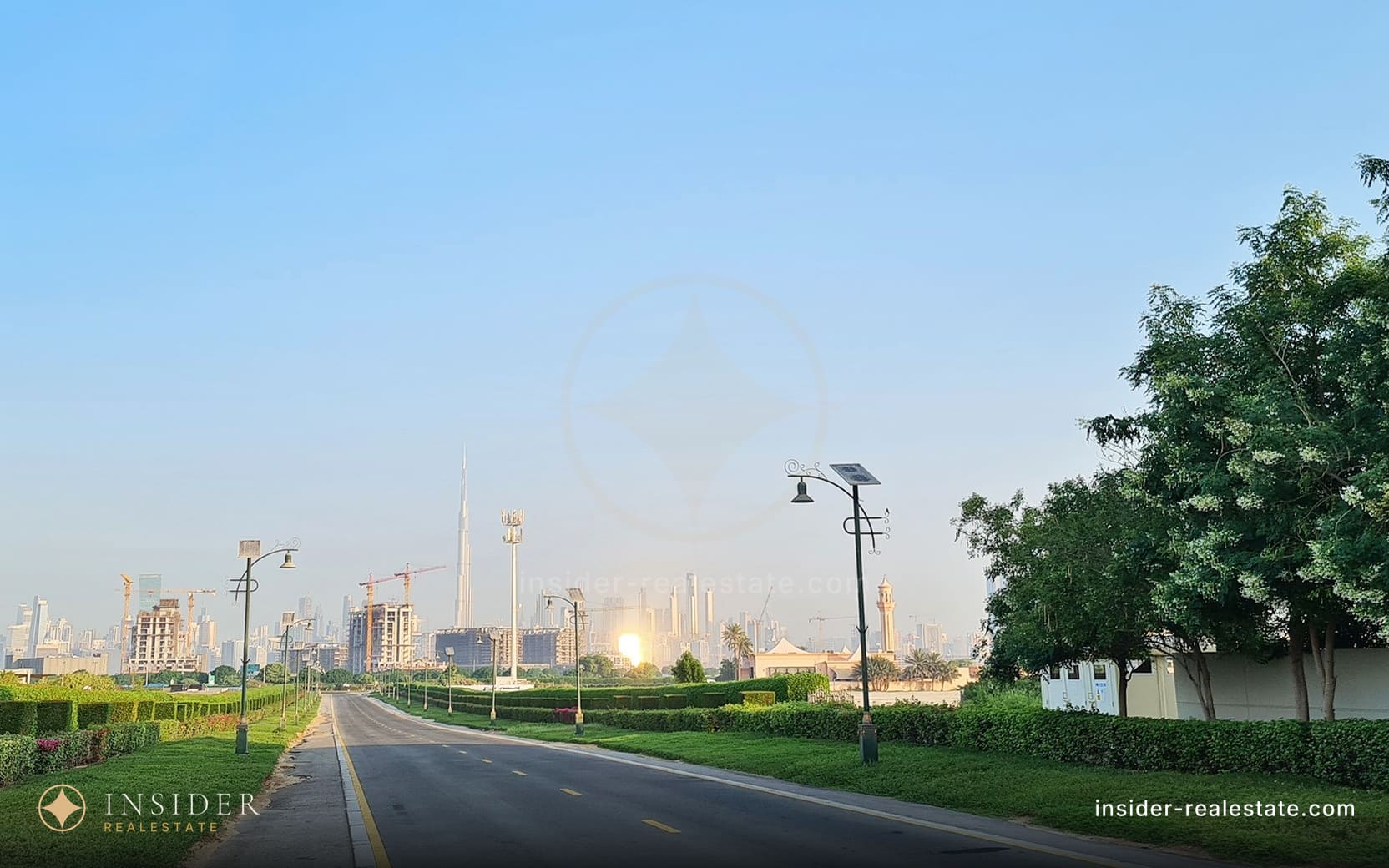
 Photo of the community
 ELPD Developers
A small developer whose new Meydan project is noticeably larger than anything the company has built before — the jump from small buildings to a tall tower carries its own distinct risk, separate from simply having no track record at all.
1 lot in stock across 1 project. By median price — 75th of 139.
- A starting price below Meydan's larger players
- An investor who has checked the contractor, not just the developer
- Willingness to track a long build through to handover
- Not for someone who needs the most reliable possible handover date
Median price $517K AED 1 900 000
Entry price $517K AED 1 900 000 — the cheapest lot
Per square foot $627 AED 2 303 / sq.ft, median
Where they build
The districts where this developer has the most lots in our stock.
MBR City 1
The company in brief
Checkable facts about the developer itself. Unlike the figures above, these are not about our stock and do not move with what happens to be listed today.
- Project
- Claydon House — the developer's only known project
- Specs
- 44 storeys, per the project record
- Location
- Meydan Horizon, within the Meydan district
What kind of developer this is
Who this is, and what exactly the scale jump risks
ELPD Developers is putting up a Meydan project noticeably larger than anything the company has built before, and that is its own distinct category of risk — not the same as the risk of a developer with no experience at all. The difference matters: a newcomer with no completed building is unpredictable across the board, while a company stepping up from small projects to a tall tower already knows how to run a project, but the engineering of scale specifically remains untested territory for it.
Tall-building construction is its own discipline: deep foundations, tall-structure design, elevator engineering, pressurised water systems, facade access and fire strategy have no equivalent in a low-rise building. Capital requirements jump sharply too, along with the consequences of underselling or overspending, and the construction period itself stretches out, lengthening the window in which something can go wrong.
Why the contractor matters more than the developer here
With a scale jump, the developer's own experience matters less than who it hired to build: the single most informative and most checkable question about the project is who the main contractor is and whether it has built to this height before. The answer exists in public sources regardless of how short the developer's own history is.
The structural engineer and supervising consultant matter just as much — on a tall building these are named participants with their own separate track record, and on a project like this they matter more than usual. It is also worth establishing whether the land under the project is owned outright by the developer, which speaks directly to the funding structure.
How the payment plan is weighted
On a long, complex build, how the payment plan is weighted — against construction progress or front-loaded toward the start — matters more than it would on an ordinary low-rise project. A front-loaded plan means the developer receives most of the money before most of the building is up, which changes its incentives and reduces buyer protection in the event of delays.
What the developer has actually delivered before — with real dates against announced ones, not general reputation talk — is also worth checking, even if prior projects were noticeably more modest in scale than the current one: a habit of meeting deadlines often carries over better than engineering skill does.
What it costs to run once finished
Worth thinking about at the purchase stage, because it is permanent: the service charge per square foot on a tall tower is noticeably higher than on a low-rise building — lifts, pumps, facade access, cooling and security systems all scale up with height. Compare the projected charge against already-delivered tall buildings rather than the district's low-rise stock, which would understate the expectation.
Also worth asking how many lifts serve how many units — a checkable figure that decides what every morning in the building will be like for its entire life.
About the surrounding district
Meydan is a master-plan district where the area's master developer and the specific building's developer are usually different companies. A buyer's contract sits with the building's developer; the district charge comes from the master developer, and both are worth establishing explicitly rather than assuming the name on the building covers the whole surrounding area.
In a district still filling in, check what is approved for plots around the specific building: the view from its windows is decided by land the buyer does not own, and that matters especially for upper floors of a tall building, where the view is a large part of the unit's value.
How I work with this property
I start with the main contractor — asking for confirmation of whether it has built to a comparable height before, which is the first question, not a formality. Next I look at how the payment plan is weighted, and I explicitly discuss with the client that a front-loaded plan demands more trust in the developer than a progress-based one.
I separately check with the district's master developer what is planned for neighbouring plots, to see whether the view from upper floors will hold — for a tall building in a still-developing district, that matters as much as the specific building's own developer.
Projects by ELPD Developers
All projects →ELPD Developers listings in stock
All stock → Photo of the community What these numbers mean, and what they do not
Lots are matched to ELPD Developers by project name, since the base has no developer field. The numbers above therefore describe our stock rather than the company’s market share: a developer with a large completed portfolio can show fewer lots than one whose buildings are resold more often.
All prices are asking prices, not sales. For the building you pick I pull the registered Land Department transactions and show the prices deals really closed at.
In the news

ELPD Developers: when a developer’s new project is far bigger than anything it has built
A developer with a tall tower under construction in Meydan. A large jump in scale is a specific risk, distinct from being new — and it is assessed differently.
Other developers
All developers → Questions
ELPD Developers: questions and answers
How much does a ELPD Developers apartment cost?
The median across this developer's lots in our stock is $517K (AED 1 900 000), with entry from $517K. The median per square foot is $627. These are asking prices out of our own base, recalculated every night; they follow what the developer and its sellers actually have on the market, not the price list on a corporate site.
What projects is ELPD Developers building?
Above on this page: 1 project by ELPD Developers from our catalogue, each with a passport covering floors, units, handover and bedrooms. The districts holding most of its lots are grouped under “Where they build”. Lots on sale, when there are any, sit right under the project.
Should I buy from ELPD Developers direct or through a broker?
For an off-plan buyer the price is identical, because the developer covers the broker’s commission. Going straight to ELPD Developers is therefore no cheaper, and the choice there is limited to its own projects — you will not get a comparison with neighbouring buildings or a candid read on handover dates. On resale and assignment the commission is standard: 2% plus VAT.
Is ELPD Developers worth buying
That depends on what you buy and why. Describe the budget and the aim — I will point out which of this developer’s buildings are justified today and which are better left alone.
Ask on WhatsAppAsk a question
Telegram is the fastest way — I answer personally.
Message on Telegram