
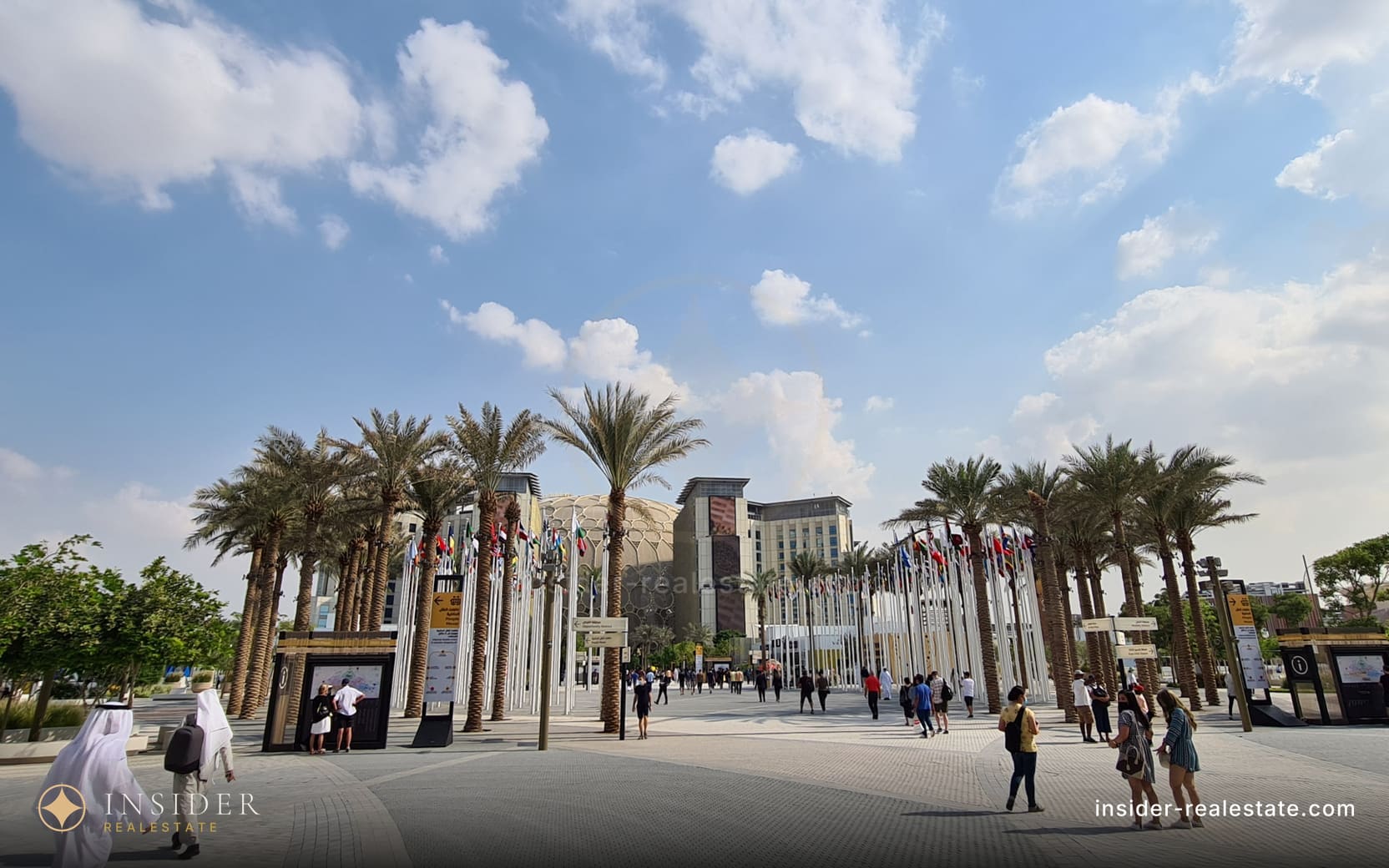
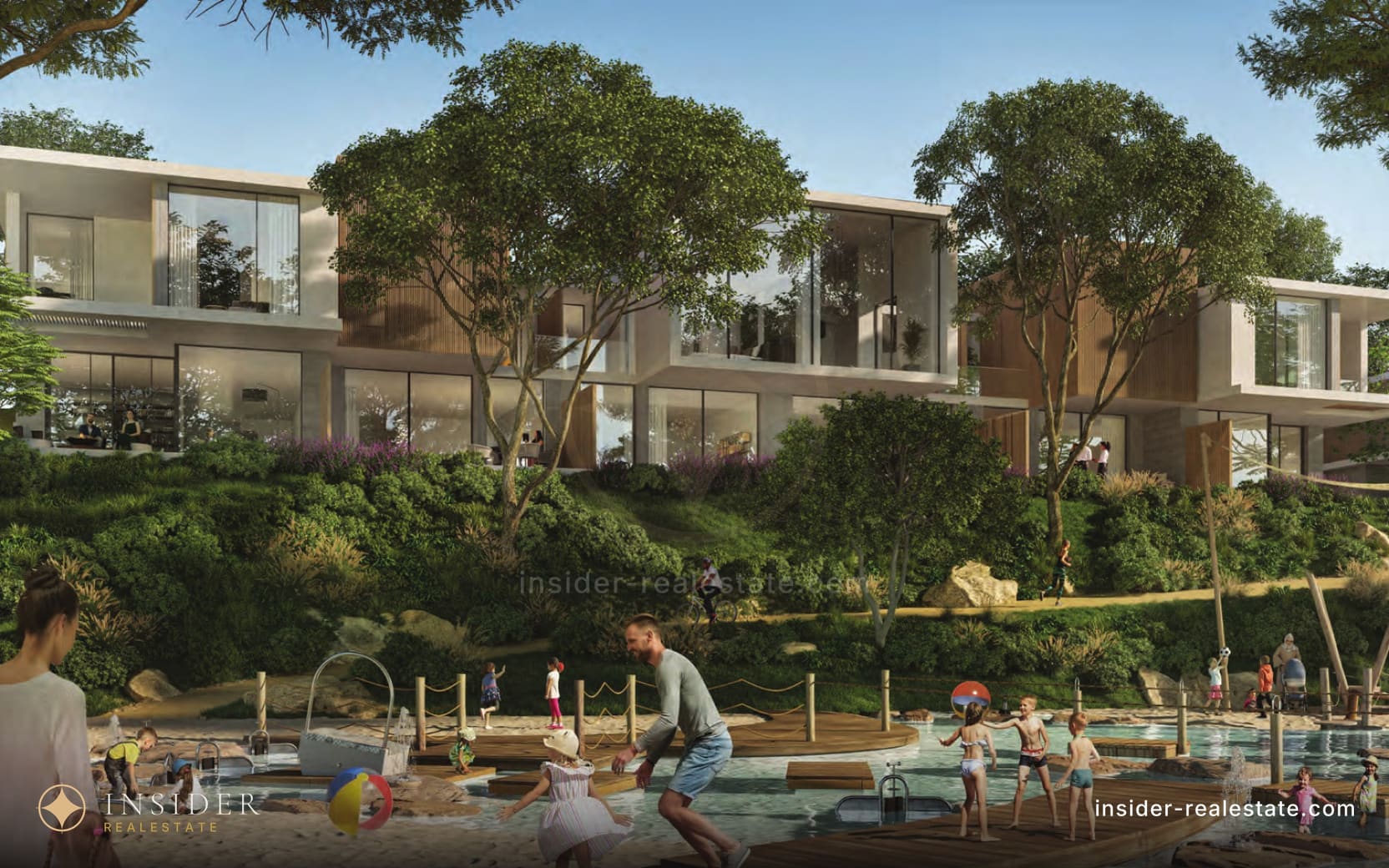
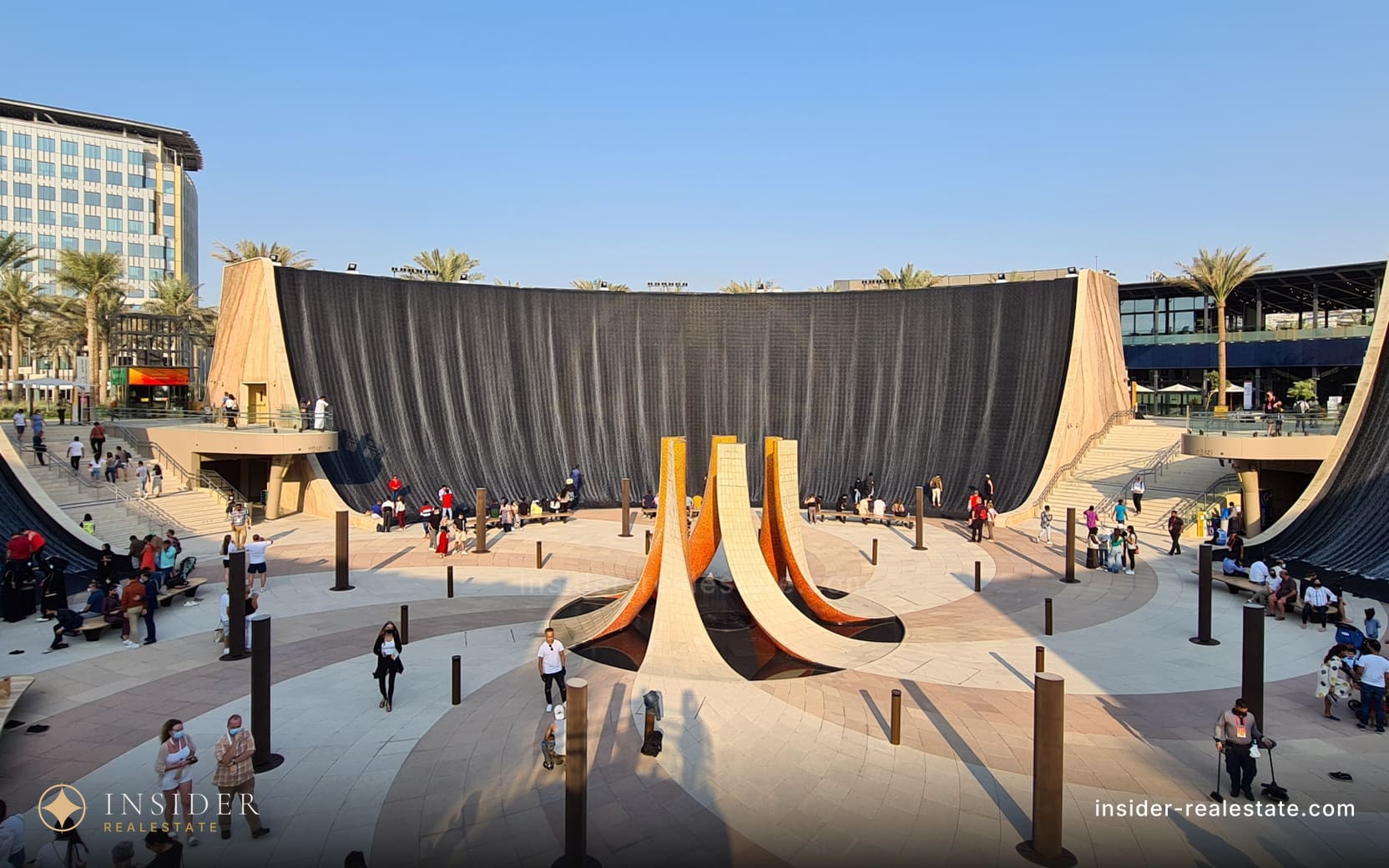
 Photo of the community −18%
 Dubai South Properties
A wholly government-owned master developer building not individual homes but an entire city around what is planned to become Dubai's largest airport — housing here is a layer on top of aviation, logistics and exhibition infrastructure, not the other way round.
3 lots in stock across 2 projects. Of the 3 with a known status: 0 ready, 3 under construction. By median price — 40th of 138.
- A long-term bet on the emirate's future largest airport
- Buyers working in aviation, logistics or on the former Expo site
- A long holding horizon rather than a quick flip
- Getting into a district at an early stage of its life
Median price $1.02M AED 3 750 000
Entry price $490K AED 1 800 000 — the cheapest lot
Completed stock 0% 3 lots discounted, deepest −18%
Where they build
The districts where this developer has the most lots in our stock.
Expo City Dubai 3
The company in brief
Checkable facts about the developer itself. Unlike the figures above, these are not about our stock and do not move with what happens to be listed today.
- Ownership
- wholly government-owned; the residential development arm of the wider Dubai South masterplan
- History
- the area was launched by the Dubai government under an earlier name and rebranded to its current one in 2015
- Registration
- registered with the Dubai Land Department as a developer under its own registration number
- Scale
- a masterplan spanning several times the size of the Dubai International Financial Centre, encompassing the airport zone, a logistics hub and the former Expo site
What kind of developer this is
Who they are, and why this isn't an ordinary developer
Dubai South Properties is not a private company but a wholly government-owned entity responsible for the residential slice of an enormous masterplan built around the emirate's planned largest airport. The area itself was conceived by the government as a single system — aviation, logistics, exhibition space and housing for the people who work there — and for the developer, residential districts are part of an infrastructure mandate rather than a standalone commercial product.
That is a fundamentally different logic from a private developer choosing a plot based on buyer demand. Here the whole city was designed first, zoned for aviation, logistics and exhibitions, and housing is fitted in wherever the masterplan calls for people to live to serve the rest of the area's functions.
What they actually build
Residential clusters are spread across different parts of the large territory: some sit near the former exhibition zone, where the pavilions and infrastructure from that event survived its closure and housing is now being built up around them; others sit closer to the airport and logistics zone, aimed at staff working in those industries. Formats vary from mid-rise blocks to lower-density clusters, but the underlying idea is the same — housing priced below the Dubai average, within walking distance of a job.
The company deliberately holds prices below the city's marquee central districts — a considered position for a master developer whose priority is populating the territory with people who work there, rather than selling the maximum floor area to investors who will never move in.
How the territory gets built
Government ownership gives the developer a resource a private company doesn't have: roads, utilities and public transport across the territory aren't laid by the developer alone but coordinated with the other state entities responsible for the wider masterplan. That lowers the risk of housing being handed over with no road to reach it, but it doesn't eliminate it entirely — infrastructure across such a large territory inevitably progresses unevenly.
The project's horizon is long by design: the city is being built over decades, not a single five-year cycle, tracking the growth of the airport and the logistics hub. Worth keeping in mind when choosing a specific cluster — some parts are much further along the path to feeling lived-in than others.
What buying in a growing city means in practice
The territory's main characteristic is that it isn't yet a finished residential whole. In different parts of it, the ratio of housing to the everyday infrastructure around it varies a great deal: where a district has been growing longer, shops, cafes and schools are already open and running; where housing was handed over recently, everyday services are still catching up with occupancy.
That isn't a developer failing to deliver — it's what buying in a city at the growth stage looks like: infrastructure arrives in waves behind the population, not ahead of it. For a buyer that means the first years in newer clusters can be less convenient than the masterplan promises, and that's worth building into the decision rather than discovering afterwards.
Resale market and outlook
The resale transaction history here is shorter than in Dubai's established districts: the territory is younger, turnover is lower, and fewer buyers are currently willing to commit here compared with central locations. That makes exiting the asset slower if a sale needs to happen quickly.
At the same time, the logic of the bet is straightforward: as the airport and the logistics hub grow and pull in more staff, demand for housing near the workplace should grow with them. It is a bet on the territory's future rather than its present state, and it needs to be judged on that horizon.
Who it suits, and who it does not
The territory suits buyers who genuinely work in aviation, logistics or one of the businesses inside the masterplan and want to live close to the job rather than commute across the city. It also suits a long-horizon investor willing to wait out the district's years of maturing in exchange for a lower entry price today.
It doesn't suit buyers who need a quick resale or rental income comparable to a mature district right away — the infrastructure and population still need to grow into the plan. And it doesn't suit anyone relying only on the developer's masterplan without checking what, of everything promised, is actually working next to the specific building today.
Projects by Dubai South Properties
All projects →Dubai South Properties listings in stock
All stock →What these numbers mean, and what they do not
There is no “developer” column in the base — a lot is attributed by its project name. The figures on this page speak about our stock, not about the company’s share of the Dubai market: a large developer with a big completed portfolio may appear smaller than one whose units come up for resale more often.
Prices come from listings, not from closed deals. For a particular building I retrieve the registered Land Department sales and show the real closing prices.
Video
Dubai South Properties on video
Project breakdowns from the English channel. Every clip has a written version on a page of its own.
Full reviews


In the news
Dubai South Properties: buying next to an airport that is still being built
The developer of the residential districts around Al Maktoum International. What an infrastructure-led location offers, and how to think about a thesis that depends on someone else’s timetable.
Other developers
All developers → Questions
Dubai South Properties: questions and answers
How much does a Dubai South Properties apartment cost?
The median across this developer's lots in our stock is $1.02M (AED 3 750 000), with entry from $490K. They are drawn from asking prices in our own base and refreshed every night — a picture of current supply rather than of the official price list.
Are there discounts on Dubai South Properties property?
Right now the base holds 3 lots from this developer priced below the market, with the deepest cut at 18%. This is not a Dubai South Properties promotion: below-market prices come from private sellers on resale or assignment who need a quick exit. An algorithm sets the size of the discount against comparable property; no broker types it in by hand.
What projects is Dubai South Properties building?
The site catalogue covers 3 projects by Dubai South Properties, each with a building passport — storeys, units, handover date and bedroom mix. They are listed above, and the “Where they build” block shows the districts with the most of its lots. Any lots on sale appear directly beneath their project.
Should I buy from Dubai South Properties direct or through a broker?
Money-wise there is no difference: on off-plan the broker is paid by Dubai South Properties, not by you, so calling the sales office direct saves nothing. What differs is the view — the developer’s sales team sells only its own buildings and will not mention that the same unit costs less next door or that this project hands over later. On resale and assignment the commission is the usual 2% plus VAT.
Is Dubai South Properties worth buying
It depends what you are buying and why. Send me your budget and the job it has to do — I will tell you which of this developer's projects make sense right now and which I would walk past.
Ask on WhatsAppAsk a question
Telegram is the fastest way — I answer personally.
Message on Telegram