
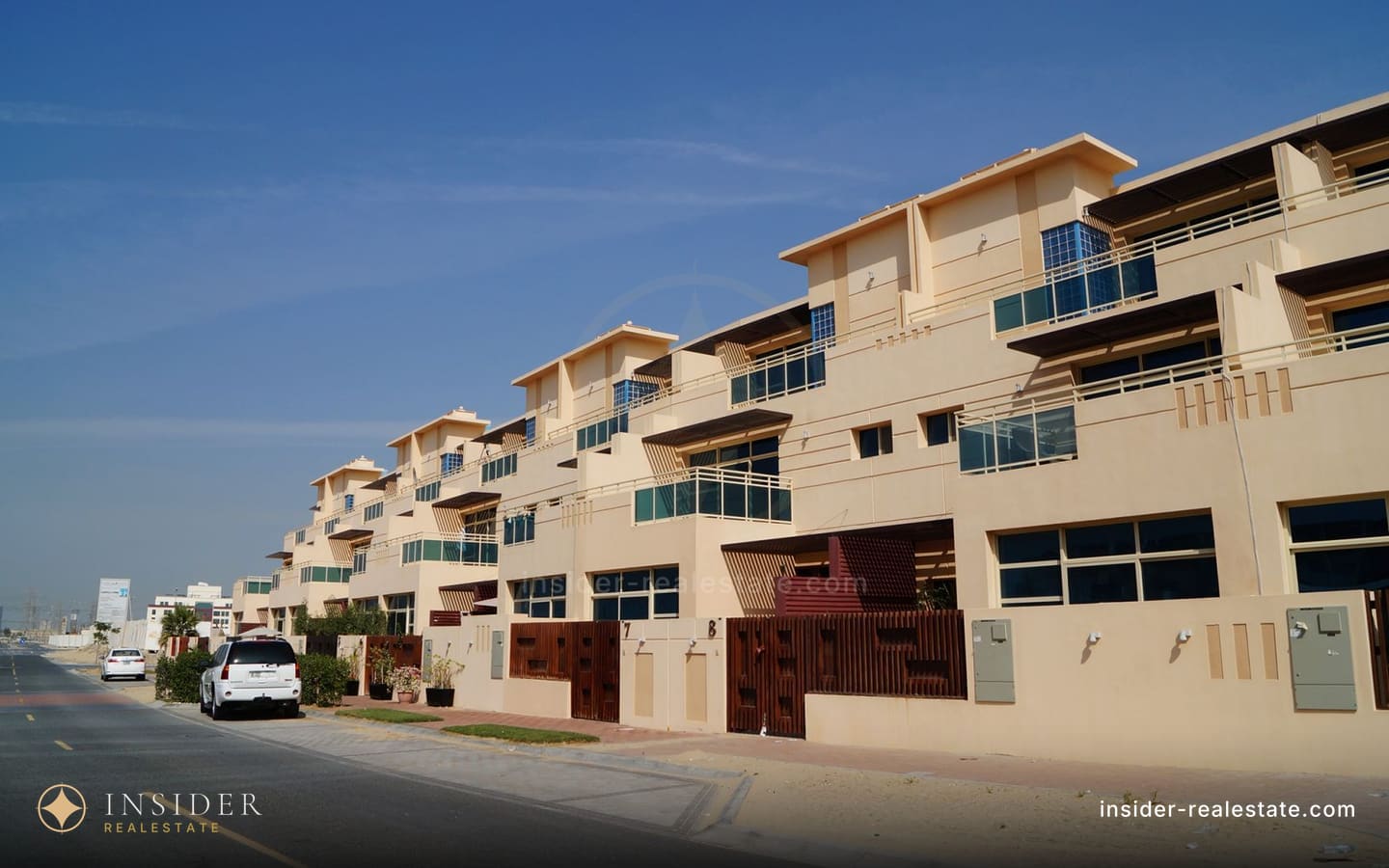
 Photo of the community
 Dar Al Karama Real Estate
A private developer backed by a small group of investors, building the first tall tower in a district where almost everything else stands a third of its height — Sapphire 32 stands apart from the rest of Jumeirah Village Circle by design, not by accident.
4 lots in stock across 2 projects. Of the 3 with a known status: 0 ready, 3 under construction. By median price — 116th of 139.
- Upper floors with an open view at mid-market pricing
- An investor who has checked whether JVC's market pays a height premium
- A range of unit formats within one building
- Not for a lower-floor buyer without a view
Median price $297K AED 1 090 750
Entry price $169K AED 620 000 — the cheapest lot
Per square foot $344 AED 1 265 / sq.ft, median
Completed stock 0% no discounted lots right now
Where they build
The districts where this developer has the most lots in our stock.
JVC 4
The company in brief
Checkable facts about the developer itself. Unlike the figures above, these are not about our stock and do not move with what happens to be listed today.
- Project
- Sapphire 32 — the developer's only known project
- Specs
- 33 storeys, 224 units, per the project record
- Location
- Jumeirah Village Circle, a district built mostly low-rise
- Land master developer
- Nakheel
What kind of developer this is
Who this is, and what stands out about its one project
Dar Al Karama Real Estate is a small private company with no public record of past buildings, and its only known project immediately sets the bar higher than a typical debut: Sapphire 32 is a tall tower in a district where the overwhelming majority of buildings stand a fraction of its height. Jumping straight from no portfolio to a notable height is not the same as debuting with a low-rise building, and it is worth assessing with correspondingly more caution.
With no track record of its own, the one meaningful question about the company is who it hired to build. The main contractor, structural engineer and supervising consultant matter more here than the developer's own reputation, because their prior experience, not Dar Al Karama's history, decides how realistic the stated timeline is.
A tall building in a low district
Jumeirah Village Circle is built mostly with buildings a third of this height, and a tall tower in that setting changes the arithmetic of buying. An open view from the upper floors — over rooftops rather than into a neighbour's living room — is rare in a district where most units face the building across the street at close range. Density rules make a second tower of similar height nearby less likely, so the view from upper floors tends to hold up over time.
A recognisable landmark in a cluster where buildings are hard to tell apart helps with both letting and selling — visibility has real value in a district built with visually similar low-rise complexes.
What height costs the lower floors
Height has a price, and it is not only the upper floors that pay it. Building costs are spread across more units, which can in theory hold down the price per square foot, but dependence on the lifts working reliably grows with storey count — a tall tower needs a properly sized lift core, and too few lifts per unit means daily queues every morning.
Running costs — pumps, cooling, facade access, fire systems — cost more per square foot at height, and that is permanently baked into the service charge. Lower floors carry the whole tower's charge without the view that justifies it: the price gap between floor ranges here should be substantial, and if it is not, that is a negotiating point.
Supply landing on the market all at once
One large building among low-rise development means many units from a single address can hit the rental market simultaneously, especially in the first year after handover — unlike a district where supply is spread evenly across dozens of smaller buildings. That is worth building into expectations for how fast a unit will let in the first months after handover.
How many units are being let nearby in the same period is a unit's direct competitor, not an abstract JVC-wide market, and that figure is worth checking separately from general district statistics.
What to check
The number of lifts against the number of units, and the parking ratio — checkable figures that shape daily life in the building. The projected service charge should be compared against already-delivered tall buildings elsewhere, not JVC's low-rise stock, which would understate the expectation. The main contractor and its experience specifically with tall buildings, the structural engineer and supervising consultant, the escrow account and project registration by number.
The floor and orientation of the unit, and what is approved for neighbouring plots — under the district's density rules this should hold, but it is worth confirming on paper rather than taking an agent's word for it. Rental rates in JVC by floor from live listings will show whether the market actually pays a premium for height here.
How I work with this property
I start with the main contractor and its experience at a comparable height — for a company's debut project, that is the first and most informative question. Next I count lifts against units and ask for the projected service charge, comparing it against already-delivered tall buildings rather than low-rise JVC neighbours.
For each floor I separately weigh the price gap against the actual rental rate from live listings — that gap shows whether the market genuinely pays for the view, and it is what an honest recommendation to a client weighing upper versus lower floors in Sapphire 32 is built on. For a client with no experience of tall buildings in JVC, I separately explain why a building like this cannot be compared directly with a mid-rise neighbour: the risk profile and the cost lines are different, and conflating them is a common mistake on a first look at the district.
Projects by Dar Al Karama Real Estate
All projects →Dar Al Karama Real Estate listings in stock
All stock →
What these numbers mean, and what they do not
The developer is inferred from the project name — there is no developer column in the base. So the figures describe our stock, not the company's share of the Dubai market: a developer sitting on an enormous volume of completed housing can look smaller here than one whose projects reach the resale market more often.
These are asking prices, not closed transactions. For a specific building I pull the registered Land Department sales and show where deals actually closed.
Video
Dar Al Karama Real Estate on video
Project breakdowns from the English channel. Every clip has a written version on a page of its own.
Full reviews


In the news
Dar Al Karama Real Estate: a tall tower in a district of short ones
A developer building a 33-storey tower in Jumeirah Village Circle. Height in a low-rise cluster changes the economics in both directions — here is how.
Other developers
All developers → Questions
Dar Al Karama Real Estate: questions and answers
How much does a Dar Al Karama Real Estate apartment cost?
The median across this developer's lots in our stock is $297K (AED 1 090 750), with entry from $169K. The median per square foot is $344. They are drawn from asking prices in our own base and refreshed every night — a picture of current supply rather than of the official price list.
What projects is Dar Al Karama Real Estate building?
Our catalogue holds 1 project by this developer, each with a building passport: storeys, unit count, handover date, the mix of bedrooms. The list is on this page, and the districts where the developer has the most lots in stock are in the “Where they build” block. Under each project sit the lots on sale, where there are any.
Should I buy from Dar Al Karama Real Estate direct or through a broker?
The price is the same: on off-plan the developer pays the broker’s commission, not the buyer, so going straight to the sales office saves nothing. The difference is elsewhere — a developer’s sales office shows its own projects only, and will not tell you that the same thing next door is cheaper or that this project is running later than advertised. On resale and assignment the commission is the standard 2% plus VAT.
Is Dar Al Karama Real Estate worth buying
That depends on what you buy and why. Describe the budget and the aim — I will point out which of this developer’s buildings are justified today and which are better left alone.
Ask on WhatsAppAsk a question
Telegram is the fastest way — I answer personally.
Message on Telegram