
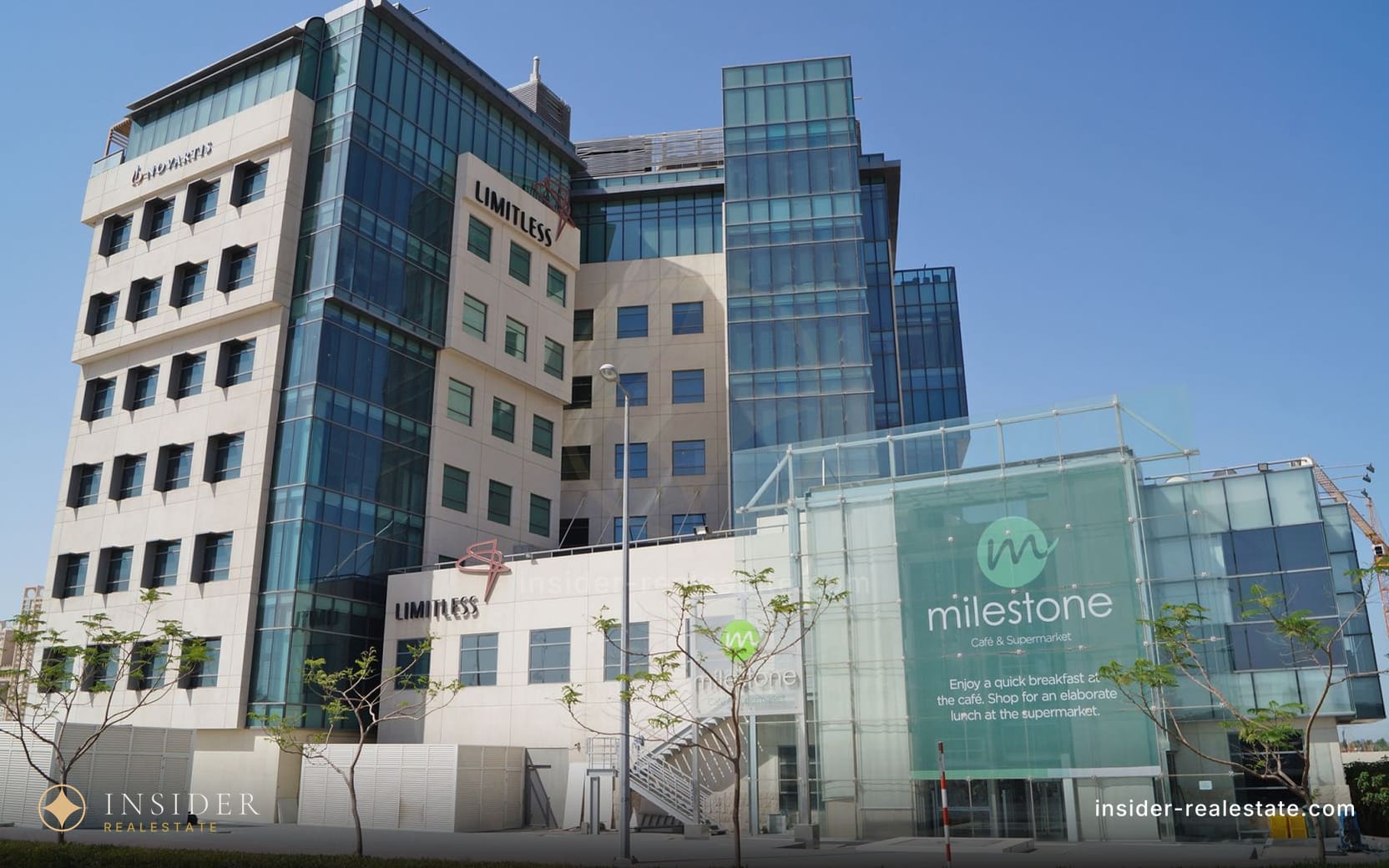
 Photo of the community
 Sonate Residences by Condor Jumeirah Village Triangle (JVT) · 1 BR · Apartment 1 264 000 AED
Ask about lot NP9-108564
A developer that spent forty years as a pure contractor before it started building housing under its own name — a rare combination that explains why a company with a relatively modest name in residential circles has surprisingly mature production discipline.
3 lots in stock across 2 projects. Of the 3 with a known status: 2 ready, 1 under construction. By median price — 64th of 139.
The districts where this developer has the most lots in our stock.
Checkable facts about the developer itself. Unlike the figures above, these are not about our stock and do not move with what happens to be listed today.
Condor Group started in Dubai not as a developer but as a construction contractor — literally concrete, rebar and site logistics, not marketing and unit sales. Only after many years of practical building work did the company enter residential development and start selling its own projects directly to buyers. That is a rare sequence for this market: usually it runs the other way, with a company starting from sales and marketing and outsourcing the engineering side from day one.
The practical consequence of that origin is that the company started with its own grasp of construction processes, not only property sales experience. That shows in its positioning: the company emphasises engineering and environmental aspects of construction more than lobby design or the marketing language typical of purely sales-driven developers.
The group has over four hundred completed projects behind it across the UAE, India and Qatar — that figure covers the entire contracting and development business, not only residential towers under its own name in Dubai, but it shows the scale of the organisation behind the brand. That volume of practical experience is rare among companies that started out as residential developers specifically — most local competitors of comparable age never went through a contracting apprenticeship at this scale.
In Dubai under its own name, the company delivers housing across several districts — from Dubai Marina to Jumeirah Village Circle and Jumeirah Village Triangle — at a steady pace rather than in isolated bursts of activity. That points to a stable operating model rather than a company betting everything on one large project.
The company positions itself as Dubai's first green-construction company and claims a LEED Platinum-certified building — the highest tier of international environmental certification — as the first of its kind in the region. For a buyer, that means more than a fashionable phrase in a brochure: specific engineering choices, more efficient ventilation and air-conditioning systems, lower-energy materials, which over time can cut utility bills compared with a standard building of the same class.
That specialisation follows logically from the company's contracting origin: engineering expertise built up over forty years of construction transfers more easily into environmental standards than it does for a developer for whom building was always just executing someone else's architectural design through subcontractors.
The company's engineering origin should show up first in the technical condition of buildings years after handover — how reliably mechanical systems run, how predictably the facade and roof hold up. That is an aspect harder to fake with marketing than lobby finishes, and it is exactly where to look for real confirmation of the claimed engineering quality.
At the same time the company operates in the mid segment rather than the premium one — service charges and common-area upkeep match the mass market, and it is worth being careful about paying extra for "engineering reputation": build quality does not always translate into a premium level of post-handover service.
The condition of the company's specific already-delivered projects in your district of interest, years after move-in — the engineering reputation should be confirmed in practice, not stay a claim in a presentation. Whether and to what level the specific building you are considering is environmentally certified, if green construction was the reason for your interest — not every company project necessarily carries the same certification.
The current status of under-construction properties against the stated schedule, and an escrow account for the specific project. The registered resale transaction history in the district you are interested in — how the company compares against neighbouring developers on the secondary market.
With this developer I always explain the company's contracting origin to the client separately from its residential projects — it explains why engineering quality here is often higher than the brand's name recognition would suggest, and that is worth weighing against more heavily marketed names at the same price. For clients who care about a building's environmental credentials, I check the specific project's certification separately, rather than relying on the company's general reputation as a "green developer."
On already-delivered properties, I look at the real condition of mechanical systems and common areas years after move-in — the best available check on whether the company's contracting experience genuinely carries through into the quality of its own residential projects, rather than staying on paper.
Photo of the community 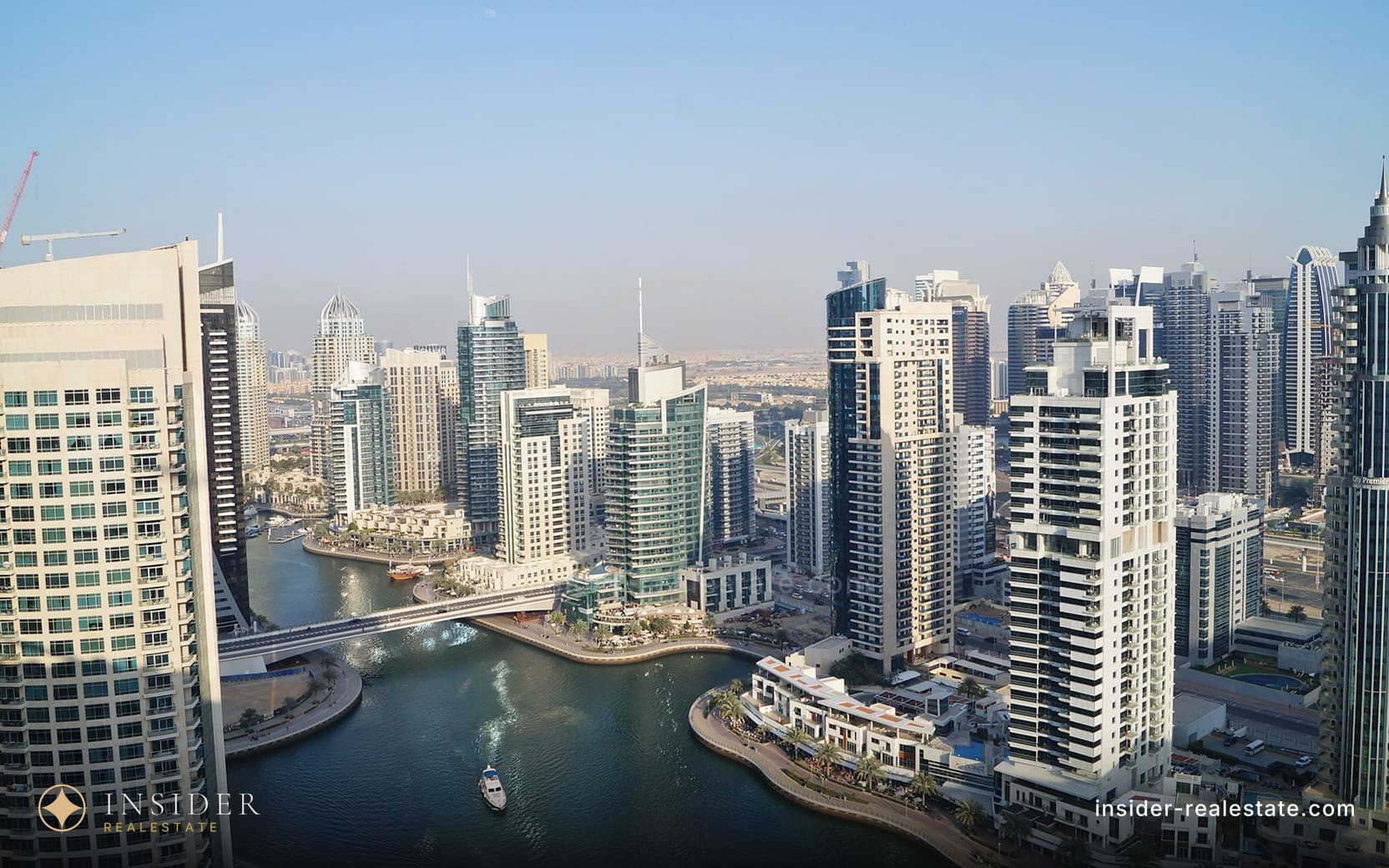 Photo of the community Photo of the community
 Lots are matched to Condor Group by project name, since the base has no developer field. The numbers above therefore describe our stock rather than the company’s market share: a developer with a large completed portfolio can show fewer lots than one whose buildings are resold more often.
All prices are asking prices, not sales. For the building you pick I pull the registered Land Department transactions and show the prices deals really closed at.
A Dubai Marina tower completed in 2023. Much of the stock in a newly delivered building is sold on by off-plan investors — and buying from one is its own transaction.
The median across this developer's lots in our stock is $626K (AED 2 300 000), with entry from $344K. The median per square foot is $390. The figures come from asking prices in our base, not from the Condor Group price list, and they are recalculated nightly to reflect what is actually for sale today.
Delivered: over 400 completed group projects across the UAE, India and Qatar. The register of the Land Department is the source that matters, not the brochure: it lists the licence, each project’s progress in per cent and the escrow account. On off-plan the buyer’s money sits in that account under RERA control and is paid out as construction stages are verified. The complete dossier is in the write-up above.
The site catalogue covers 2 projects by Condor Group, each with a building passport — storeys, units, handover date and bedroom mix. They are listed above, and the “Where they build” block shows the districts with the most of its lots. Any lots on sale appear directly beneath their project.
The price is the same: on off-plan the developer pays the broker’s commission, not the buyer, so going straight to the sales office saves nothing. The difference is elsewhere — a developer’s sales office shows its own projects only, and will not tell you that the same thing next door is cheaper or that this project is running later than advertised. On resale and assignment the commission is the standard 2% plus VAT.
The answer depends on the purpose. Send your budget and goal — I will go through which Condor Group projects are worth considering now and which I would skip.
Ask on WhatsAppTelegram is the fastest way — I answer personally.
Message on Telegram