
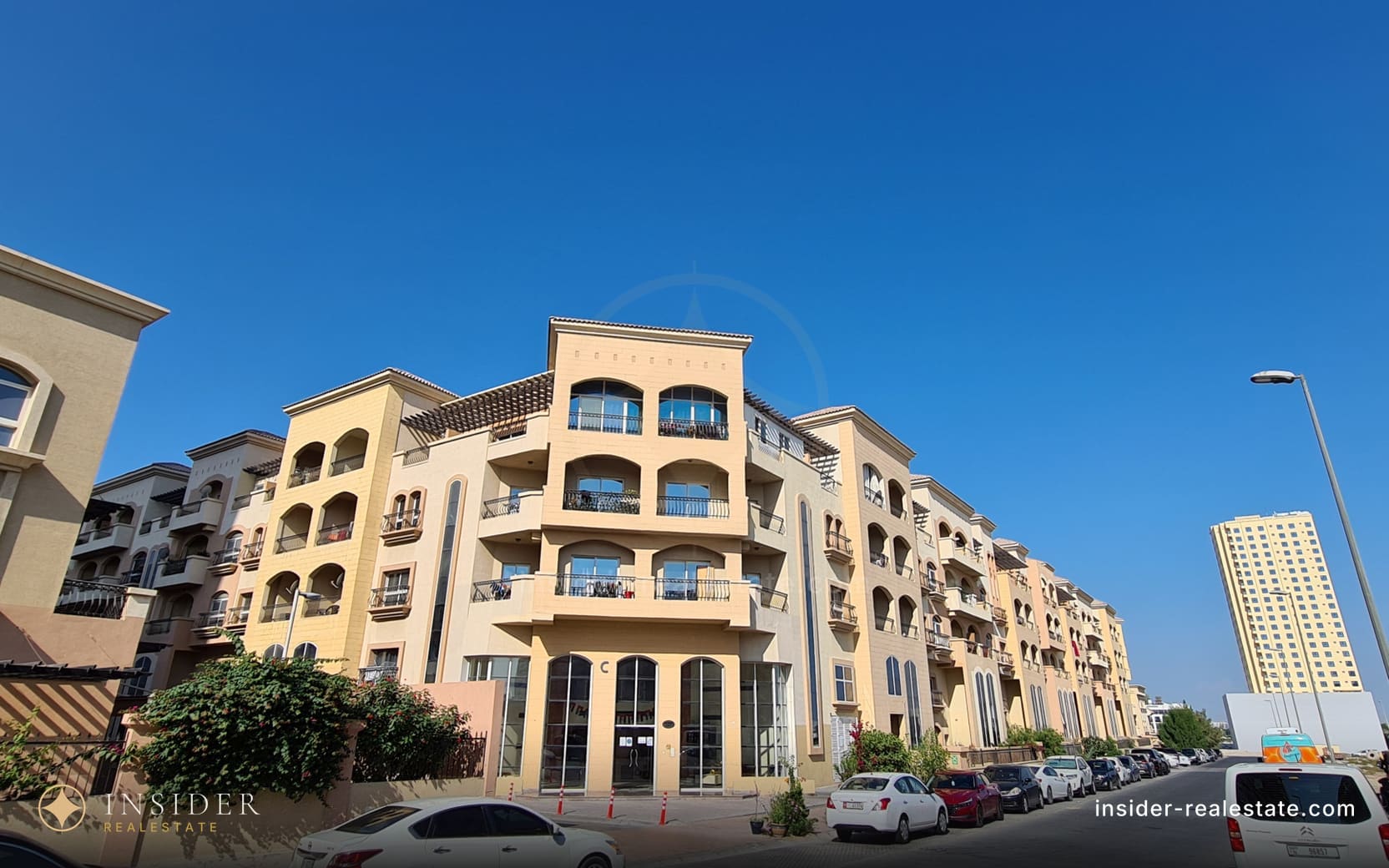
 Photo of the community
 Bloom Heights A Jumeirah Village Circle (JVC) · 2 BR · Apartment 1 600 000 AED
Ask about lot NP9-303577
Abu Dhabi's largest family-owned developer, not a Dubai company with a capital-city side project: Bloom Holding builds entire districts rather than individual towers — communities meant for tens of thousands of residents — and has only recently entered Dubai with a handful of standalone projects.
1 lot in stock across 1 project. Of the 1 with a known status: 1 ready, 0 under construction. By median price — 87th of 139. The company was founded in 2008.
The districts where this developer has the most lots in our stock.
Checkable facts about the developer itself. Unlike the figures above, these are not about our stock and do not move with what happens to be listed today.
Bloom Holding operates primarily in the Abu Dhabi market, which is a fundamentally different market from Dubai: fewer new entrants, slower turnover, more attention paid to government and semi-government structures. The company is part of National Holding, a large investment conglomerate, which gives it a financial footing that a typical niche developer running one or two projects does not have.
For a buyer used to comparing Dubai developers against each other, it matters to understand: Bloom competes not with JVC-scale builders but with capital-market players like Aldar. The scale of ambition here is measured in whole districts with their own infrastructure, schools and retail, not a single tower.
The group's flagship project in Zayed City is not a residential complex but a multi-phase masterplan where infrastructure — parks, a lake, schools, retail — is built alongside housing rather than added years later. That approach reduces a common risk of large new districts: living for the first several years next to an unfinished neighbourhood.
The architectural theme is Mediterranean-inspired — unusual for the UAE market, which tends toward either modernist glass facades or Arabic classical design. That is a recognisable visual identity that works both during sales and later, as the district is perceived as one coherent product rather than a set of disconnected construction phases.
Large masterplans have one advantage over standalone developers: infrastructure here is part of the overall design, not an afterthought bolted onto housing. But scale also means phases stretched out over years — an early-phase buyer lives next to later-phase construction for a long time, and that should be part of the expectation when choosing a specific phase rather than the project in general.
Distance to already-open infrastructure — the park, the school, the retail strip — shapes daily life in a given phase far more than the masterplan's overall brand. Check the phasing map and the status of your specific plot, not the project's general marketing description.
The company has entered Dubai with standalone projects in districts like JVC, but this is not its primary market — it is an expansion beyond its home capital. For a buyer, that means the brand does not yet have the same depth of local delivery history in Dubai as it does in Abu Dhabi, and a Dubai project should be judged on its own merits rather than on the company's capital-market reputation, which does not transfer directly.
This is not a sign of lower quality so much as a different context: the company brings capital and large-masterplan experience into Dubai, but a specific Dubai project is usually more modest in scale and infrastructure scope than the capital's flagship developments.
For a Zayed City purchase, check the status of the specific phase and its distance to already-delivered infrastructure, not the masterplan's overall status. For Dubai projects, separately confirm which group entity is the actual developer of record on the sale contract, and assess it on its own rather than on the group's reputation, built mostly on capital-city projects.
In both cases, ask for a phase-by-phase infrastructure rollout with concrete dates rather than general promises, and compare the pace of previous phases against the new one's stated timeline — on large masterplans, the gap between plan and delivery tends to widen on later phases rather than the first.
Photo of the community Lots are matched to Bloom Holding by project name, since the base has no developer field. The numbers above therefore describe our stock rather than the company’s market share: a developer with a large completed portfolio can show fewer lots than one whose buildings are resold more often.
All prices are asking prices, not sales. For the building you pick I pull the registered Land Department transactions and show the prices deals really closed at.
The median across this developer's lots in our stock is $436K (AED 1 600 000), with entry from $436K. The median per square foot is $375. They are drawn from asking prices in our own base and refreshed every night — a picture of current supply rather than of the official price list.
Founded: 2008, in Abu Dhabi. Delivered: also Bloom Gardens and Bloom Marina in Abu Dhabi, plus standalone Dubai projects (JVC). A developer is checked against the Land Department’s open register rather than a brochure: it shows the licence status, the construction progress of each project and the registered escrow account. On off-plan the buyer’s money goes into that account under RERA supervision and is released against verified milestones. The full dossier is in the write-up above.
Money-wise there is no difference: on off-plan the broker is paid by Bloom Holding, not by you, so calling the sales office direct saves nothing. What differs is the view — the developer’s sales team sells only its own buildings and will not mention that the same unit costs less next door or that this project hands over later. On resale and assignment the commission is the usual 2% plus VAT.
That depends on what you buy and why. Describe the budget and the aim — I will point out which of this developer’s buildings are justified today and which are better left alone.
Ask on WhatsAppTelegram is the fastest way — I answer personally.
Message on Telegram