
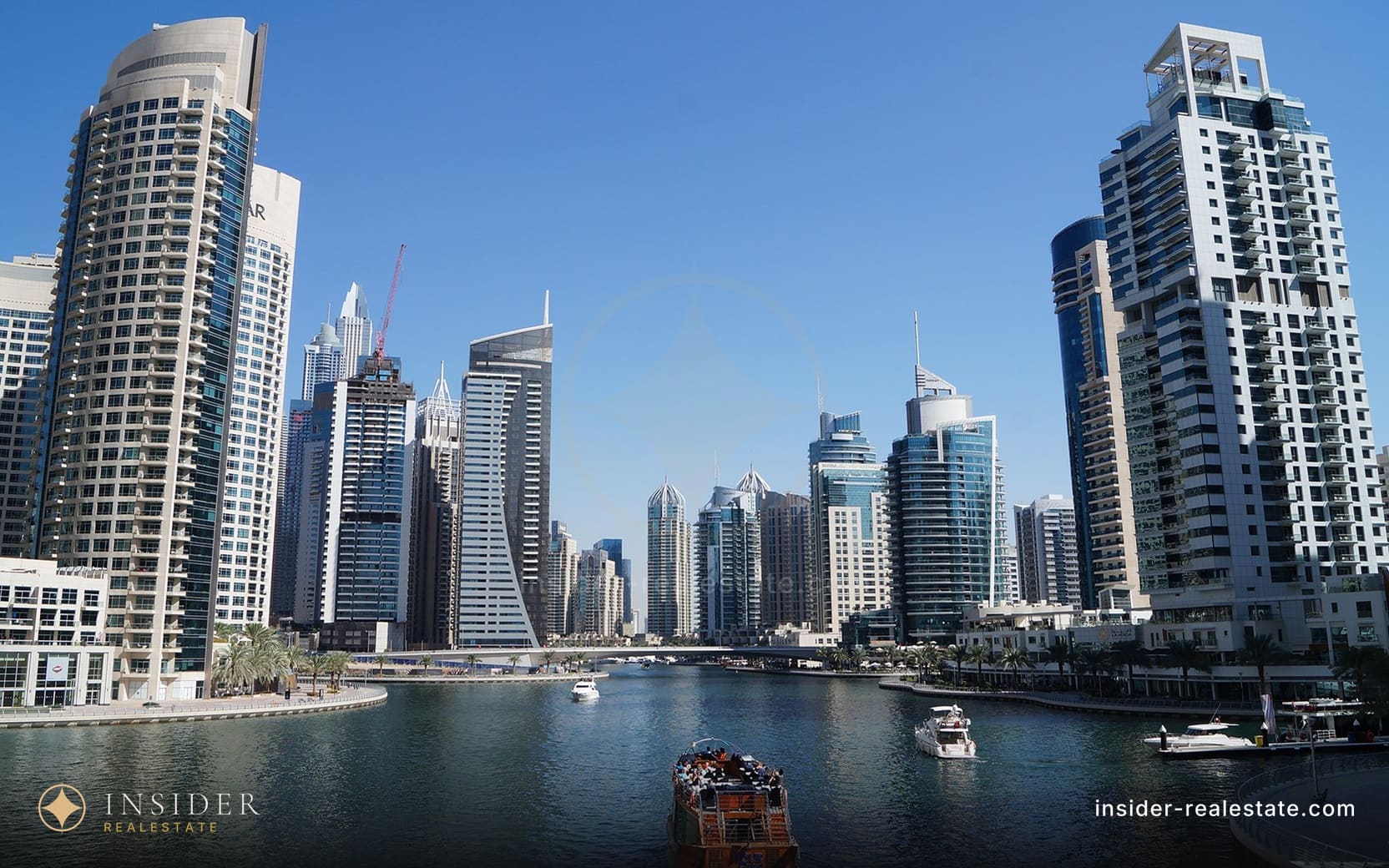
 Photo of the community −8%
 Bin Shafar Holding
The development name of the Al Shafar General Contracting group: a single building on the books — the 63-storey Emirates Crown in Dubai Marina, delivered in 2008, the very year the market turned.
3 lots in stock across 1 project. Of the 2 with a known status: 2 ready, 0 under construction. By median price — 31st of 139.
- A Marina address cheaper than a new build
- An investor willing to check the owners' association minutes
- A long let rather than a speculative flip
- Not for someone judging a building by its lobby
Median price $1.44M AED 5 300 000
Entry price $1.31M AED 4 800 000 — the cheapest lot
Per square foot $367 AED 1 347 / sq.ft, median
Completed stock 100% 1 lot discounted, deepest −8%
Where they build
The districts where this developer has the most lots in our stock.
Dubai Marina 3
The company in brief
Checkable facts about the developer itself. Unlike the figures above, these are not about our stock and do not move with what happens to be listed today.
- Parent group
- Al Shafar General Contracting Company (ASGC), a major UAE contractor with 250+ delivered projects
- Only residential project
- Emirates Crown in Dubai Marina
- Building specs
- 63 storeys, 296m structural height, per the project record
- Delivered
- 2008, construction started in 2005
What kind of developer this is
Who this actually is
Bin Shafar Holding as a development name sits behind a single residential project — Emirates Crown in Dubai Marina — and behind that name is Al Shafar General Contracting, a major UAE construction contractor with a portfolio of several hundred delivered projects and offices across several countries in the region. That is a fundamentally different setup from a developer with dozens of residential buildings to its name: contract construction is the group's core business, and housing under its own brand is closer to an exception than the rule.
The practical takeaway is simple: judging the company as a developer makes little sense given the lack of a track record, but judging it as a builder does — ASGC's record in contract construction is checkable and substantial, even though only one building carries its own residential brand.
A building from the market-turn wave
Emirates Crown was delivered in the very year the Dubai market turned after years of growth — right on the hinge between boom and downturn. Buildings completed in that narrow window form a recognisable group with shared traits — designed during the boom, when money was easy, and finished during the downturn, and wherever those two moments diverge, the compromise usually shows up in the common-area finishes.
Ownership in such buildings typically fragmented fast — a large share of units went to investors at the market's peak and changed hands repeatedly afterward, which directly affects how engaged today's owners' association is in maintaining the building. Some buildings from this wave stood partly vacant for years after handover, which shaped both their maintenance history and how early the reserve fund built up.
What two decades actually mean for this specific tower
Age alone does not make a building a bad purchase — several of Dubai Marina's best-located towers come from exactly this wave, and where the owners' association has stayed active the whole time, the building has aged well. The problem is that the answer differs from building to building and has to be checked, not assumed in either direction based on age alone.
The tower is now roughly two decades old, meaning lifts, chillers and facade work have either already gone through scheduled renewal or are due soon. That means a buyer should be asking not about the year of construction but about exactly what has already been done and what still has to be funded from the building's reserve.
Telling a well-kept building from a neglected one in a single day
These are cheap checks, and they are more informative than any listing. Look at the engineering, not the lobby — a lobby is cheap to refresh before a viewing, but pump rooms and risers do not lie about a building's real condition. Read several years of owners' association meeting minutes: a building that requested quotes for major works and funded them is in a completely different position from one that kept deferring the decision year after year.
Check the reserve fund balance against the building's age — a twenty-year-old tower with a thin reserve is not a cheap purchase, it is a deferred bill that will eventually land on owners. And a simple practical test: ride the lifts during the morning rush and ask residents how long an ordinary breakdown takes to fix — that one answer says more about building management than any document.
What else to check before buying
A full technical survey of the building, including its engineering systems, not just the unit itself. A multi-year history of the service charge and what caused any jumps in it, if there were any. Comparable transactions on the same floor range in this specific tower from the Land Department's open register — with fifteen-plus years of sales history, there is enough data for the spread between floors to show up in numbers.
Actual rental rates in this specific building, not the district average, along with the current short-let rules and the parking allocation — for a tower this age and height, these are not secondary details but parameters that shape daily life in the building.
How I work with this property
I start with the owners' association's minutes from the last several years and the actual condition of the engineering systems — for a building this age, that tells you more than any conversation about the developer, who simply has no other project to compare it against. Next I pull registered transactions for specific floors in the building and compare them against current listings.
I separately check the reserve fund balance and the association's plans for upcoming major works — facade, lifts, roofing — because that line item, not the developer's name, is what actually decides what owning a unit in Emirates Crown will cost over the next several years.
Projects by Bin Shafar Holding
All projects →Bin Shafar Holding listings in stock
All stock →What these numbers mean, and what they do not
There is no “developer” column in the base — a lot is attributed by its project name. The figures on this page speak about our stock, not about the company’s share of the Dubai market: a large developer with a big completed portfolio may appear smaller than one whose units come up for resale more often.
Prices come from listings, not from closed deals. For a particular building I retrieve the registered Land Department sales and show the real closing prices.
Video
Bin Shafar Holding on video
Project breakdowns from the English channel. Every clip has a written version on a page of its own.
 1:35Binghatti Aquarise, Business Bay: the pitch and the reality check12 September 2025
 1:17Skyrise by Binghatti: a landmark tower at mid-market pricing11 September 2025
 1:38Binghatti Hills at Arjan: the volume play, examined10 September 2025
 1:31Binghatti Haven in Dubai Sports City: cheap for a reason, or cheap for a good reason?9 September 2025
 1:15Binghatti Circle in JVC: retail and offices at the entry level8 September 2025
In the news
Bin Shafar Holding: a 2008 building, and what that vintage means
A Dubai Marina tower completed in the year the market turned. Why buildings from that cohort are worth understanding as a group, and what to verify in one.
Other developers
All developers → Questions
Bin Shafar Holding: questions and answers
How much does a Bin Shafar Holding apartment cost?
The median across this developer's lots in our stock is $1.44M (AED 5 300 000), with entry from $1.31M. The median per square foot is $367. These are asking prices out of our own base, recalculated every night; they follow what the developer and its sellers actually have on the market, not the price list on a corporate site.
Are there discounts on Bin Shafar Holding property?
Right now the base holds 1 lot from this developer priced below the market, with the deepest cut at 8%. It is the seller on the secondary market or on an assignment who cuts the price, not the developer — each has a reason to hurry. The discount is calculated by an algorithm relative to comparable property, with no manual broker estimate.
Is Bin Shafar Holding a reliable developer?
Delivered: 2008, construction started in 2005. A developer is checked against the Land Department’s open register rather than a brochure: it shows the licence status, the construction progress of each project and the registered escrow account. On off-plan the buyer’s money goes into that account under RERA supervision and is released against verified milestones. The full dossier is in the write-up above.
What projects is Bin Shafar Holding building?
The site catalogue covers 1 project by Bin Shafar Holding, each with a building passport — storeys, units, handover date and bedroom mix. They are listed above, and the “Where they build” block shows the districts with the most of its lots. Any lots on sale appear directly beneath their project.
Should I buy from Bin Shafar Holding direct or through a broker?
The price is the same: on off-plan the developer pays the broker’s commission, not the buyer, so going straight to the sales office saves nothing. The difference is elsewhere — a developer’s sales office shows its own projects only, and will not tell you that the same thing next door is cheaper or that this project is running later than advertised. On resale and assignment the commission is the standard 2% plus VAT.
Is Bin Shafar Holding worth buying
That depends on what you buy and why. Describe the budget and the aim — I will point out which of this developer’s buildings are justified today and which are better left alone.
Ask on WhatsAppAsk a question
Telegram is the fastest way — I answer personally.
Message on Telegram