The World Islands: an island as an asset class
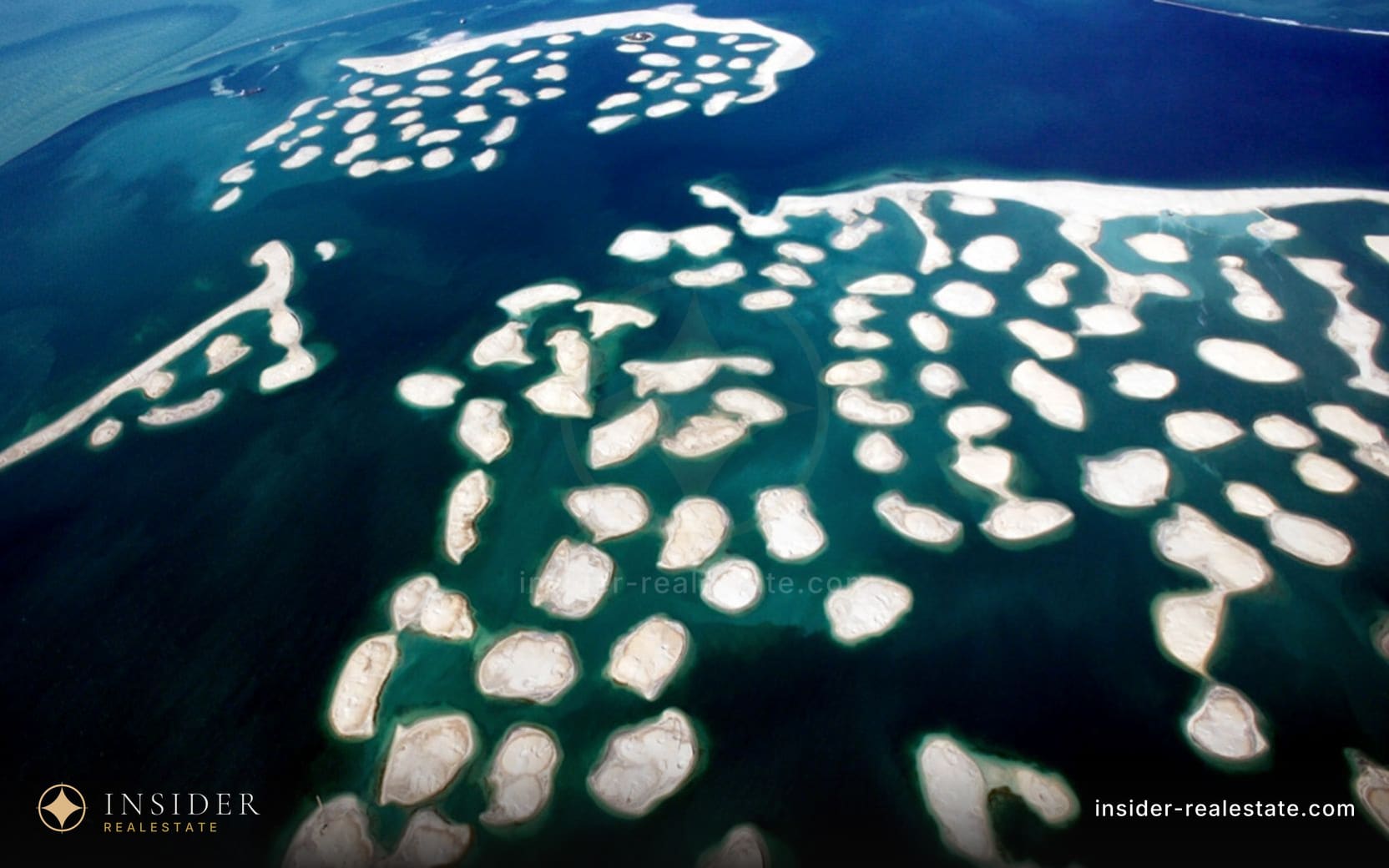
An archipelago of man-made islands, built out only in part. Buying here is not property in the ordinary sense, and it has to be assessed by different rules.
The World is an archipelago of man-made islands laid out in the shape of a world map, reclaimed long ago and built out only in part. Offers appear here regularly, and they cannot be analysed like ordinary property: this is a different asset class.
How an island differs from an apartment or a villa
- Access is by water or by air only. No road means every trip is logistics rather than pulling out of a garage — and that shapes both daily life and the cost of running the place.
- Utilities are either your own or absent. Power, water, drainage, waste removal, security: each is either connected and maintained by someone, or solved locally and autonomously. Establish which, specifically and in writing.
- Construction costs more and takes longer. Everything arrives by sea, weather windows are limited, and few contractors work in these conditions.
- Shoreline maintenance. Reclaimed islands need continuing work against erosion, and that is a permanent cost with a named party responsible for it — or it is not, which is the answer you need.
Liquidity is the central question
- The buyer pool is extremely narrow and international. This is not "few buyers" — it is single digits a year across the whole archipelago.
- There are effectively no comparables for a valuation. The price is negotiated rather than derived, and that cuts both ways.
- Exit is measured in years, not months. If the capital might be needed back, that is a disqualifying property, not a detail.
- Mortgage finance is generally unavailable, which means your future buyer will be paying cash too.
What to establish before any conversation about price
- What is actually being sold — land, development rights, a completed building, a share — and in which register it is recorded.
- Who provides and maintains the utilities, under what contract, and what happens if that contract ends.
- Who is responsible for the shoreline and for replenishing it.
- What development restrictions apply to that specific island.
- Transport: who provides it, on what schedule, and at whose cost.
- What is actually built and operating on the neighbouring islands — the only available benchmark there is.
Who it suits
- Buyers for whom this is a trophy asset and a way of living, not an investment.
- Capital that will not be needed back and can wait years.
- Not for an investor in any sense of the word: yield, liquidity and comparability do not work here the way they work in the ordinary market.
Based on the Dubai Land Department register. The bundle of rights, the utilities provision and the transport arrangements for a specific island must be established separately.
Talk to a licensed broker: 📲 +971 50 120 32 64 on WhatsApp, @dubai_oleg on Telegram
In the news
Other write-ups on the site about the same thing.
The World Islands: pricing an asset with no comparables
Almost every property decision rests on what similar things sold for. Here there is no "similar" — so the method has to change, and so does the price.
The World Islands: what it costs to run a property with no city infrastructure
A standalone island has no city utilities, waste collection or emergency services in the usual sense. All of it is someone’s daily work and someone’s budget.
Dubai Islands: the last waterfront land, from about $5 200 a square metre
A chain of reclaimed islands under a single government master plan. Almost no coastal land with direct beach access is left inside the emirate — and one or two new projects launch here every month. The opportunity and the risk are the same fact.
Jumeirah Islands: 46 clusters of 16 villas, and a market with no off-plan
A gated Nakheel community on man-made islands: 736 villas, exactly 16 homes per cluster, water instead of fences between plots. Why its statistics behave differently from the rest of the Dubai market.
Dubai’s Quality of Life Strategy 2033: 200 parks, the Green Spine, and what districts gain
Dubai is rolling out a 200-plus project quality-of-life plan through 2033, anchored by a 15km green corridor along Sheikh Zayed Road. We break down what is already under way and which districts benefit first.
Where you actually shop in Dubai, and why it belongs in the property decision
Every Dubai district claims good amenity. The difference that shows up in daily life is not how much retail there is but whether you reach it on foot — and that difference is set by the masterplan, not by the listing.
Below market in The World Islands right now
From the daily off-market feed. Availability and price are confirmed on request.
All below-market listings →