Me Do Re Properties: building in JLT, a district with its own rules
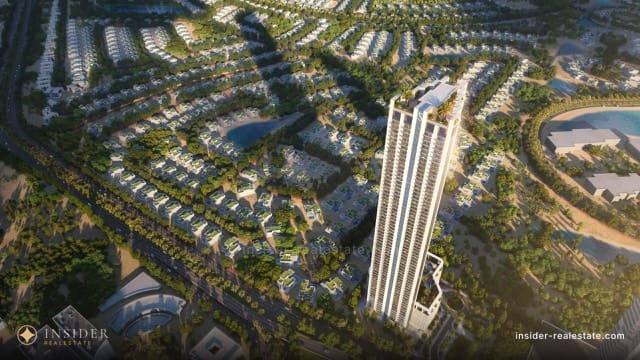
A developer with a tall tower under construction in Jumeirah Lake Towers. JLT is laid out and governed differently from the rest of Dubai, and that shapes what you own.
Me Do Re Properties is building a tall tower in Jumeirah Lake Towers. JLT looks like a normal high-rise district from the road, and it is not quite one: its layout, its governance and its mix of uses all differ from the towers across the highway in the Marina.
What makes JLT different
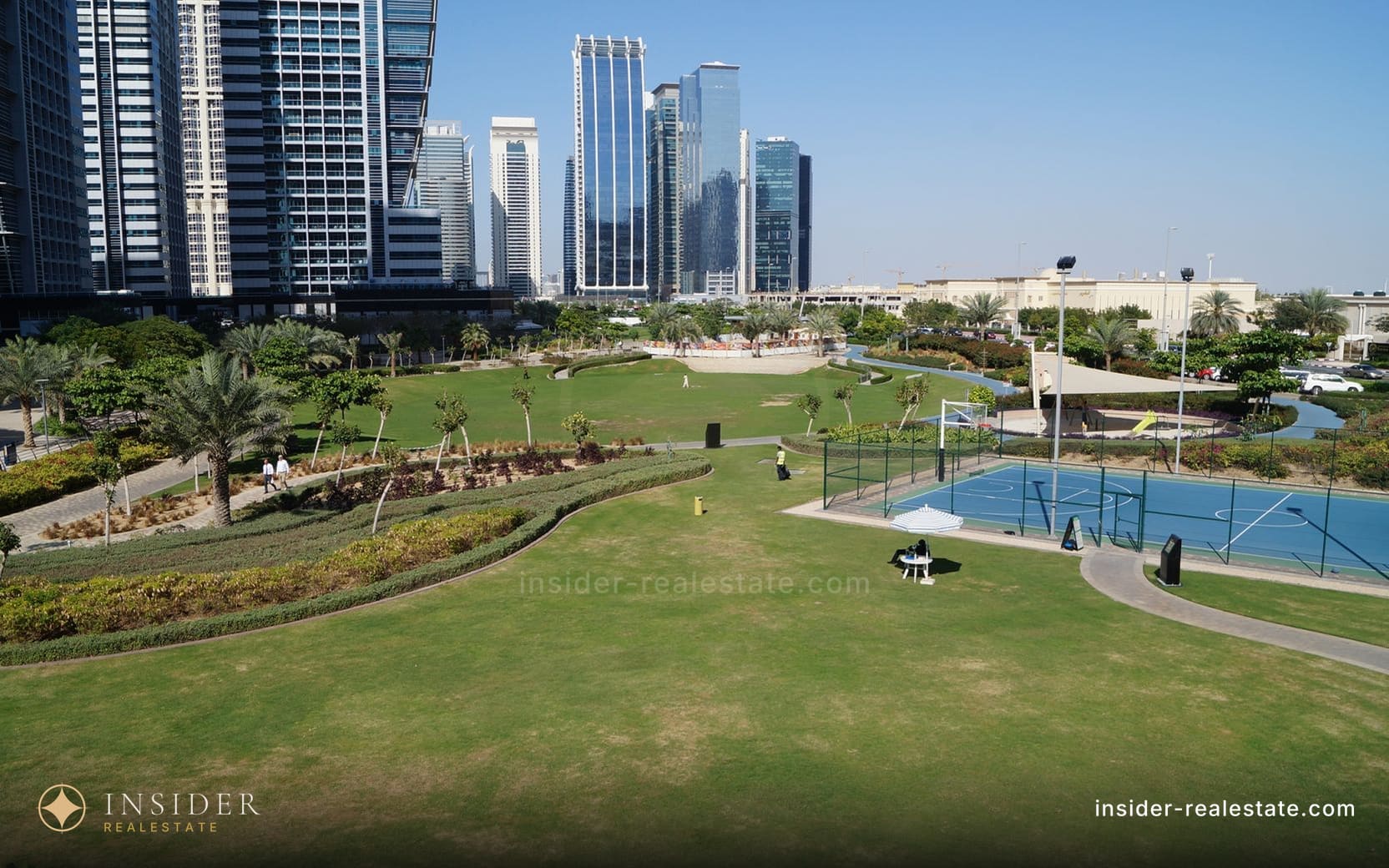
- It is organised in clusters around artificial lakes, each lettered, each with its own group of towers. Which cluster a building sits in decides walking distance to the metro, to the lakes and to the shops — differences that matter far more here than the district-level address.
- It sits within a free-zone framework, and many towers hold a mix of offices, retail and homes in the same building.
- Mixed use inside one tower is the norm rather than the exception, and that shapes daily life: lift traffic at office hours, shared lobbies, and a weekday rhythm.
- The lakes are common infrastructure, maintained at district level and funded through charges.
What that means for a buyer
- Establish the ownership form for the specific tower. Free-zone districts are not uniform on this, and it is the first question, not a detail.
- Check what else is in the building. A residential floor above active offices is a different home from one in a purely residential tower — establish whether lifts and lobbies are separated.
- Ask which cluster. Metro proximity within JLT varies from a two-minute walk to a fifteen-minute one, and rents follow that closely.
- Both charges. The building's service charge and any district-level charge for lakes, landscaping and shared infrastructure.
Why the district works
JLT has genuine strengths that keep it consistently let: two metro stations, prices below the Marina for comparable size, a large amount of everyday retail at ground level, and a working population inside the district itself. It is a practical address rather than a glamorous one, and the rental market reflects that with steady demand and modest voids.
What to check
- Ownership form and foreign-buyer eligibility for that exact tower.
- Escrow account and Oqood registration, the contractor, and the delay remedy.
- Service charge in comparable delivered towers in the same cluster.
- How many units complete nearby in the same period.
- Achieved rents in the specific cluster, from live listings.
- Parking allocation, which in JLT is a real constraint.
Who it suits
- Yield investors wanting steady long-let demand at prices below the Marina.
- Buyers who work in or near the district.
- Not somebody expecting a prime residential address, and not a buyer who has skipped the ownership-form question.
Based on the Dubai Land Department register and the published structure of the district.
Talk to a licensed broker: 📲 +971 50 120 32 64 on WhatsApp, @dubai_oleg on Telegram
Video on this topic
The same subject on the English channel — each clip has a written version of its own.
 19:45Oceano on Al Marjan Island: the Luxe Developers project and the island being built around it14 August 2026
 15:01DIFC Living: apartments inside Dubai's financial centre17 September 2023
 1:35Binghatti Aquarise, Business Bay: the pitch and the reality check12 September 2025
 1:17Skyrise by Binghatti: a landmark tower at mid-market pricing11 September 2025
 1:38Binghatti Hills at Arjan: the volume play, examined10 September 2025

In the news
Other write-ups on the site about the same thing.
Dubai Islands: JW Marriott Residences by CG Developers, and Nakheel's AED 527m infrastructure contract
CG Developers is building Dubai's first JW Marriott residence, priced from AED 1.72 million with a Q1 2028 handover. In parallel, Nakheel has awarded a AED 527 million contract for Island B's core infrastructure — roads, water and sewage for a future 49 000 homes.
UAE developers under S&P and Moody's review: liquidity, construction costs and handover dates in 2026
In March 2026 S&P saw no liquidity pressure at Emaar, DAMAC, Omniyat and PNC Investments. In July Moody's reported most UAE projects due in 2026–27 on schedule despite imported materials costing 20–25% more. What off-plan buyers should take from both.

Dubai's top developers by 2025 sales, and the 648 projects launched in a single year
Emaar sold about AED 65.8bn in Dubai in 2025, DAMAC AED 35.9bn, Sobha about AED 30bn and Binghatti AED 26bn. Meanwhile 258 developers launched 648 projects with 167 000 units. What that mix of concentration and crowding means for buyers.

How a Dubai launch price list is built, and how to read one
A launch sells out in an afternoon, which is exactly the problem: the buyer has the least time to think at the moment the most is being decided. What the price list is actually telling you, and which columns matter.

A capital developer entered Dubai: 1 300 homes sold out before noon
Five things worked at once. But a phase selling out in hours is an indicator of the market’s state at that moment rather than proof of the project’s quality.

The largest Dubai developer’s revenue rose 65% in a half-year
A developer’s financial statements are not obvious reading for an apartment buyer, but they answer the main question: will the company finish what you are paying for?
Below market in JLT right now
From the daily off-market feed. Availability and price are confirmed on request.
All below-market listings →