
Emirates is fitting Starlink across its fleet: a hundred aircraft done
Why an aviation story sits in a property section: connectivity is part of what it costs to live in Dubai, and none of these items moves prices alone.
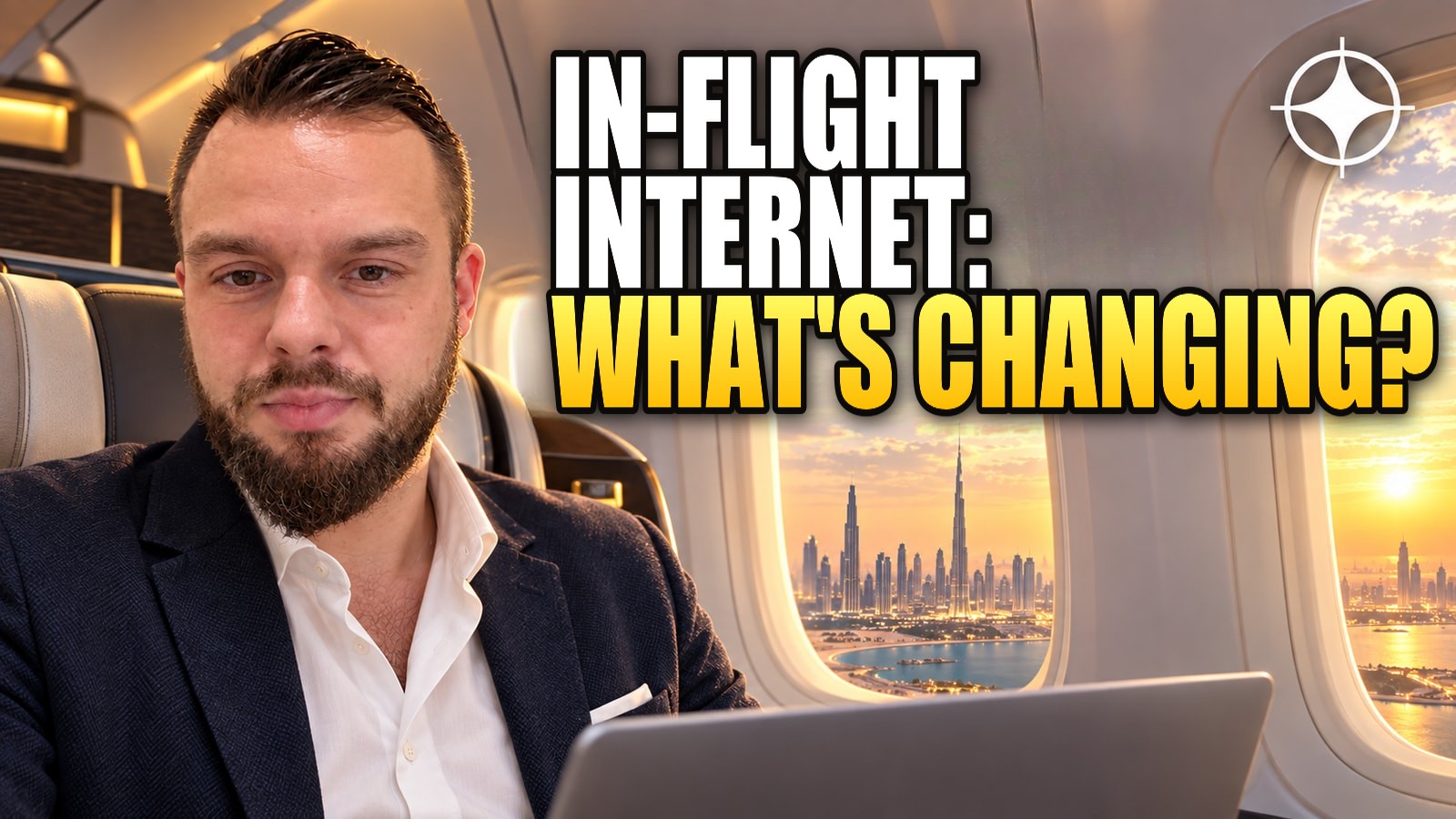
Emirates has equipped a hundred aircraft with next-generation satellite internet and plans to complete the upgrade of its whole fleet by the end of 2026.
Why an aviation story is in a property section
Because connectivity is part of the cost of living in Dubai. A significant share of the emirate's residents are people who fly constantly: regional heads, consultants, entrepreneurs with businesses in several countries. For them, working internet on a six-hour flight is not a convenience but a working day.
Dubai has consistently built a position as a hub from which to run a business in Europe, Asia and Africa at once. Every element of that construction — direct routes, the speed of the airport, the quality of connectivity in the air — works towards the same argument: it is convenient from here.
Talk to a licensed broker: 📲 +971 50 120 32 64 on WhatsApp, @dubai_oleg on Telegram
Context
Dubai International has long been operating at record volumes: in some months more than 4.3 million passengers pass through it. In parallel, Al Maktoum International is being built for a multiple of that flow, and rail service between the emirates has started.
None of these stories moves housing prices by itself. Together they explain why the inflow of residents does not stop: transport access is one of the first items in a relocation decision, and on that measure the emirate's arguments accumulate rather than diminish.
In the news
Other write-ups on the site about the same thing.
UAE economy in 2026: PMI at 55.3 in August, GDP up 3% and Dubai private schools in the PISA global top ten
The UAE non-oil PMI rose to 55.3 in August 2026, its highest since December 2024. Real GDP grew 3% in Q1, with the non-oil share at 79.4%. Dubai private schools ranked 6th in the world for reading and 8th for maths in PISA 2025. Why the economy looks stronger than the housing mood.
A company in Dubai in one day: how Dubai South Business Hub works, and why the UAE wants 2 million companies by 2031
Dubai South’s free zone issues a same-day e-licence for qualifying digital activities, from AED 12 500, entirely online. At the national level the goal is bigger: from 1.2 million companies today to more than 2 million by 2031, plus at least ten new unicorns.

Mandatory health insurance in Dubai and Abu Dhabi in 2026: what the basic plan covers
Since 1 January 2025, health insurance has been mandatory nationwide for private-sector staff, but the rules differ by emirate: Abu Dhabi employers must cover up to four family members, Dubai only the employee. What a basic policy covers, and where you pay extra.

UAE freelancer and blogger taxes in 2026: VAT, corporate tax, and the new advertiser permit
There is still no personal income tax in the UAE. A freelancer registers for 5% VAT above AED 375 000 turnover, while corporate tax kicks in only above AED 1m — a different threshold people confuse. Since 1 February 2026, sponsored content also needs a media permit, and a fine has been issued.

UAE business opportunities visa: a sponsor-free visit visa for 60, 90 or 120 days
The UAE visit visa for exploring business opportunities needs no sponsor and runs for 60, 90 or 120 days, single or multiple entry. In Dubai it costs AED 200/300/400 plus a AED 1 000 deposit and takes 48 hours. Who needs it, and where it fits before a property purchase.
UAE driving licence for foreigners in 2026: direct swap, Golden Chance and driving school costs
RTA swaps licences from 57 countries with no test for about AED 1 000–1 200. Everyone else goes through a driving school — 10 to 20 mandatory hours and AED 4 500–7 500. All three routes, and where people lose money.