
Dubai builds the VDX vertiport next to DXB as air taxis approach commercial launch
A four-level vertiport for electric air taxis is rising next to Dubai International Airport, with capacity for up to 170 000 passengers a year — billed as the first facility of its class in the world. What air taxis mean for the geography of property prices.
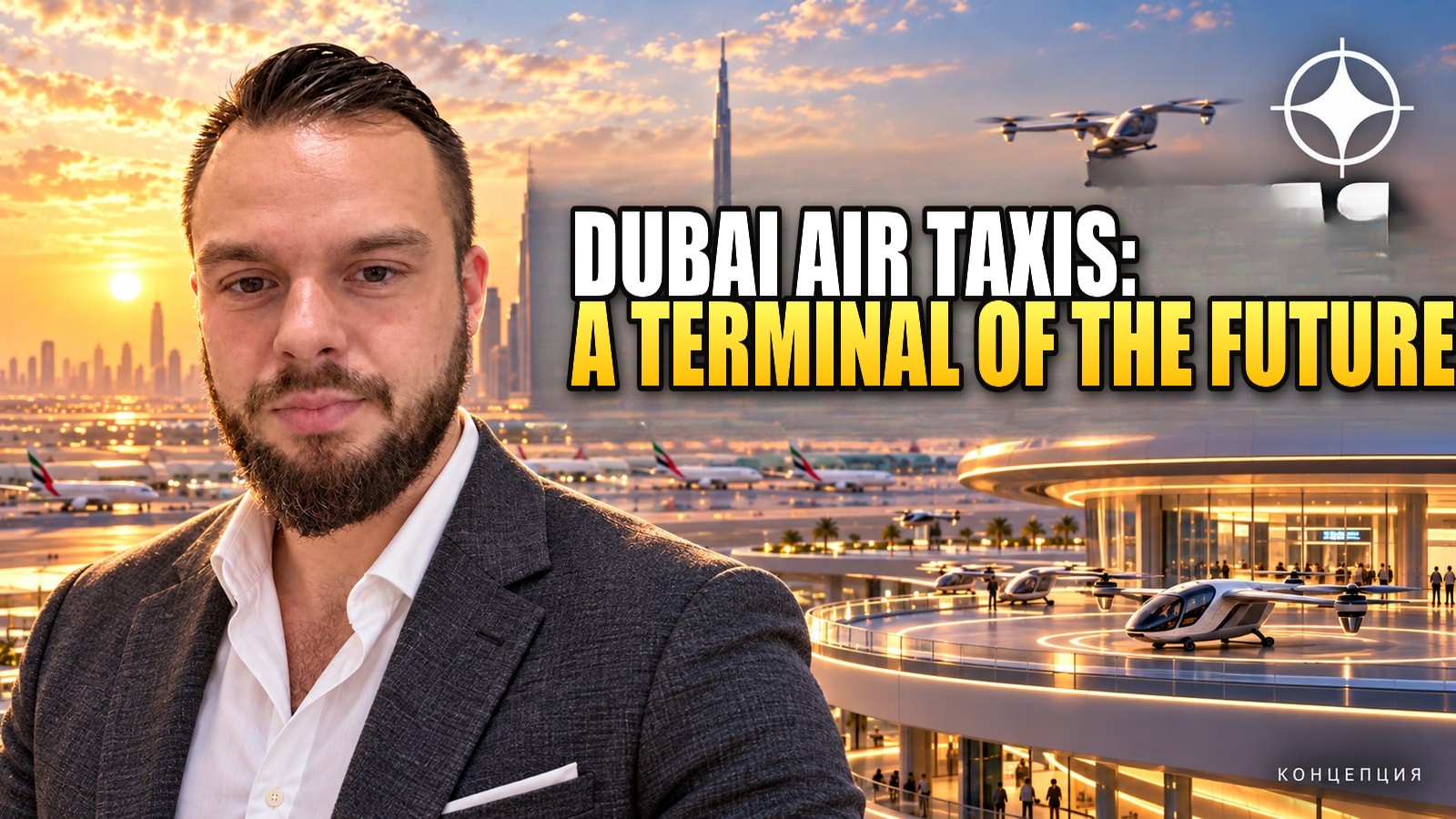
Dubai has started building the VDX vertiport next to Dubai International Airport — a terminal for electric air taxis that the authorities position as the first facility of its class in the world. Four levels, two take-off and landing pads, fast-charging infrastructure for the aircraft, and a design capacity of up to 170 000 passengers a year.
What we know about the project
- Location: at DXB. The logic is obvious — the first commercial air-taxi route will link the airport with the city's key destinations, removing the classic pain scenario: the drive with suitcases at rush hour.
- Up to 170 000 passengers a year — the scale of a small regional airport.
- Four levels and fast charging — this is designed as a transport node, not a helipad: waiting halls, passenger processing, aircraft turnaround in minutes.
Why Dubai is serious
Dubai's air-taxi programme has run for years — aircraft certification, test flights, and a route network defined in advance: the airport, Downtown, the Palm, the Marina. Building a permanent vertiport is the stage at which a programme stops being a showcase: nobody builds terminals for demonstration flights.
The first-phase economics target a clear customer: the premium traveller for whom a 15-minute flight against an hour in a car is worth the fare. It is not mass transit — and does not pretend to be in its early years.
Talk to a licensed broker: 📲 +971 50 120 32 64 on WhatsApp, @dubai_oleg on Telegram
What it means for property
Every new transport mode in Dubai has redrawn the price map: the metro did it in the 2010s, and proximity to a station still adds a measurable premium to rents. Air taxis work differently — they do not create mass accessibility, but they create premium connectivity: locations with vertiports gain a new kind of convenience for the most affluent segment.
- Follow the vertiport map. The announced locations — airport, Downtown, Palm, Marina — coincide with the premium housing clusters; future pads in new districts will be an early signal of their status.
- The effect is reputational before it is operational. For the luxury segment, "the city where air taxis fly" burnishes Dubai's brand — and a city's brand capitalises into the price of its best assets.
- The horizon is years, not months. It is too early to price air taxis into a specific apartment; it is exactly the right time to track the infrastructure.
Based on Dubai transport authority announcements on the VDX vertiport project.
In the news
Other write-ups on the site about the same thing.
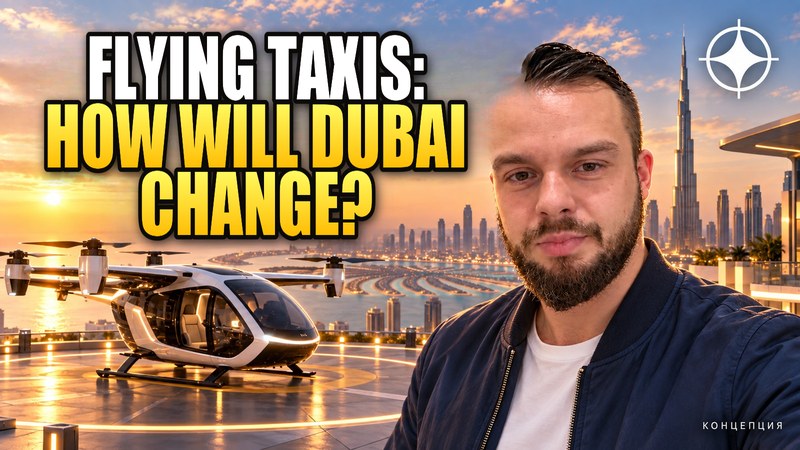
Flying taxis hit UAE skies in 2026: DXB to the Palm in 12 minutes, Abu Dhabi to Dubai in under half an hour
Dubai and Abu Dhabi air taxis start commercial flights in 2026: the first vertiport at DXB is finished and the capital has priced its routes. Where the vertiports are, flight times, what an Abu Dhabi to Dubai air taxi will cost and what it means for property.
Air taxi in Dubai: airport — Downtown — Marina — Palm
Four passengers and a pilot, electric, between the four locations with the heaviest ground traffic and the most expensive property. What it does to prices, and what to treat with caution.
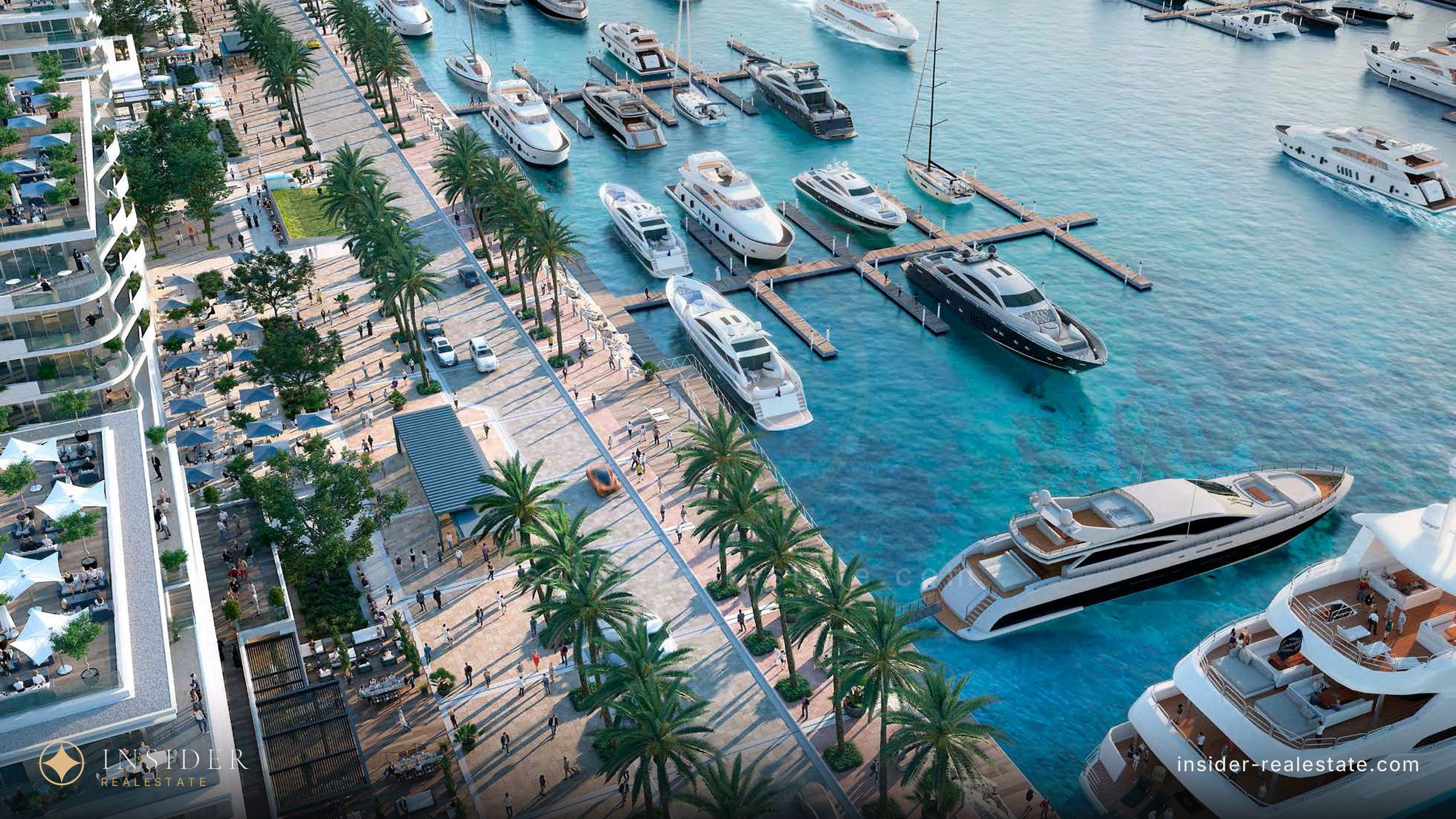
Dubai Walk: 6 000 km of pedestrian routes and 110 bridges by 2040
RTA has begun phase one of Dubai Walk: 12 km of routes, 5 km of cycle lanes and 11 transport interchange points. By 2040 — 6 000 km of pedestrian infrastructure across 160 districts and 110 bridges, lifting walking’s share of trips from 16% to 25%.
Dubai Airport Express Line via JVC and the Abu Dhabi high-speed train: what changes for property
The RTA is planning a 55 km, five-station Airport Express Line from DXB via Al Jaddaf and Al Khail Road to JVC and Al Maktoum, with flight check-in at the stations. Etihad Rail is separately building a 350 km/h Abu Dhabi–Dubai line with a 30-minute journey. What it means for JVC and Al Jaddaf.
Dubai Loop: Elon Musk’s tunnel between DIFC and Dubai Mall — what is really being built
The Boring Company’s Dubai Loop: a 6.4 km pilot with 4 stations between DIFC and Dubai Mall for about $154m, a full 22.5 km, 19-station network for about $545m. The RTA contract was signed in February 2026 and tunnelling is due in the second half of the year. What it means for buyers downtown.
There is no metro in Abu Dhabi: what is being built instead, and by when
Not one operating line, not one station. The metro maps circulating online are drawn from plans rather than from reality — and the difference matters before you choose a district.