
Dubai Festival City: a district where one company owns everything around you
A waterfront quarter with a mall, hotels, schools and homes under a single owner. Single ownership buys predictability and creates dependence.
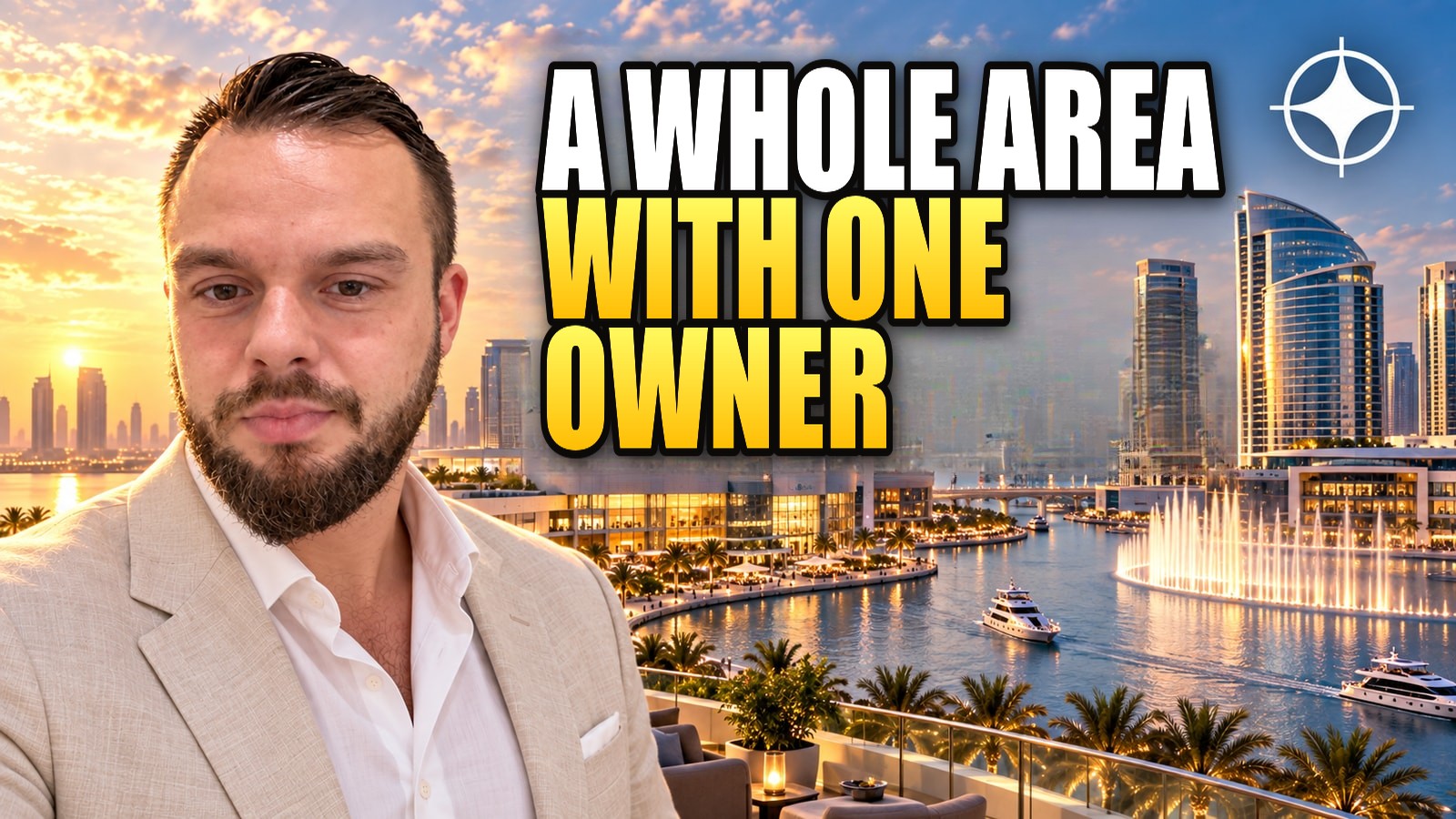
Dubai Festival City is a waterfront quarter on Dubai Creek where the mall, the hotels, the offices, the schools and the housing were built and are run by one group. A district with a single owner is its own category of asset, and it has a real strength and the flip side of that same strength.
What single ownership gives you
- Predictability. What appears next door is decided by the same party that built your building, not by whoever buys the plot across the road. That is rare: normally your view and your quiet depend on somebody else's land.
- Infrastructure that exists rather than being promised. The mall, the hotels and the schools are there, and they are maintained by the party whose core business they are.
- One maintenance standard across landscaping, lighting and security — visible on the street, not in a brochure.
- A long horizon. An owner who will still be here in twenty years has direct reasons to keep the district up.
And the other side of it
- Dependence on a single decision. A change of strategy — reworking the mall, changing a hotel operator, selling part of the portfolio — changes the district as a whole, and residents have no say in it.
- Little internal competition. Services, commercial leasing and maintenance sit in one set of hands, and prices reflect that.
- Mixed use means traffic. The mall and the hotels run on their own schedule, not on a residential one, and weekends are the busy part.
- Thin resale supply. The residential component is small relative to the commercial one, transactions are few, and comparables for a valuation are harder to assemble.
What to check
- The form of title for the specific building: in quarters like this it is not always uniform across the site.
- The service charge and any district levy, with their history, and precisely what each covers.
- Which facilities residents may actually use, and on what terms — in the documents, not by proximity.
- Orientation and distance to the mall and the hotels: traffic and floodlighting are experienced very differently a hundred metres apart.
- Live asking rents inside the quarter, not district averages.
- Typical time on market for resales — with few transactions it runs longer than the city norm.
Who it suits
- Buyers who value a predictable environment and accept paying for it in service charges.
- Families who want schools and daily infrastructure within walking distance.
- Not for anyone who needs liquidity, or who does not want their asset to depend on one owner's decisions.
Based on the Dubai Land Department register and the district's published ownership structure.
Talk to a licensed broker: 📲 +971 50 120 32 64 on WhatsApp, @dubai_oleg on Telegram
In the news
Other write-ups on the site about the same thing.
Dubai Festival City: who decides what you pay
A district under a single owner is maintained better than most. It also means the standard, and the charge that pays for it, are set by someone else.
Al Muhaisnah: where micro-location matters more than the address
Several very different built environments under one district name. Here you check the street, not the district.

BNH Real Estate Developer: homes above shops, and what that changes
A developer with mixed retail-and-residential buildings in Al Furjan. Living above active commercial space has specific advantages and specific problems, and both are checkable.

Dubai service charges in instalments: how RERA’s Tayseer plan works and who it helps
RERA’s Tayseer initiative lets owners clear overdue service charges in instalments of at least six months, and management companies hold off enforcement while the plan is kept. Nineteen companies joined at launch in March 2025; the DLD service page now lists 23. Terms and limits.
Dubai building quality and safety law 2026: a 10-year certificate, inspections and fines up to AED 2m
On 10 March 2026 Sheikh Mohammed issued Law No. 3 on the quality and safety of buildings. Every building needs a certificate — valid 10 years if under 40 years old, 5 years if older. Fines run from AED 100 to AED 1m, doubling to AED 2m for repeat breaches. What it means for apartment owners.

Hotel-style services in UAE residences: what the service charge covers, what is billed separately, and what it costs
Concierge, valet, housekeeping, a private chef and help letting the unit: what a hotel-serviced residence includes in the service charge, and what it bills on top. CBRE puts the branded premium at 64% in Dubai and 87% in Abu Dhabi. Where the premium pays for itself, and where it does not.