
Al Ali Property Investment: check the plot is freehold before anything else
A developer with projects in Al Barsha and Nad Al Sheba. Mainland Dubai is not uniformly open to foreign ownership, and the map of what is does not follow district boundaries.
Al Ali Property Investment builds in Al Barsha and Nad Al Sheba — mainland districts rather than the purpose-built freehold zones. That makes one question the first one, ahead of price, layout and everything else: is this specific plot open to foreign ownership at all?
Why this question exists
- Foreign freehold in Dubai is granted by designated area, not across the emirate. The purpose-built districts — the Marina, JLT, Downtown, the Palm and others — were created as such from the start.
- Mainland districts are mixed. Parts of some older areas were designated later, and the boundaries follow plot numbers rather than the district name or what a map shows as a neighbourhood.
- So "Al Barsha is freehold" is not a usable statement. A specific plot is or is not, and neighbouring plots can differ.
- Designations change over time, which is why this has to be verified now, for this plot, rather than taken from an article or an older transaction.
Confirm it with the Dubai Land Department for the exact plot before paying anything. A sales office's assurance is not verification, and this is not a question where being wrong is recoverable.
What buying on the mainland gives
- Established districts with real infrastructure — schools, clinics, mosques, everyday retail, all long since built.
- Lower prices than the purpose-built zones for comparable size and central position.
- A different tenant pool, more settled and more local, with longer tenancies.
- Lower density in most of these areas than in the tower districts.
And what it costs
- Thinner comparable data. Mainland districts trade less often than the Marina, so pricing is harder to check and an independent valuation earns its fee.
- A smaller resale market, since fewer foreign buyers look there — plan a longer sale.
- Short lets are often not viable, and may not be permitted.
- Financing can be less straightforward for non-residents on non-standard ownership forms.
What to check
- Ownership status of the exact plot, in writing, from the land department — before anything else.
- Whether a branded or serviced element is involved, and what the operator or licence actually provides.
- Escrow and Oqood for off-plan, plus the contractor and the delay remedy.
- Achieved rents in the immediate area, from live listings.
- Service charge in comparable delivered buildings.
- An independent valuation, given the thinner data.
Who it suits
- Buyers who want an established central-ish district at below-zone prices and have settled the ownership question.
- Long-let investors targeting settled local tenants.
- Not a buyer who needs liquidity, and absolutely not one who has taken the freehold status on trust.
Based on the Dubai Land Department register. Verify the ownership status of any specific plot with the land department before committing.
Talk to a licensed broker: 📲 +971 50 120 32 64 on WhatsApp, @dubai_oleg on Telegram
Video on this topic
The same subject on the English channel — each clip has a written version of its own.
 19:45
19:45 Oceano on Al Marjan Island: the Luxe Developers project and the island being built around it
A walkthrough of Al Marjan Island as it is being built: current infrastructure, the resort plots still under construction, and the architectural vision for the hotels going up around Oceano.
WatchIn the news
Other write-ups on the site about the same thing.

Al Barsha area profile: a mainland district by the metro and the mall, and why ownership varies street by street
Villas, apartment blocks, hotels and a major mall in the middle of the city. Convenient to live in — but what a foreigner can actually own here changes from one plot to the next.
Arada: Sharjah first, and why that is a different legal question
The largest developer in Sharjah, now also building in Dubai. Where foreign ownership in Sharjah differs from freehold, what the emirate offers in exchange, and what to establish before buying.
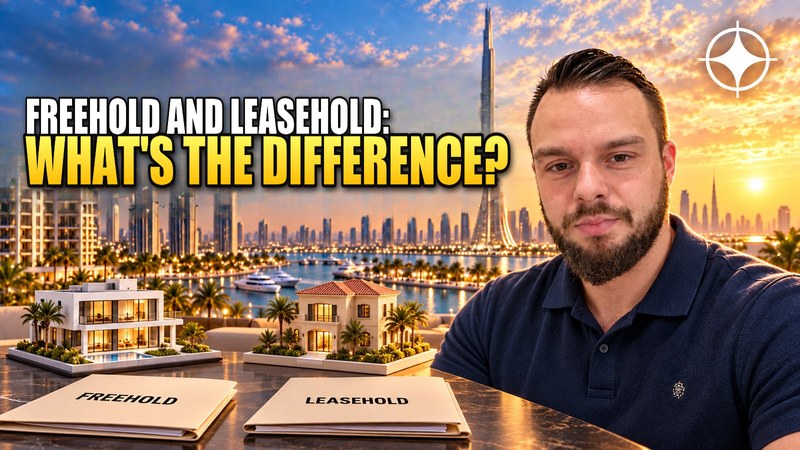
Freehold and leasehold in Dubai: what actually changes for the buyer
Freehold is ownership including the land, and it is the only form that supports a residency application. Leasehold is a long right of use, up to 99 years. The difference is decided by the specific project, not by the name of the district.
Property in Qatar: nine freehold zones and sixteen with 99-year usufruct
Before 2018 a foreigner could buy at exactly three addresses. The law rewrote the rules and split the country into three parts — and which part a house is in is the first question.
Property in Oman: what an ITC is, and where a foreigner can buy at all
The Omani market for a foreigner is arranged simply and strictly: purchase is possible only inside integrated tourism complexes. Outside them, nothing is sold.

Al Satwa: a central district where a foreign buyer may find nothing to buy
A dense older quarter minutes from the centre. Before price, establish whether the specific plot is open to foreign ownership at all — often it is not.