A developer founded by a British architect rather than a financier or construction contractor — visible in how the company describes its projects: the language of design and sustainability comes up more often than the language of yield and payment plans.
1 project by this developer in the catalogue. Nothing of
theirs is in the discounted stock right now — nearby listings are below.
A buyer who values a developer's architectural origin
Experimental formats like a "green" residential community with AI-driven infrastructure elements
Not for buyers seeking a developer with a long specifically-Dubai history
Not for a conservative buyer wary of new housing formats
The company in brief
Checkable facts about the developer itself. Unlike the figures above, these are not
about our stock and do not move with what happens to be listed today.
Founded
2013, an international developer present in the UK and the UAE
Founder
Rui Liu, a UK-qualified architect (ARB/RIBA), founder and chairman of the company
Leadership change
Jake Jacobs became CEO in January 2026; Rui Liu moved into a chairman-focused role
UAE portfolio
seven delivered projects during the company's time in the country
Leos Royal, Umm Addamin
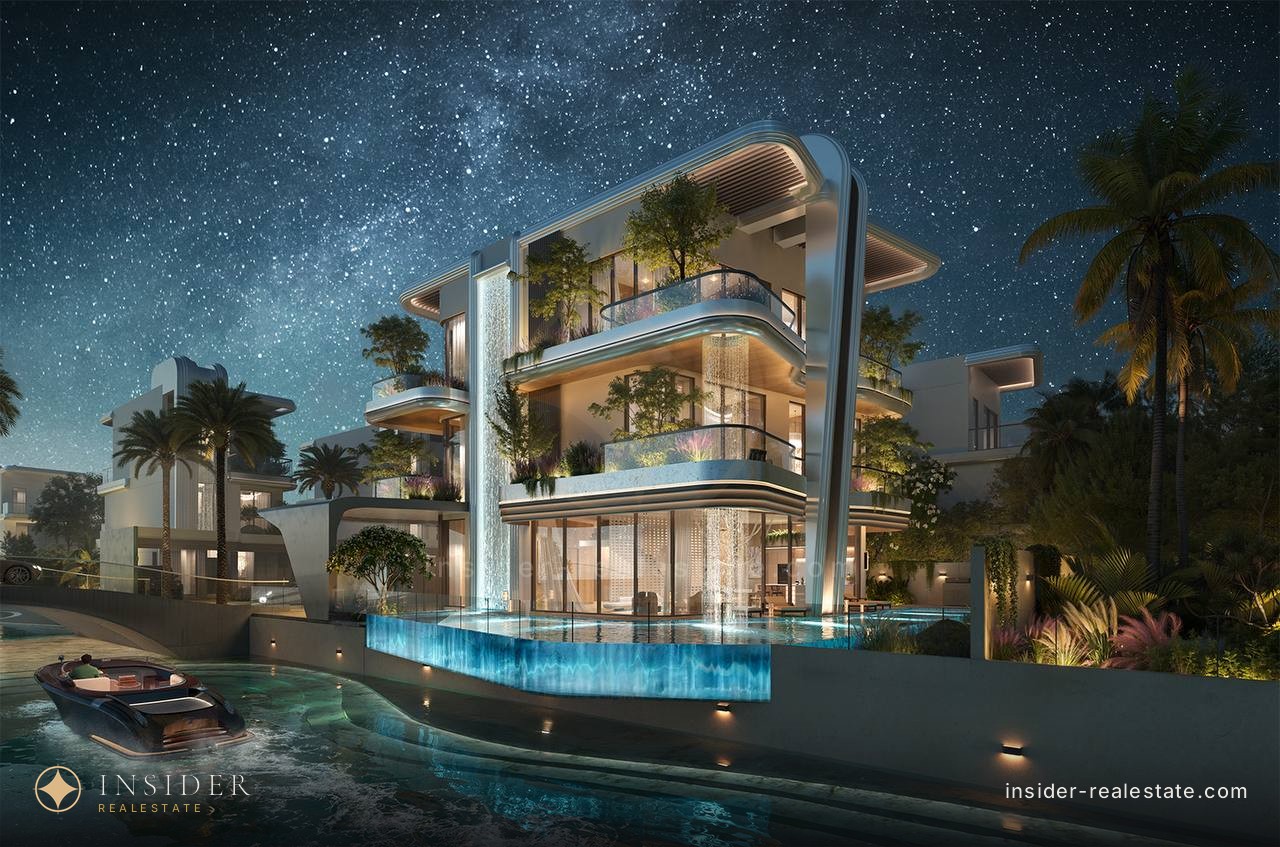
a large residential project of around 800 units, townhouses and villas, marketed as the "world's first AI-green living community"
What kind of developer this is
Who this is, and why the architectural origin shows
Leos Developments was founded by Rui Liu, a UK-qualified architect with academic teaching experience at several UK universities before becoming a developer. That is an unusual background for a Dubai-market developer's founder, where companies are more often led by people from finance, construction contracting or family business rather than practising architects.
That origin shows in the company's positioning: an emphasis on design, architectural approach and, in its latest project, sustainability, comes through more strongly than at a typical mass-market developer whose main selling points are price and payment plans. For a buyer who specifically values an architectural approach, that is a meaningful signal when choosing a developer.
The recent change of leadership
Recently the company made a significant management change: Jake Jacobs became the new CEO, while founder Rui Liu moved into a chairman-focused role, stepping back from operational management. For a relatively young company, that is a significant event — a CEO change often comes with a review of priorities, growth pace and even communication style with buyers.
That is not by itself a reason for concern — many companies go through such transitions as they grow — but it is a reason to watch more closely how already-announced projects perform over the first months and years after the leadership change, since that period is what shows whether operational continuity held.
The UAE portfolio — seven projects during its time in the country
Across its time in the UK and the UAE, the company has delivered seven projects specifically in the Emirates — a notable pace for a developer of international origin, but noticeably smaller than large local players of comparable age. That points to a mid-sized, growing company, not a newcomer with a single project, but also not a developer with decades of local history.
The company's international origin — presence in both the UK and the UAE — potentially gives access to foreign capital and a different architectural school, but also means leadership's resources and attention are split between two different markets rather than focused solely on Dubai.
The flagship project — an experimental format still to be proven
The company's large residential project in Umm Addamin is marketed as the world's first "AI-green living community" — a phrase combining sustainable-construction elements with smart-home infrastructure, alongside British architectural styling. The stated scale is substantial — around eight hundred units, including townhouses and villas of various sizes.
For a project this ambitious in concept, the company does not yet have a completed precedent of comparable scale in its portfolio — the previous seven projects were apparently smaller in volume. That means the claimed technology and sustainability concept has not yet been tested at this size by this specific team, and marketing language is worth treating with some caution until actual delivery.
What to check before buying
What specifically sits behind the "AI-green community" phrase in engineering terms — exactly which technologies and systems are built into the project, not just the marketing description. The flagship project's actual construction status against its stated schedule, given this is the company's largest property to date and the recent leadership change.
The condition of the already-delivered projects among the company's seven, if you can see them — the best available source of information on execution quality before the new large property is finished. The project's registration with the Dubai Land Department and its escrow account status.
How I work with its properties
For a client drawn to the developer's architectural origin, I show exactly how that expresses itself in the layouts and materials of the specific project under consideration, not just in the architect-founder's general reputation. For the Umm Addamin flagship project, I ask for the "AI" and "green" marketing language to be translated into a specific list of engineering choices — that is what separates real technology from a selling slogan.
Given the recent CEO change, I watch construction timelines more closely than usual over the next year or two — that period will show whether the company's operational stability held after the leadership change, and I warn clients considering an early-stage purchase about this honestly.
The developer is inferred from the project name — there is no developer column in the base. So the figures describe our stock, not the company's share of the Dubai market: a developer sitting on an enormous volume of completed housing can look smaller here than one whose projects reach the resale market more often.
These are asking prices, not closed transactions. For a specific building I pull the registered Land Department sales and show where deals actually closed.
In October 2024 UK-founded LEOS moved its global headquarters to Dubai and announced a $7bn fund for 10+ UAE projects. A year later it launched LEOS Royal with Dubai Holding: about 800 villas and townhouses in Wadi Al Safa 5, valued at AED 5bn+. How to read a developer like this.
Founded: 2013, an international developer present in the UK and the UAE. A developer is checked against the Land Department’s open register rather than a brochure: it shows the licence status, the construction progress of each project and the registered escrow account. On off-plan the buyer’s money goes into that account under RERA supervision and is released against verified milestones. The full dossier is in the write-up above.
What projects is Leos Developments building?
Above on this page: 1 project by Leos Developments from our catalogue, each with a passport covering floors, units, handover and bedrooms. Lots on sale, when there are any, sit right under the project.
Should I buy from Leos Developments direct or through a broker?
Money-wise there is no difference: on off-plan the broker is paid by Leos Developments, not by you, so calling the sales office direct saves nothing. What differs is the view — the developer’s sales team sells only its own buildings and will not mention that the same unit costs less next door or that this project hands over later. On resale and assignment the commission is the usual 2% plus VAT.
Is Leos Developments worth buying
That depends on what you buy and why. Describe the budget and the aim — I will point out which of this developer’s buildings are justified today and which are better left alone.