
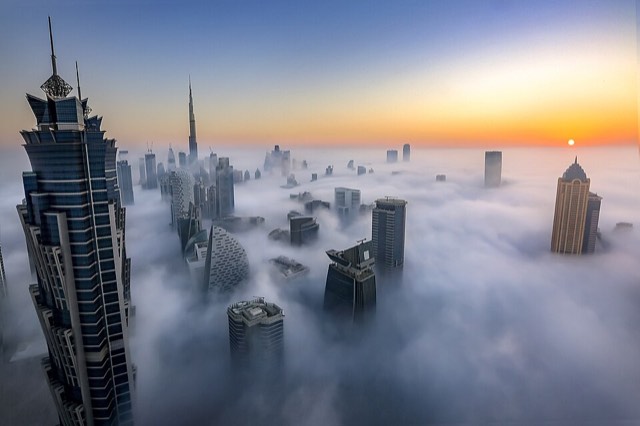
 Illustrative photo
 International City
Country-themed low-rise clusters on the eastern edge: the cheapest freehold property in Dubai, and the highest headline yields.
3 units in stock. 1 with a confirmed status: 0 ready, 1 under construction. 77th most expensive of 80 districts by median price.
- highest headline yields
- lowest ticket size in Dubai
- experienced yield investors
Median price $244K AED 895 000
Entry price $158K AED 580 000 — cheapest unit
Per square foot $338 AED 1 243 / sq ft, median
Ready stock 0% nothing discounted right now
What is nearby, and what it does to the price
What this area is actually like
What International City is
International City is a large low-rise residential district on the eastern side of the emirate, developed by Nakheel and laid out in clusters themed after countries — China, England, France, Greece, Italy, Persia, Russia, Spain and Morocco.
The buildings are four-storey walk-ups and low-rise blocks, predominantly studios and one-bedrooms, with a substantial commercial component including the Dragon Mart wholesale complex nearby.
It is by some distance the cheapest freehold residential district in Dubai and has been since it was built.
The yield numbers and what they mean
Headline gross yields here are the highest in the emirate, sometimes markedly so. That figure is real and it is also incomplete.
Net of the service charge, of realistic vacancy, and of the maintenance that an ageing low-rise building requires, the number comes down considerably. It usually remains attractive; it is rarely as attractive as advertised.
The tenant base is entirely price-driven: workers, sharers and households for whom this is the most affordable accommodation available with a Dubai address. Demand is deep and durable at that level.
The condition problem
This is the central issue. Much of International City was built in the mid-2000s to a low specification, and the maintenance record across the district has been poor in places.
Recurring issues have included drainage and sewage, building maintenance backlogs, service charge collection problems, and common areas in visibly poor condition.
Some clusters and some buildings are materially better than others. This is not a district where you can buy on paper — inspection is mandatory, and so is examining the owners association position.
The location
Eastern Dubai off Emirates Road, roughly twenty-five to thirty-five minutes from Downtown depending on traffic, far from the coastal districts, close to the Sharjah border and to Dragon Mart.
No metro. Bus services exist and are used, which is unusual for Dubai and reflects the tenant demographic.
Amenity within the district is basic but functional: supermarkets, small restaurants, clinics. Dragon Mart provides large-scale retail nearby.
What to check
The specific cluster and the specific building, physically. Condition varies enormously and the difference is visible immediately.
The service charge history and whether the owners association is actually collecting and spending.
Any history of drainage or sewage problems in that cluster.
Occupancy in the building and the achieved rents, rather than district averages.
The realistic maintenance provision you will need to make as an owner.
Who it suits
An experienced yield investor who understands low-cost housing as an asset class, will inspect properly, and prices in maintenance and vacancy honestly.
Someone building a small portfolio of low-ticket units where the arithmetic across several properties works even if one underperforms.
It suits poorly a first-time buyer, anyone buying remotely without inspection, and anyone attracted purely by a headline yield figure.
Dragon Mart and the trading economy
Dragon Mart, the enormous Chinese wholesale and retail complex, sits beside International City and is the reason a large part of the local economy exists. Around it are trading offices, warehouses, logistics operators and the workforce that runs them.
That is the demand engine. A great many International City tenants work in or around Dragon Mart and the surrounding trading businesses, and they want to live within a short drive at the lowest possible cost.
It is a genuinely durable base — the wholesale trade into the region is long-established and not dependent on any single sector — but it is a low-wage one, which is exactly why rents here are what they are.
Dragon Mart also provides the district with large-format retail that its own community shops could not, and it is a practical amenity for residents whatever they do for a living.
What actually goes wrong in the weaker clusters
The recurring problems in International City are specific and worth naming: drainage and sewage backing up in parts of the district, service charge collection falling short of what maintenance costs, common areas and lifts deteriorating faster than they are repaired, and owners associations that in some buildings barely function.
These are not evenly spread. Some clusters and some buildings have been maintained properly for two decades and are perfectly sound assets. Others have visibly not.
The distinction is obvious within ten minutes on site: look at the stairwells, the lift interiors, the standing water around the buildings and the state of the parking. A well-run building in this district does not hide it, and neither does a badly run one.
Ask directly whether the cluster has had drainage issues, and ask the owners association what the reserve fund position is. In a district of this age those two answers determine your next decade of ownership.
Treating it as a portfolio play
Because the ticket size here is the smallest in Dubai, International City is one of the few places where an investor can hold several units for the price of one apartment elsewhere. That changes the risk calculus meaningfully.
Across four or five units, a void in one is absorbed by the others, an unexpected maintenance bill is spread, and the average return is far more predictable than any single unit’s.
It also spreads cluster risk, which in this district is the main risk. Concentrating everything in one building means one owners association decides your outcome.
What it demands in exchange is genuine management: inspections, tenant screening, chasing maintenance and staying on top of the charge. Investors who treat this district as passive income consistently underperform the ones who treat it as a small operating business.
The market, per the Land Department
Residential price index 167.33 Q4 2025
Quarter on quarter +3.32% QoQ
Year on year +8.9% YoY
Full year 2025 +9.81% index 162.51
These are official DLD readings for the entire emirate; a district split, International City included, is not made public. Use them as context for the prices on this page — registered sales for the building you pick I pull on request. Source: Dubai Land Department, read 15/08/2026.
The latest read: July 2026
The DLD index above comes out quarterly and does not separate segments. The monthly price index treats villas and apartments apart, which in 2026 is essential: a market-wide average conceals that the two have gone different ways.
Villas and townhouses 292.5 flat YoY
Apartments 168.7 −4.2% YoY
All residential 219.2 −0.3% MoM
Price per sqft 2 039 villas · apartments 1 397 AED
Off-plan took 72.8% of the month's deals and ready homes 27.2%. Ready volume was up 11.4% on the month, and off-plan alone fell both month on month and year on year (−45.3%). So negotiation is realistic on apartments and off-plan, much less so on completed villas in established communities. Index base is January 2021 = 100 — a villa reading of 292.5 means growth of 192.5% from that mark, not a premium over a 2021 peak. Monthly ValuStrat market review for July 2026, checked 24/08/2026.
Questions about International City
Is International City a good investment?
It has the highest headline gross yields and the lowest entry prices in Dubai, with deep, durable demand at the affordable end. Against that: ageing low-specification stock, a patchy maintenance record and wide variance between clusters. Physical inspection is essential.
What are the clusters in International City?
Low-rise residential clusters themed after countries — China, England, France, Greece, Italy, Persia, Russia, Spain and Morocco — each with its own buildings, management and condition, which varies considerably between them.
Other districts
All districts →Projects in International City
All projects in International City →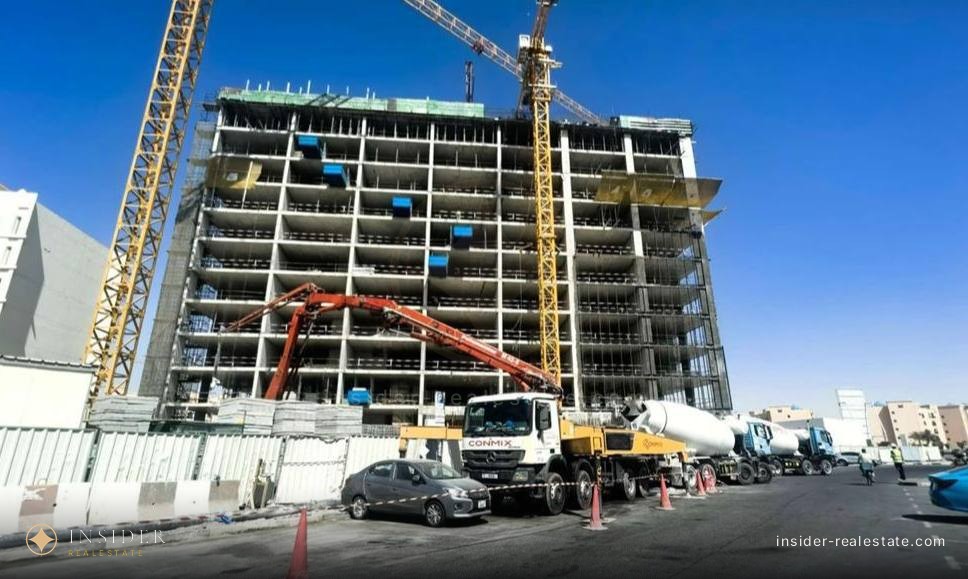
International City in the news
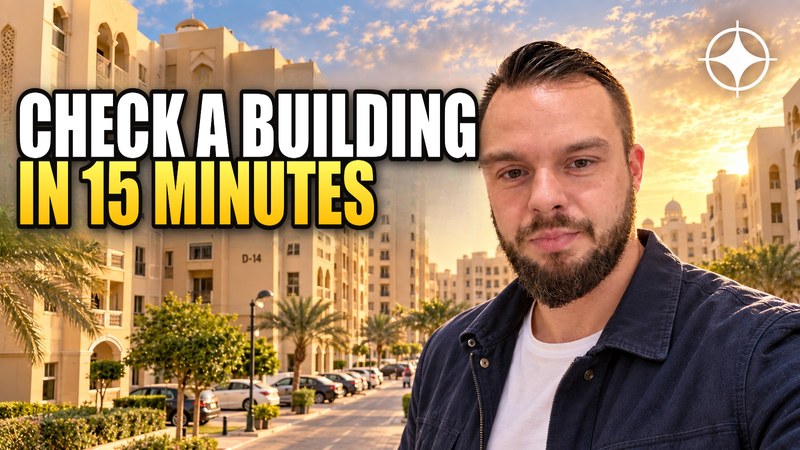
International City area profile: how to judge a building from its entrance in fifteen minutes
A vast estate of near-identical blocks, where the gap between two neighbouring buildings is wider than between whole districts. You measure it on foot, not from a listing.
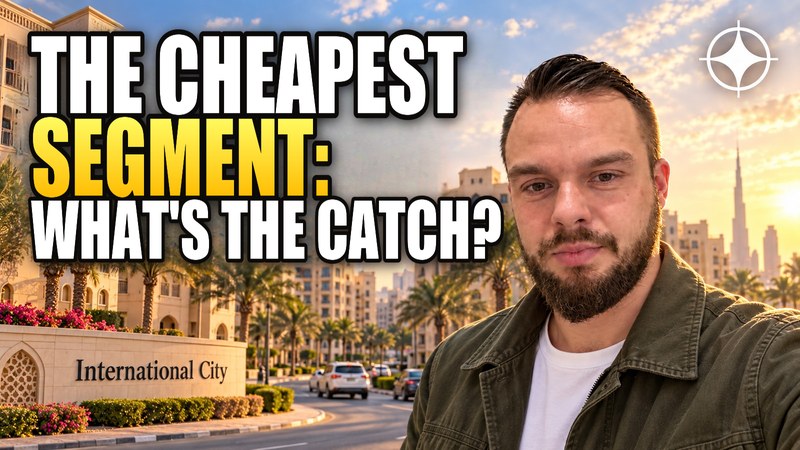
Manjothi Real Estate Development: the cheapest end of the market, honestly
A developer building in International City. The lowest entry prices in Dubai buy a real asset with a real yield — and a specific set of limitations worth stating plainly.
Retail is growing where nobody expected: International City, JVC, Majan and Arjan
Transaction statistics on Dubai retail units give an unexpected picture: activity leads not at prestige addresses but in mass residential districts.
Looking at International City specifically?
Tell me which building or unit it is. Before you make an offer I will bring the registered transaction history, the current service charge and the real letting prices of comparable units.
Ask on WhatsAppAsk a question
Telegram is the fastest way — I answer personally.
Message on Telegram