
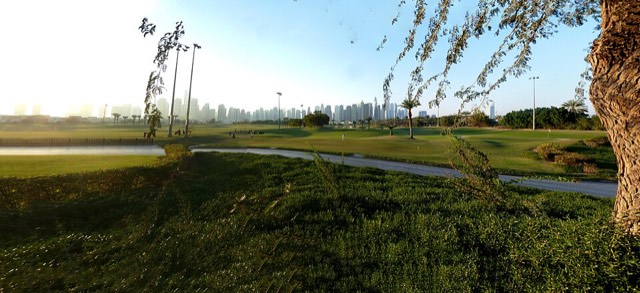
 −8% Illustrative photo
 Khalifa City
The large mainland suburb by the airport: villas, international schools and a championship golf course at moderate prices.
- international schools
- a house and garden
- airport proximity
Entry price $272K AED 998 920 · for a 1-bedroom apartment
Format Apartments apartments
Regulator DMT Dept. of Municipalities & Transport, Abu Dhabi
What this district is actually like
What Khalifa City is
Khalifa City is a large residential district on the mainland between Abu Dhabi island and the international airport. It began as three separate projects, which still causes confusion: Khalifa City A is what people now call Khalifa City, Khalifa City B became Shakhbout City, and New Khalifa City grew into the separate district of Zayed City.
The layout is suburban: a grid of wide streets, villas on their own plots, with retail, schools and mosques distributed between them. Density is low and buildings are low-rise.
The dominant format is villas of three to six bedrooms, but there is apartment stock too — the largest example being Aldar’s Al Rayyana, 1 537 units delivered in 2013.
The district is long established and fully occupied. This is not a masterplan on paper: what you see is the finished article.
Why families come here
Schools first. The International School of Choueifat, GEMS American Academy and Al Raha International School sit in or immediately beside the district — three different curricula within a short drive.
Space second. For what buys a flat on the islands, you buy a house with a garden here, and the difference in floor area is a multiple rather than a margin.
Position third: between the city and the airport, with two bridges into the centre, fifteen to twenty minutes to the terminal and Yas Island close by.
The result is a textbook suburb: you pay for space and schools with a commute and with the absence of walkable urban life.
What is here
Retail is distributed rather than concentrated: Forsan Central Mall, Etihad Plaza, BOUTIK Mall at Al Rayyana, the local Gardens Plaza, plus Spar, Géant and Spinneys supermarkets.
Healthcare is strong for a suburb: Mediclinic Khalifa City and NMC Royal Hospital cover both everyday and inpatient needs.
For leisure there is the eighteen-hole Abu Dhabi Golf Club and the Al Forsan sports resort with waterskiing, karting and shooting.
What is missing is street life. People walk within their own block and drive for everything else.
The market
Summaries place the district in the emirate’s affordable band, with apartment yields among the highest and villa yields moderate, as they are wherever houses and gardens are involved.
Rental demand is steady and family-driven, resting on the schools and the airport rather than on fashion. Tenancies are long and voids are short.
Capital growth is modest — the district is built out, no scarcity is being created and speculative activity is minimal.
Worth understanding the market structure: apartments are few and concentrated in a handful of complexes, while the real turnover is in villas.
What to check
The ownership form for the specific property. This is mainland Abu Dhabi, where foreign freehold is not the default — it is established from the documents.
The age and condition of the house. The district was built in waves and the spread between neighbouring villas is wide.
Running costs: garden, irrigation and cooling a detached house are all materially dearer than an apartment.
The school run and the commute at real times of day — in a suburb that is a daily fact.
Noise: the airport and the highways are close, and this is judged on site rather than from a map.
Who it suits
A family wanting a house and garden with a choice of international schools nearby; anyone working at the airport or in the eastern half of the emirate; a landlord expecting long family tenancies.
It suits poorly anyone who values urban life and walkability, anyone expecting rapid capital growth, and anyone buying without establishing the ownership form — on the mainland that is the first question.
The district by the numbers
Zayed International Airport is fifteen to twenty minutes away, Al Raha Beach sixteen, Dubai about an hour on the E11; two bridges connect the district to Abu Dhabi island.
The housing is villas of three to six bedrooms, with individual listings reaching eleven, plus apartments from studios to three bedrooms — the largest complex being Al Rayyana with 1 537 units.
Schools: the International School of Choueifat on the SABIS system, GEMS American Academy with an American curriculum and IB, Al Raha International School on the IB, and the Dibber nursery.
Retail is Forsan Central Mall, Etihad Plaza, BOUTIK Mall and Gardens Plaza. Healthcare is Mediclinic Khalifa City and NMC Royal Hospital. Leisure is the eighteen-hole Abu Dhabi Golf Club and the Al Forsan sports resort.
What we have in Khalifa City
1 unit −8% Illustrative photo Video
Abu Dhabi on camera
Films from the channel about the emirate. They are not cut by district — the market, the islands and the ownership rules are the same conversation across all of them — so the rail is the emirate's rather than this district's.
Full reviews


Questions about Khalifa City
Can foreigners buy property in Khalifa City?
Only where the specific property falls within a designated investment zone — on the Abu Dhabi mainland that is not the default. Check the individual address rather than the district as a whole, and do it before any deposit.
Are Khalifa City and Zayed City the same place?
No, though the confusion is historical and understandable. The project originally had three parts: Khalifa City A is today’s Khalifa City, Khalifa City B became Shakhbout City, and New Khalifa City grew into the separate district of Zayed City with its own masterplan.
What schools are in Khalifa City?
The International School of Choueifat on the SABIS system, GEMS American Academy with an American curriculum and IB, and Al Raha International School on the IB — three different systems within a short drive, which is the district’s main argument for a family.
The yield and entry price shown above are indicative figures for comparing districts against each other, drawn from market summaries rather than calculated from our own inventory the way the Dubai numbers are. They are not a valuation of any specific property and they are not investment advice. Foreign freehold ownership in Abu Dhabi is available only within designated investment zones — confirm the designation for any specific property before proceeding.
In the news
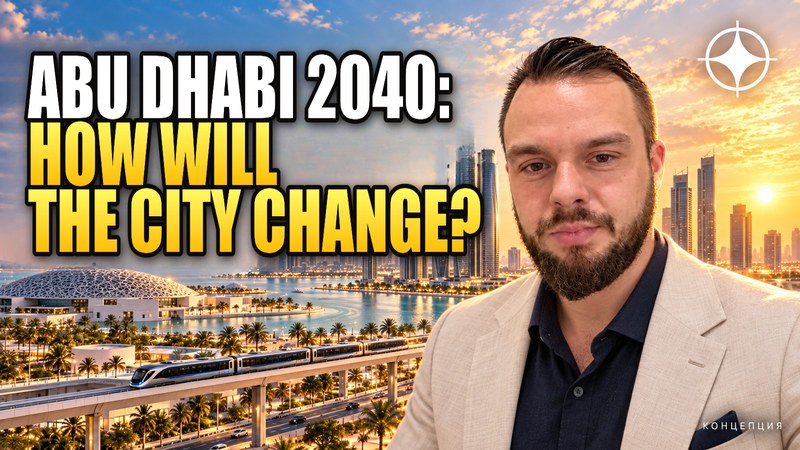
Abu Dhabi 2040: a doubling population, AED 240bn of infrastructure and the transport pipeline
Abu Dhabi expects its population and GDP to double by 2040; the emirate had 4.14m residents at the end of 2024. AED 240bn is earmarked for housing, transport, health and schools. The widely quoted "6 million by 2040" is not an official figure. What is actually being built.
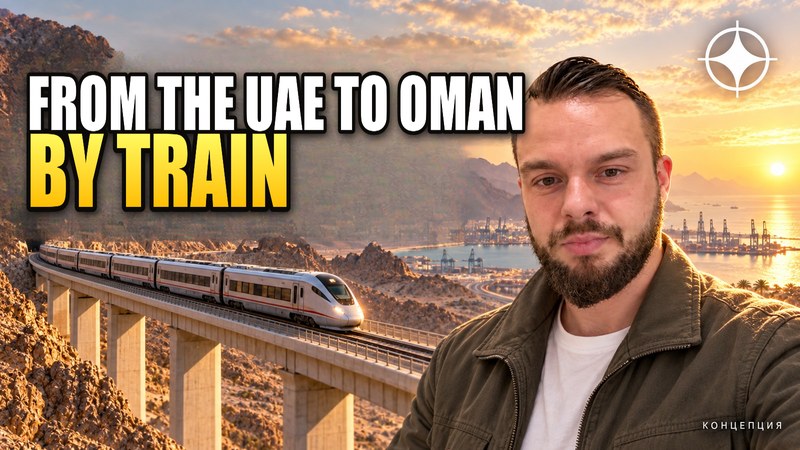
Hafeet Rail: the UAE–Oman railway, Abu Dhabi to Sohar in 100 minutes, and 40% built
Hafeet Rail is a $2.5bn joint venture between Etihad Rail, Oman Rail and Mubadala: 238km from Abu Dhabi through Al Ain to the Omani port of Sohar. The passenger service will run at up to 200km/h; as of spring 2026 the line was 40% complete, and Oman ratified the agreement in September.
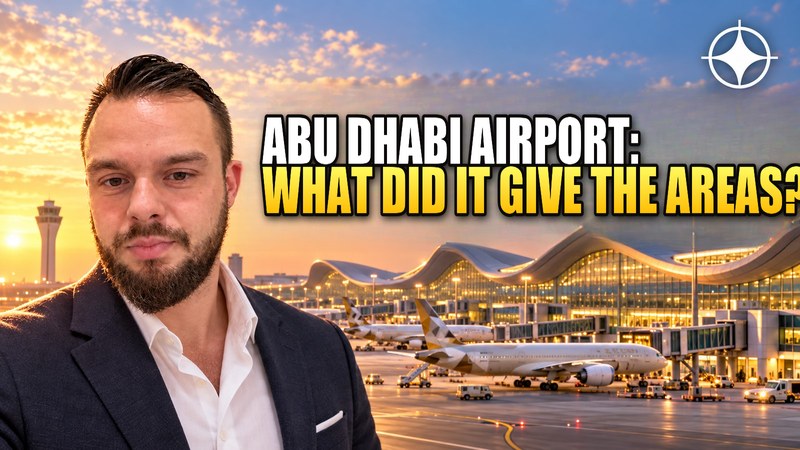
Zayed International Airport, Abu Dhabi: Terminal A, a record 32.5m passengers, and what it did for Yas Island and Al Raha
Terminal A at Abu Dhabi’s airport opened in November 2023 after years on hold: 742 000 sq m, capacity for 45m passengers a year. Renamed Zayed International in February 2024, it handled a record 32.5m passengers in 2025 (+12.8%). What that means for housing on Yas Island and in Al Raha.
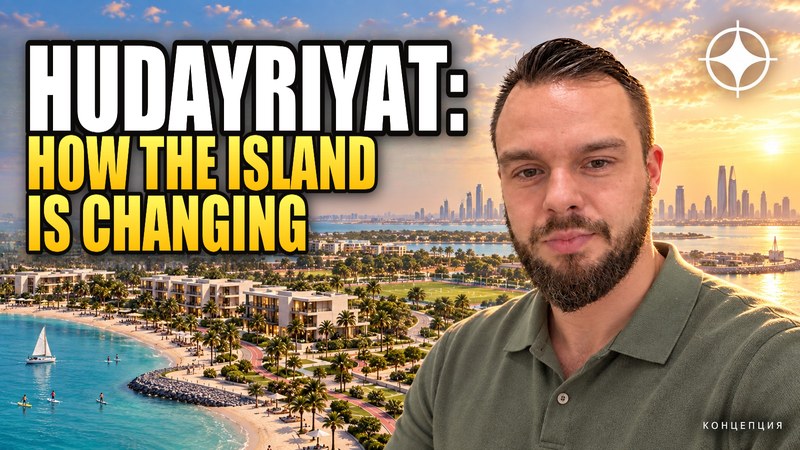
Hudayriyat Island, Abu Dhabi: Modon’s masterplan, Nawayef and Bashayer, and what people are actually buying
Hudayriyat is a 3 000+ hectare island off Abu Dhabi’s southern shore that state developer Modon is turning into a sports and residential district. Nawayef Village’s 378 townhouses (about AED 2bn) sold out on launch day; Bashayer sold roughly AED 3bn in a day in December 2025.
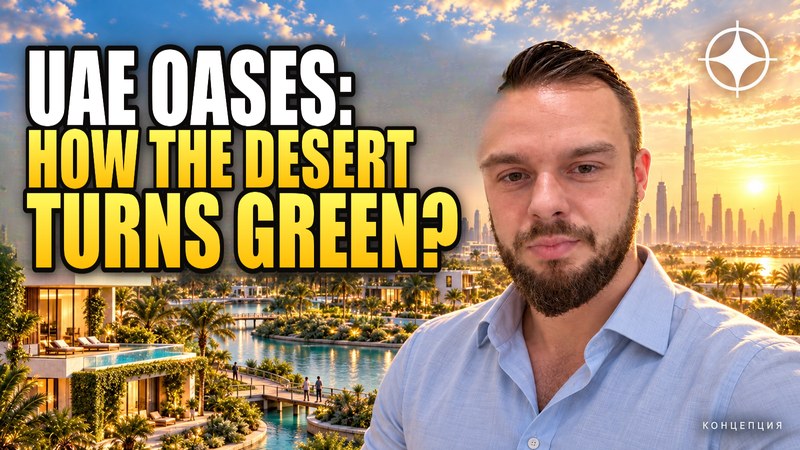
UAE's New Oases: How Dubai and Abu Dhabi Are Turning the Desert Green
Dubai ecotourism and green communities: Al Layan Oasis in Al Marmoom, Expo Valley Nature Reserve at Expo City Dubai, Hudayriyat Island in Abu Dhabi and Kalba in Sharjah. What is being built, when it opens and why nature is becoming part of UAE real estate.
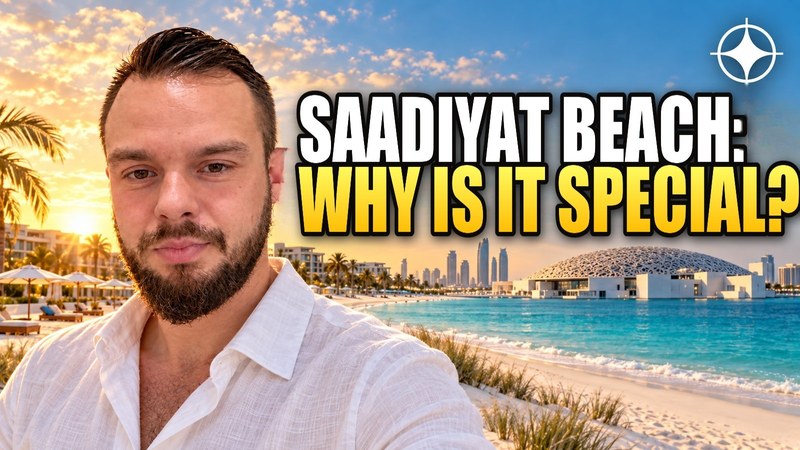
Saadiyat Beach Ranks in the World's Top 20: Abu Dhabi Beats Famous Resorts
Saadiyat Beach in Abu Dhabi is No. 19 in The World's 50 Best Beaches 2026. Why Saadiyat Island made the list of the best beaches in the world, and how the Louvre, a marine reserve and luxury resorts are turning it into Abu Dhabi's main tourism hub.
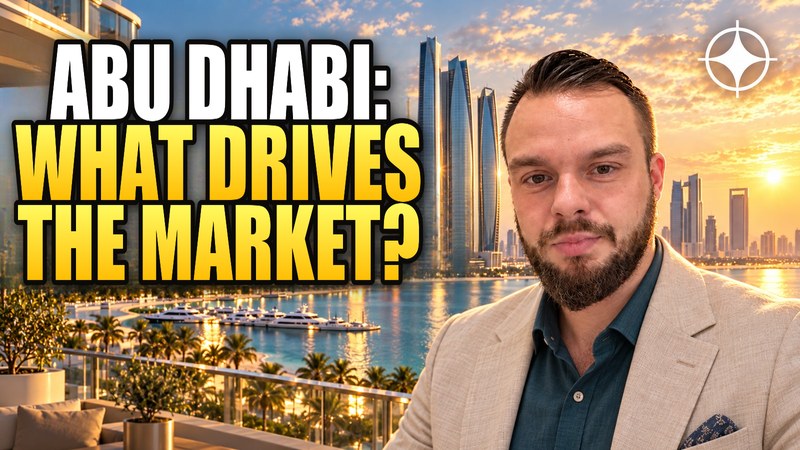
Abu Dhabi property market 2026: AED 117bn in six months and a run of ADREC records
ADREC data: AED 117bn of transactions in H1 2026 (+112%), AED 86.1bn of sales and AED 13.8bn of foreign direct investment (+309%, more than all of 2025). Full-year 2025 was a record AED 142bn. What sits behind the numbers.
Al Maryah Island apartments: W Residences Abu Dhabi, the capital’s first W-branded homes, due in 2027
W Residences Abu Dhabi is the first W-branded residential project in the UAE capital, on the financial district of Al Maryah Island. Developer Taraf (Yas Holding) broke ground in January 2025 with Marriott; 1–4 bed apartments, duplexes and penthouses launched from AED 2.2m, with handover in Q4 2027.
Off-plan escrow in Dubai and Abu Dhabi: AED 500 000 fines for early marketing and EOIs only through Madhmoun
In June 2024 the Dubai Land Department fined three developers AED 500 000 each for marketing projects before registration and escrow. Since 16 February 2026 Abu Dhabi takes off-plan EOIs only through ADREC’s Madhmoun platform and a government escrow. What it means for buyers.
Other apartment districts
All Abu Dhabi districts →Is Khalifa City the right call for you?
Tell me the budget and what the purchase is for — a percentage, a resale, or somewhere for the family to live. I will run it against the Dubai alternative at the same money and say plainly which side wins. It is often not the side people expect.
Ask on WhatsAppAsk a question
Telegram is the fastest way — I answer personally.
Message on Telegram